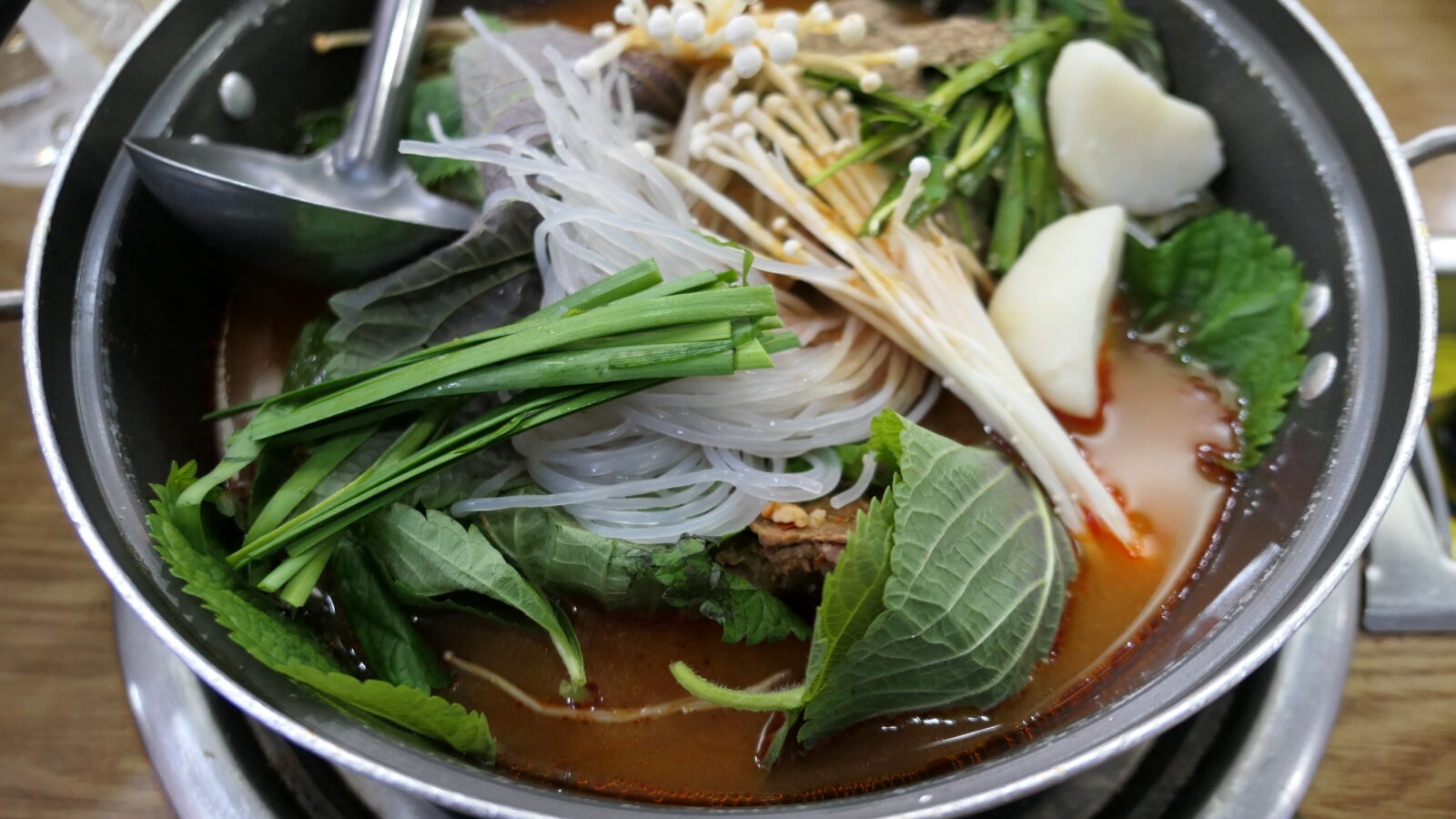
Gamjatang (감자탕, gamjatang) is the pot you order when you want to eat with your hands. Pork spine bones simmer down until the meat slides off the knuckle, and they share the broth with whole potatoes, napa cabbage, and a heavy dusting of ground perilla seeds that turns the whole thing nutty and faintly creamy. It’s chili-red, a little messy, and meant for a table of people. Here’s what it is, how Koreans actually order it, and a full recipe for making it at home.
What Is Gamjatang?
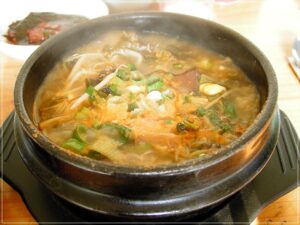
The backbone of the dish, literally, is dwaeji-deungppyeo (pork neck and spine bones). You blanch them, then let them go low and slow until the cartilage gives and the meat clinging to the bone turns spoon-soft. The broth gets its character from gochugaru (chili flakes), gochujang, doenjang (fermented soybean paste), garlic, and ginger, with potatoes, napa cabbage, scallions, and perilla leaves going in later. What makes it gamjatang and not just another spicy pork stew is the deulkkae-garu, ground perilla (sesame-leaf) seeds, stirred in at the end for that toasty, almost creamy finish.
The name is a long-running argument at Korean tables. Gamja usually means “potato,” and yes, there are potatoes in the pot. But plenty of Koreans insist it comes from gamjabbyeo, a colloquial term for a particular pork spine bone, with the potato connection arriving after the fact. Both versions get repeated, and nobody’s settled it.
Taste and Texture
The broth is meaty and rich but doesn’t sit heavy, and the heat builds in layers rather than slapping you. Those perilla seeds are doing the real work, softening the chili and the pork funk into something toasty and round. The pork is the payoff: you grab a knuckle of bone with fingers or chopsticks and work the soft meat loose. Potatoes go silky and drink up the broth; napa cabbage and perilla leaves cut back in with something fresh and herbal.
How Koreans Eat It
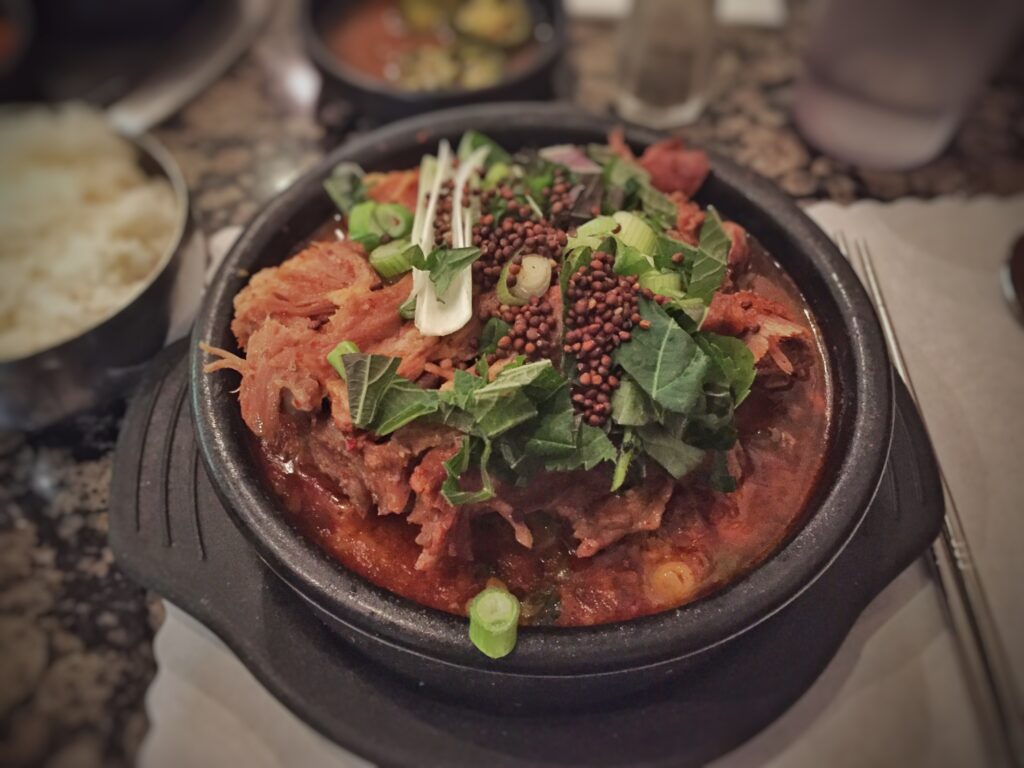
This is group food. A wide pot lands in the middle of the table, often kept at a simmer over a portable burner, and everyone goes in together with rice and a few banchan. It’s also a go-to haejang (해장) dish — the restorative, broth-heavy meal you eat the morning after drinking too much. Late-night gamjatang spots cluster around nightlife districts for exactly that reason.
If you’re eating alone, there’s a one-bowl version worth knowing: ppyeo-haejangguk (뼈해장국), basically gamjatang in a single stone bowl, with more broth and rice and fewer of the big bones. Get gamjatang with a group, ppyeo-haejangguk when it’s just you.
Cultural and Regional Notes
The roots usually point to Jeolla, where hog farming was widespread, and the dish became tied to Incheon in particular. When railway construction pulled laborers to the area around the turn of the 20th century, a cheap, calorie-dense, protein-rich soup was exactly the fuel they needed. Now it’s everywhere, including Korean restaurants from Los Angeles to Toronto.
How to Make Gamjatang at Home
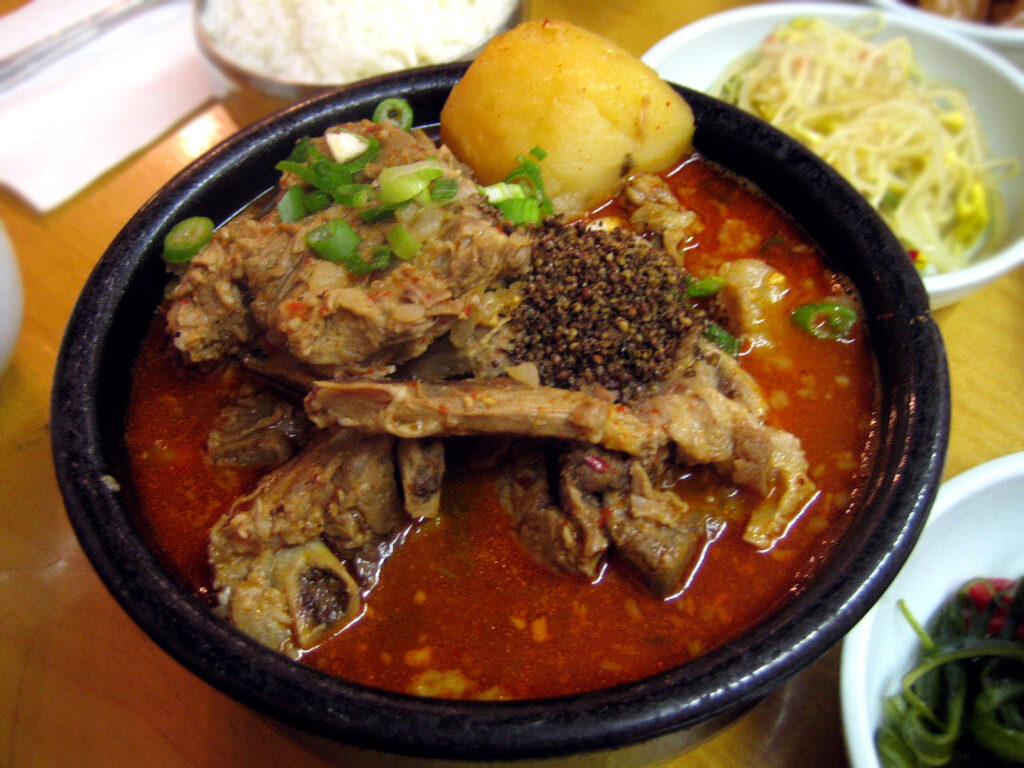
The recipe is forgiving, but two steps carry the whole thing. Soaking and blanching the bones is what gets you a clean, non-gamey broth, and a long, low simmer is what makes the meat give way. Skimp on either and you’ll taste it.
Ingredients
- 2 to 2.5 lb (about 1 kg) pork neck/spine bones
- 4 small potatoes, peeled
- ¼ napa cabbage, blanched (optional but traditional)
- 4 scallions, cut into long pieces
- 1 onion, quartered; a few slices fresh ginger; 6 garlic cloves
- Seasoning paste: 3 Tbsp gochugaru (chili flakes), 1 Tbsp gochujang, 1 Tbsp doenjang, 2 Tbsp minced garlic, 1 Tbsp soy sauce, 1 Tbsp fish sauce, 1 tsp ground black pepper
- 3 to 4 Tbsp deulkkae-garu (ground perilla seeds)
- A handful of perilla (kkaennip) leaves; chili peppers and crown daisy (ssukgat) optional
Steps
- Soak: Submerge the bones in cold water for 1 to 2 hours, changing the water once, to draw out blood.
- Blanch: Boil the bones in fresh water for about 10 minutes, then drain and rinse each bone under cold water to wash off scum. This is the key to a clean broth.
- Build the broth: Return the bones to a clean pot, cover with fresh water, add onion, ginger and garlic, and simmer gently for about 1 hour until the meat is tender.
- Season: Stir the seasoning paste into the broth.
- Add potatoes: Add the whole peeled potatoes and the napa cabbage; simmer 20 to 30 minutes until the potatoes are fully cooked.
- Finish: Add scallions, chili peppers and most of the perilla seeds; simmer 5 more minutes. Top with perilla leaves (and crown daisy if using) just before serving.
- Serve: Bring the pot to the table with rice and banchan, keeping it warm over a burner if you have one.
Honest Cautions
It’s a rich, salty dish, so hold off on extra salt until the paste has had time to meld. The bones are the real sourcing headache — outside Korean or Asian markets they can be hard to find, so ask a butcher for “pork neck bones” or “spine bones.” It runs spicy by default, though you can pull back the gochugaru if you want. And there’s no eating this neatly; you’re working around the bones with your hands, so keep napkins within reach.
Where to eat 감자탕 (gamjatang, pork-bone potato soup) in Seoul
If gamjatang is the comfort bowl Koreans default to — pork neck-bones simmered until the meat slides off, broth gone spicy and earthy with potato, perilla seeds and crown daisy — then Seoul has two old strongholds for it. There’s the Donam-dong market alleys near Sungshin Women’s University, and there’s Eungam-dong’s “Gamja-guk Street.” Three institutions worth the trip:
- 태조감자국 (Taejo Gamja-guk) — Donam-dong, inside Donam Jeil Market (성북구 보문로34길 43); nearest station Seongsin Women’s Univ. (Line 4). Seoul’s oldest surviving gamjatang house, opened in 1958 and now run by the third generation — the name “Taejo” (grand-progenitor) was a cheeky bid to outrank rivals who claimed to be the “wonjo” (original). This is the deep, soulful bowl that started it all. Open daily roughly 10:00-23:00 with a mid-afternoon break (15:00-16:30).
- 태조대림감자국 (Taejo Daerim Gamja-guk) — Eungam-dong’s Gamja-guk Street, at the entrance of Daerim Market (은평구 응암로 172); nearest station Saejeol (Line 6), Exit 2. The oldest and best-known shop on Seoul’s most famous gamjatang street, founded in 1989 and designated a Seoul “Oraegage” (heritage long-standing business). Come for the gamjatang or the grilled marinated pork bones, then wander the street itself, a gamjatang landmark. Open 24 hours, year-round.
- 황해옥감자탕 (Hwanghae-ok Gamjatang) — Donam-dong, in the Donam Market food alley (성북구 보문로40길 23); nearest station Seongsin Women’s Univ. (Line 4). A roughly 50-year neighborhood old-timer, always mentioned alongside Taejo as a Donam gamjatang institution, prized for a cleaner, clearer broth rather than the thick, gloopy style. Less nationally famous than Taejo, more of a locals’ favorite — which is exactly the point. Open daily 10:00-23:20.
Hours, break times and holiday closures shift constantly at small family-run shops, so check the latest on a map app (Naver Map or Kakao Map) before you head out.




Leave a Reply