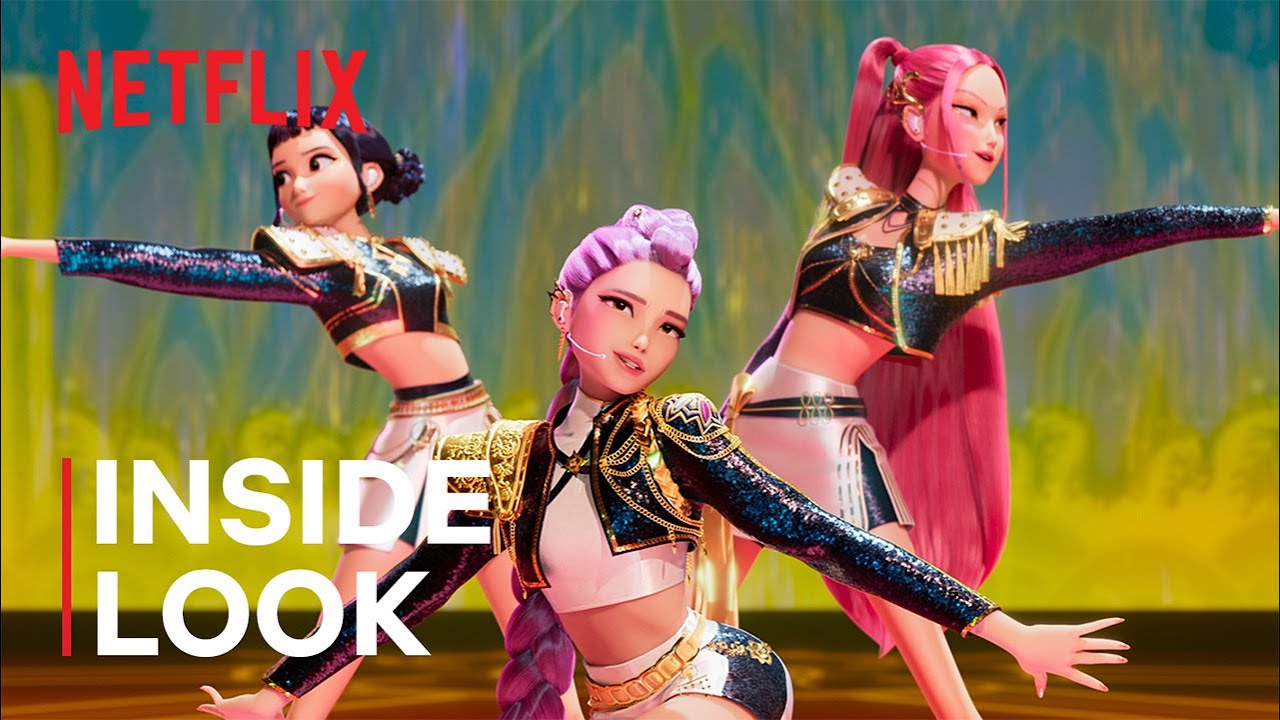
“Golden” did something most movie songs never manage: it left the movie. The breakout track from KPop Demon Hunters climbed real-world charts on its own, and Netflix’s “The Creative Force Behind the Film” featurette is the studio’s attempt to explain how an animated musical about a demon-hunting girl group became a genuine K-pop moment.
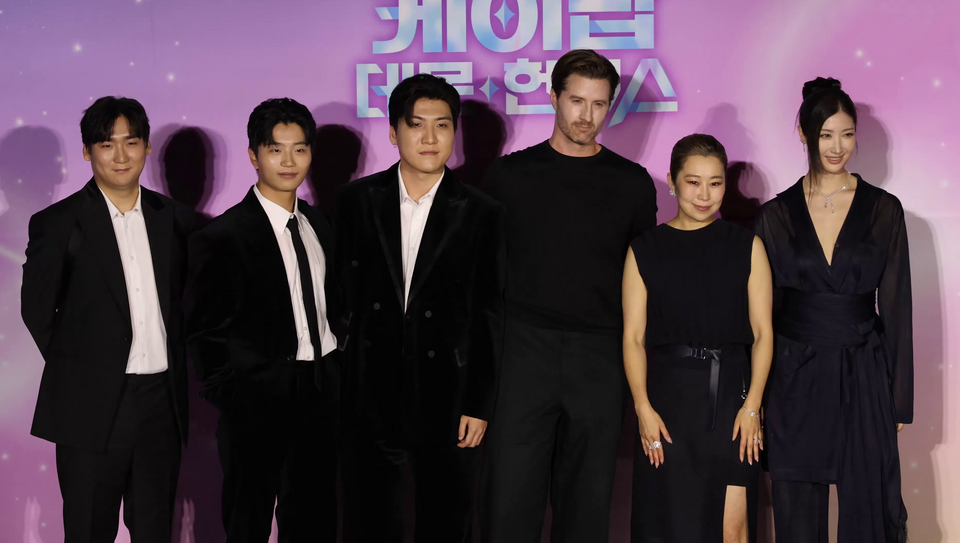
Who actually made it
The featurette centers on the people behind the film rather than the fictional idols on screen. KPop Demon Hunters was directed by Maggie Kang and Chris Appelhans and produced by Sony Pictures Animation for Netflix, releasing in 2025. Kang has talked about wanting the film rooted in a specifically Korean sensibility — the folklore, the humor, the texture of fandom — rather than a generic pop-culture pastiche. That intent shows up in the details: the way the group moves, the shorthand of a comeback stage, the in-jokes that land harder if you already follow K-pop.
What the behind-the-scenes framing makes clear is that the music was never an afterthought bolted onto the animation. It was built like an actual K-pop release, with songwriters and topline vocalists treated as core creative voices rather than background filler.

HUNTR/X and the Saja Boys, explained
The story runs on two fictional groups. HUNTR/X is the girl trio at the center — Rumi, Mira, and Zoey — idols by day and demon hunters by calling, whose performances literally shield their fans. Their foils are the Saja Boys, a rival boy group fronting for the demon world, weaponizing the exact same fan-idol bond for the opposite end.
It is a sharp premise because it takes something true about K-pop — the intensity of the connection between a group and its fandom — and makes it the literal engine of the plot. The rivalry between a girl group and a boy group, the competing comebacks, the fandom as a source of power: none of that needs explaining to anyone who already follows the genre.

Why the soundtrack broke out
The clearest measure of the film’s reach is that its songs traveled past its own audience. “Golden” became the standout, reaching the top of the Billboard Hot 100 — rare territory for a track from an animated feature — while the soundtrack as a whole performed like a real K-pop release rather than a novelty tie-in. Other songs, including the Saja Boys’ “Your Idol” and the bubblegum “Soda Pop,” found their own followings.
Part of the reason is who made the music. The songs were written and performed by a deep bench of K-pop and pop songwriters and vocalists — EJAE, who provides Rumi’s singing, among them — and produced to the standard of a charting single, not a soundtrack cue. If a particular song hooks you, it sits on the major streaming platforms exactly as any other K-pop release would, and it rewards repeat plays away from the film.

What it gets right about K-pop
The featurette spends real time on craft, and it pays off on screen. The choreography is shot like a music video, with the camera respecting the formation changes and the hit on the beat the way a good comeback stage does. The styling, the fan culture, the rhythm of a release cycle — these are rendered with the confidence of people who clearly watch the genre rather than gesture at it.
There is also a styling layer fans have latched onto: HUNTR/X’s clean, skin-first idol look sits squarely in current Korean beauty’s bare-faced lane. If that aesthetic is what pulled you in, our COSRX Snail 96 essence guide breaks down how that lit-from-within base is actually built.
Where to start, and what to play
If you are coming to this cold: see the film first for the story, then treat the soundtrack as its own album — “Golden” is the obvious entry point, with “Your Idol” and “Soda Pop” close behind. From there, the natural next step is the real genre the film clearly studied. If you want a living example of the virtual-meets-pop concept HUNTR/X plays with, our aespa guide is a clean bridge from the fiction to the music it draws on.
Frequently Asked Questions (FAQ)
Is KPop Demon Hunters a real K-pop group?
No. HUNTR/X and the Saja Boys are fictional groups created for the film. Their songs, however, were written and performed by real K-pop and pop songwriters and vocalists, which is why the soundtrack holds up as actual music rather than a movie gimmick.
Where can I see it?
KPop Demon Hunters is a Netflix original, so it streams on Netflix wherever the service is available. The “Creative Force Behind the Film” featurette and other extras are published on Netflix’s official channels.
Did “Golden” really chart?
Yes. “Golden” broke out of the film and onto mainstream charts, reaching the top of the Billboard Hot 100 — an unusual feat for a song from an animated movie — and pulling the wider soundtrack along with it.
Who handles the singing in the film?
The singing voices come from a roster of vocalists, with EJAE providing Rumi’s singing. The credits list the full songwriting and vocal lineup for each track.
Do I need to know K-pop to enjoy it?
No, but it helps. The story works as a standalone fantasy musical, while the fandom references, comeback-stage staging, and genre in-jokes give longtime listeners an extra layer.
The featurette’s real argument is that the film worked because the people who made it took both halves seriously — the animation and the music as equal craft. Whatever this team does next, that is the bar it set.
Source: youtu.be · Netflix — Still Watching Netflix



Leave a Reply