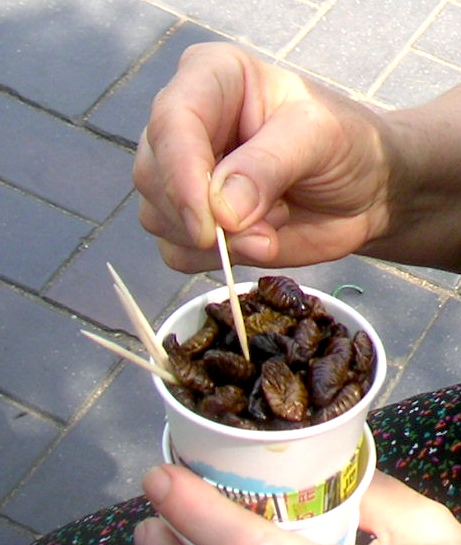
Few Korean snacks divide a room faster than beondegi (번데기, beon-de-gi). The word literally means “pupa,” and that is exactly what it is: boiled and seasoned silkworm pupae (the Bombyx mori moth), scooped steaming into a small paper cup and eaten with a toothpick. For many older Koreans it is the taste of childhood and of school-gate carts; for first-time visitors it is often the bravest bite of a trip. Both reactions are correct — and once you understand where it comes from, it makes a lot more sense.
What beondegi actually is
Beondegi is a byproduct of Korea’s silk industry. After silkworms spin their cocoons and the silk thread is reeled off, the pupae inside remain — protein-dense, abundant, and historically very cheap. Korea has practiced sericulture for thousands of years, but eating the leftover pupae as a everyday snack took off after the Korean War (1950–1953), when the government promoted silk production and affordable protein was scarce. Beondegi became a frugal, nourishing street food, and it stuck.
Nutritionally it earns its reputation: silkworm pupae are roughly 55–60% protein by dry weight and carry unsaturated fats, iron, zinc and B vitamins, giving them a protein profile comparable to beef or fish. It is, in the most literal sense, a sustainable protein that Korea was eating long before the term was fashionable.
What it tastes like (honestly)
Let’s be straight with you, because the smell arrives before the snack does. Freshly boiled beondegi has a warm, earthy, nutty-savory aroma that some describe as shrimp-like or reminiscent of canned corn. The texture is the real experience: a firm, slightly crisp outer shell that gives way to a soft, juicy, almost mushroom-like interior. It is more “savory mouthful” than “crunchy chip.”
The seasoning is gentle — usually salt, sometimes a little soy and a hint of sweetness or chili. The flavor is mild and brothy rather than aggressive; the aroma is the part people brace for, not the taste.
How it’s eaten
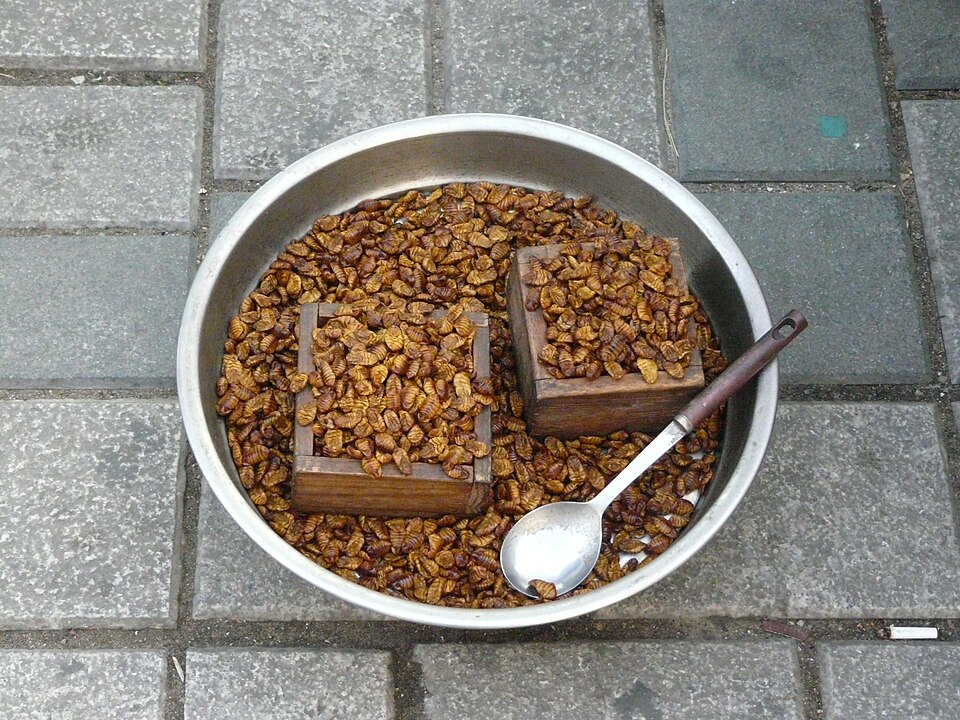
- Street cart, paper cup. The classic format. A vendor ladles hot pupae and a spoonful of their salty cooking liquor into a cup; you spear them with a toothpick and sip the broth at the end.
- Canned. Supermarkets and convenience stores sell pre-cooked beondegi in cans — heat and eat. Be warned: canned versions have a much stronger, more metallic “tire-rubber” smell than fresh-boiled ones. Fresh from a cart is the friendlier introduction.
- Beondegi-tang (번데기탕). A heartier soup version, simmered with garlic, green onion, soy and red pepper, often served as anju — bar food to go with soju or beer.
- At home. Cooks stir-fry the pupae briefly in sesame oil, then simmer with water, garlic, Cheongyang chili and seasoned salt for a few minutes.
A simple home preparation
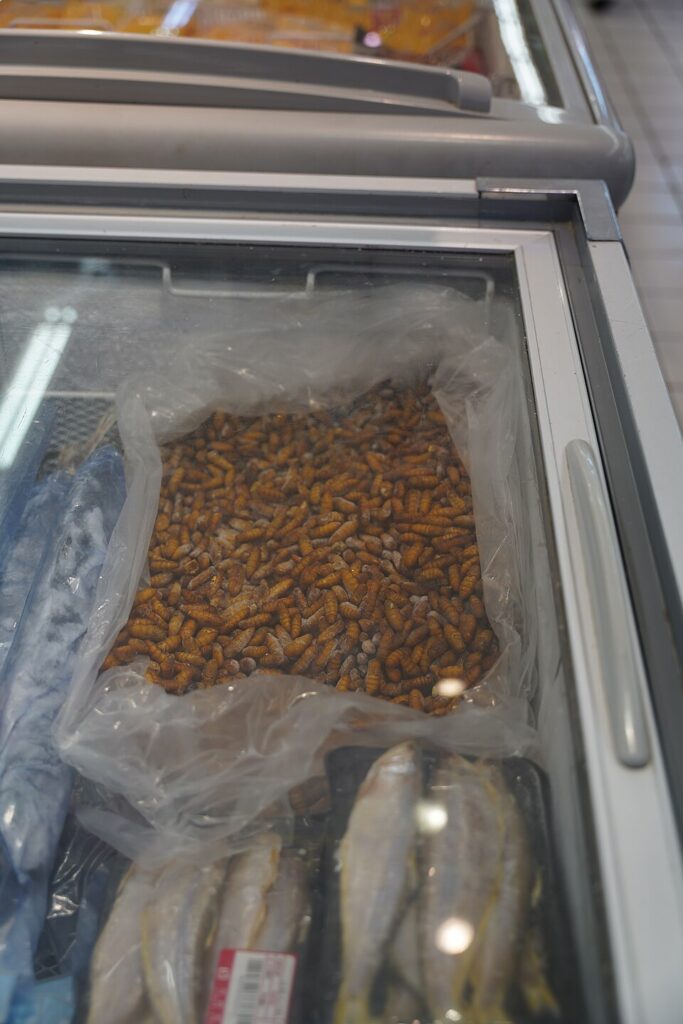
If you find frozen or vacuum-packed silkworm pupae at a Korean grocer, beondegi is genuinely easy to make. The goal is to season and warm them through, not to overcook.
- Rinse the pupae gently in cool water and drain.
- Warm a little sesame oil in a pot and stir-fry the pupae for 1–2 minutes.
- Add water to barely cover, plus minced garlic, a slice of Cheongyang chili, and salt or a splash of soy.
- Simmer 5–7 minutes until fragrant and heated through; do not boil hard for long, or they toughen.
- Serve hot in cups with a little of the broth and toothpicks.
Cultural notes
Beondegi is nostalgia food. It peaked as a children’s street snack in the 1960s–80s and is now most beloved by older generations, though it remains a fixture at markets, festivals and pojangmacha (street tents) nationwide. The canned form even travels in backpacks as a cheap, shelf-stable protein. For a culture that increasingly markets polished K-food abroad, beondegi is a refreshingly unglamorous reminder of leaner decades — and a small dare that locals enjoy offering visitors.
Honest cautions
- The smell is real. The aroma is the biggest hurdle; opening a can in a small room is a commitment. Fresh-cooked from a cart is far milder.
- Allergies. People with shellfish or dust-mite allergies should be cautious — insect proteins can cross-react, and allergic reactions to silkworm pupae are documented. Try a small amount first.
- Buy from busy, reputable vendors. As with any cooked street food, choose stalls with high turnover so the pupae are hot and fresh rather than sitting lukewarm.
- Sodium. The cooking liquor is salty; sip it sparingly.
Approach beondegi the way generations of Koreans have — hot, in a paper cup, with an open mind. You may not order it twice, but you’ll understand a real piece of Korea’s food history in a single bite.




Leave a Reply