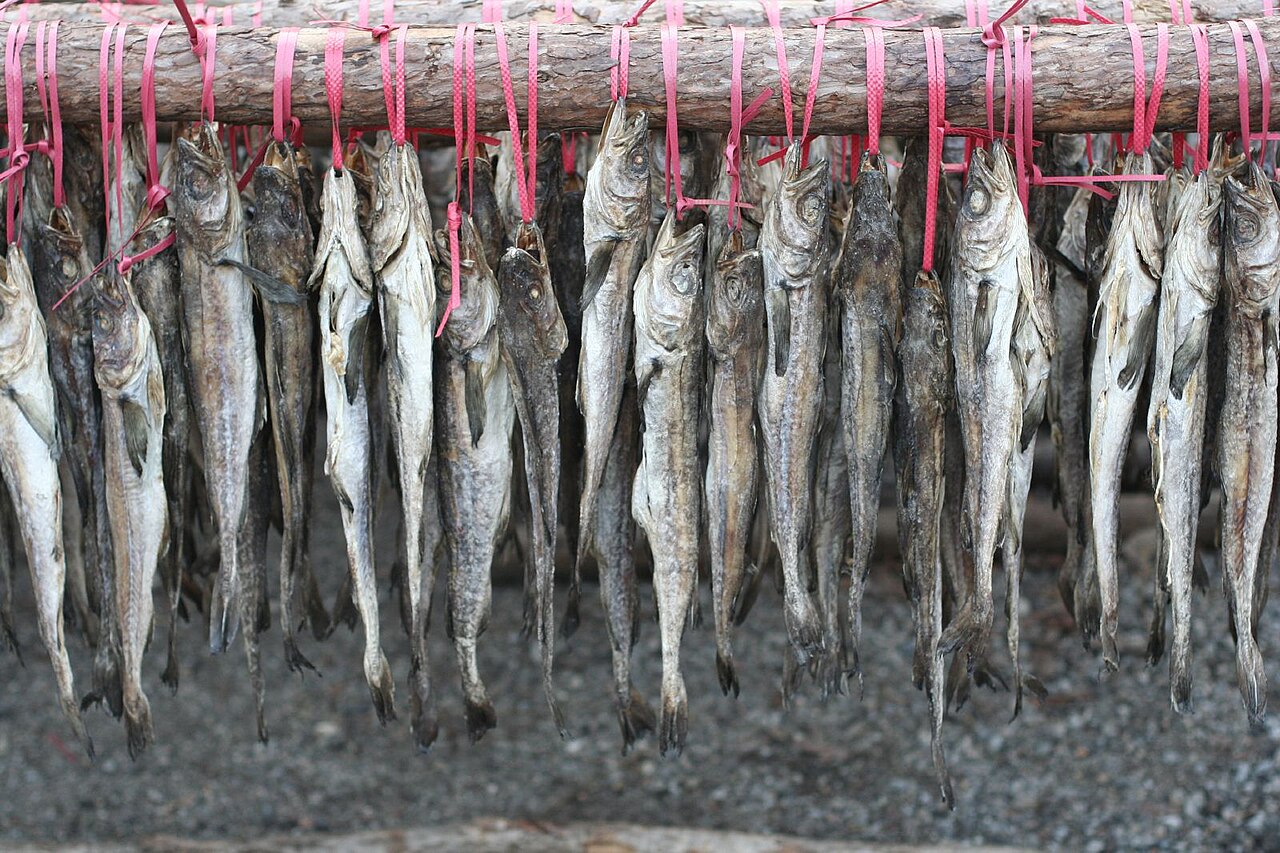
Few Korean ingredients are as quietly miraculous as hwangtae (황태, hwang-tae). It starts as ordinary Alaska pollock and ends, months later, as a pale-gold, almost fluffy slab of dried fish that tears apart like cotton. The transformation happens outdoors, in the dead of winter, with nothing but cold mountain air doing the work. This guide explains what hwangtae actually is, how it earns its flavor, and the three dishes every Korean home cook reaches for when a slab of it is in the pantry.
What Hwangtae Is
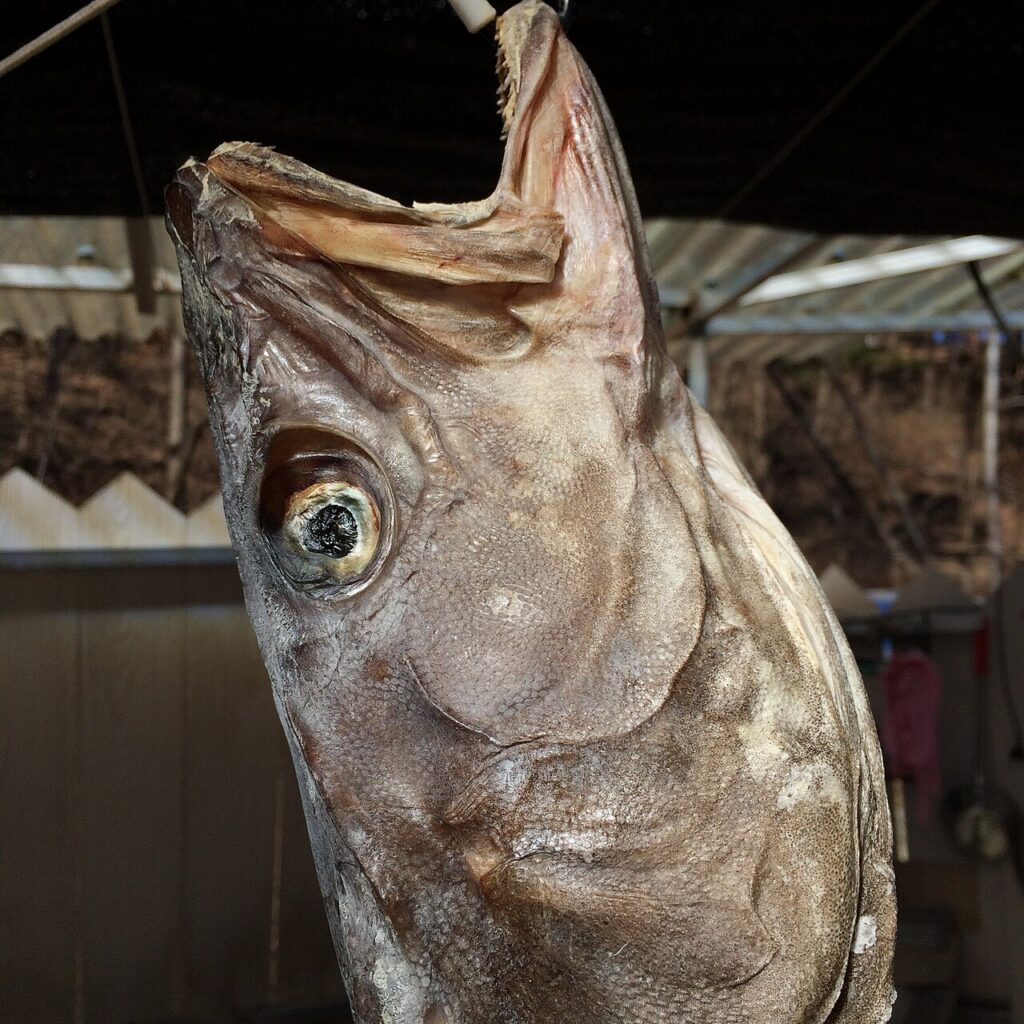
Hwangtae is pollock (명태, myeongtae; Gadus chalcogrammus) that has been naturally freeze-dried over a full winter. Fresh pollock is gutted, often butterflied, and hung on two-story wooden racks called 덕장 (deokjang) set up on open mountainsides. From December to March the fish freezes solid at night, thaws a little by day, and freezes again — over and over, dozens of times.
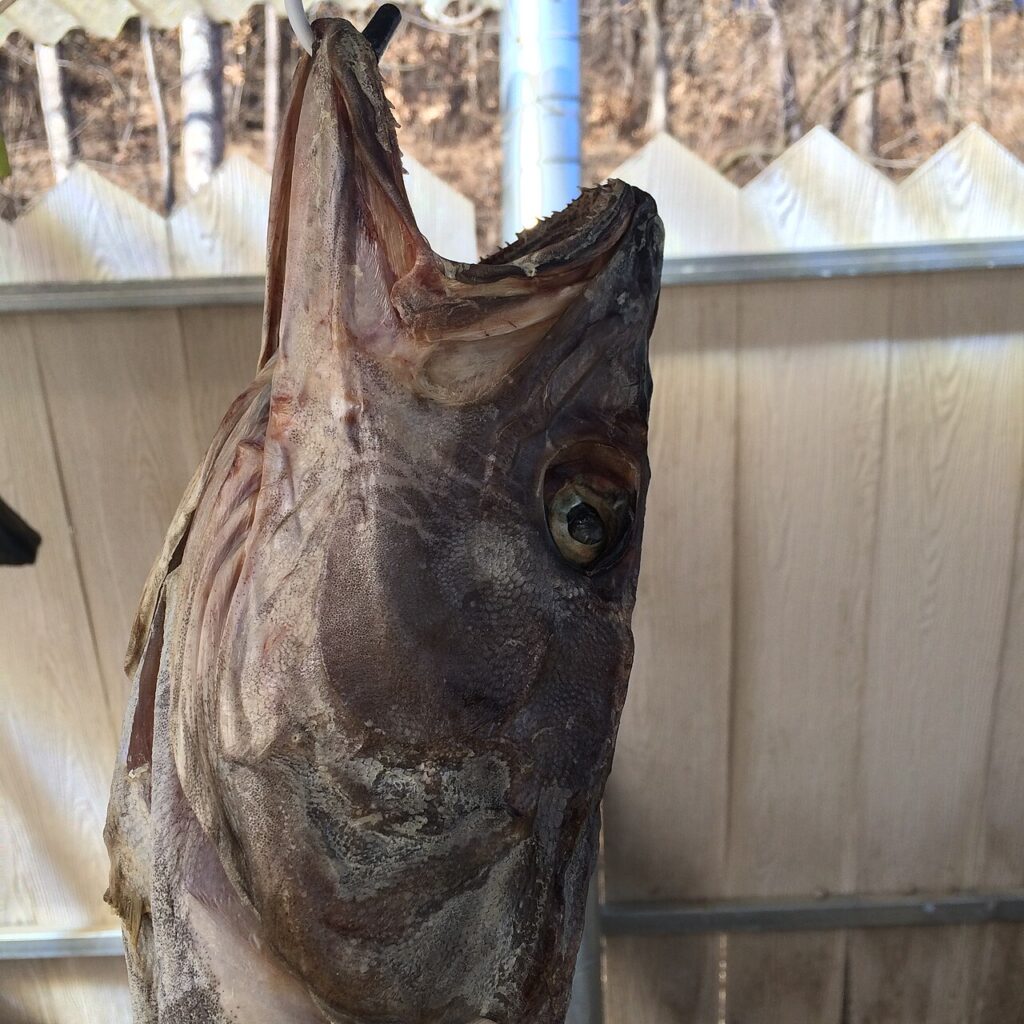
That freeze-thaw cycling is the whole secret. As the flesh freezes, ice crystals expand and push the muscle fibers apart; as it thaws, the structure relaxes. Repeated for months, this tenderizes the meat into a porous, layered texture while concentrating the savory amino acids. The fish slowly turns from gray to a warm yellow — and hwang (황) literally means “yellow.” A top-grade hwangtae takes roughly four months and a lot of luck with the weather to make.
Why Gangwon’s Mountains
The two names you will see on every premium package are Yongdae-ri (용대리, in Inje County) and Daegwallyeong (대관령), both high in Gangwon Province. They share the same recipe for great hwangtae: brutal cold, big swings between day and night temperatures, and a dry, knife-edged wind that locals call kal-baram (“blade wind”). Those conditions deliver the maximum number of clean freeze-thaw cycles without the fish rotting or simply drying out too fast. Pollock cured this way is the most prized — and most expensive — form of dried pollock in Korea.
How It Tastes and Feels
Good hwangtae is mild, deeply savory, and faintly sweet, with none of the harsh fishiness of cheaper dried seafood. Dry, it is light and chewy; once simmered or soaked it swells back up soft and absorbent, drinking in broth and seasoning. The flesh separates into tender, fibrous flakes — the texture is closer to shredded chicken than to a stiff dried fish. This is exactly why it works so well in soups and seasoned side dishes.
The Three Classic Dishes
황태해장국 — Hwangtae haejang-guk (hangover soup)
The most famous use, and the easiest. Torn hwangtae is toasted briefly in sesame oil, then simmered into a milky, comforting broth with radish, garlic, and often egg. It is light, restorative, and traditionally eaten the morning after drinking — Koreans swear by pollock for the liver. Below is a simple home version.
황태구이 — Hwangtae-gui (grilled glazed pollock)
A rehydrated, pressed pollock fillet is brushed with a sweet-and-spicy gochujang glaze and grilled or pan-seared until the edges caramelize. It is a beloved specialty across Gangwon Province and a hearty centerpiece for a rice meal.
황태채무침 — Hwangtae-chae muchim (seasoned shredded pollock)
Pre-shredded hwangtae (sold as 황태채) is lightly moistened and tossed with gochujang, soy, sugar, sesame oil, and sesame seeds into a chewy, spicy-sweet banchan that keeps for days in the fridge.
How to Make Hwangtae Haejang-guk at Home
This is the gateway recipe — minimal ingredients, hard to ruin, and it shows off everything hwangtae does well. See the structured ingredient and step lists below. A few notes: tear the fish into bite-size pieces and pick out any stray bones or fins first; toasting it in sesame oil before adding water is what builds the milky, nutty depth; and salt at the very end, because the dried fish already carries savory minerality.
Buying and Storing
Whole slabs, halved fillets, and bagged shredded 황태채 are all common at Korean groceries. Look for a soft, pale-gold color and a pliable (not bone-dry, not damp) feel. Because it is fully dried, hwangtae stores for months — keep it sealed in a cool, dry place, or freeze it for the long haul to guard against moisture and pantry pests.
Honest Cautions
Hwangtae is dried, fully cooked in your dishes, and free of the raw-shellfish or offal risks that some Korean specialties carry — so it is a low-worry ingredient. The two real things to watch: bones (run your fingers through torn flesh and remove any sharp fins or spines, especially before serving children) and sodium (the fish and the gochujang seasonings are both salty, so taste before you add more salt). Anyone with a fish allergy should obviously steer clear. And while pollock soup is a cherished hangover cure, treat that as comfort and folk tradition, not medicine.




Leave a Reply