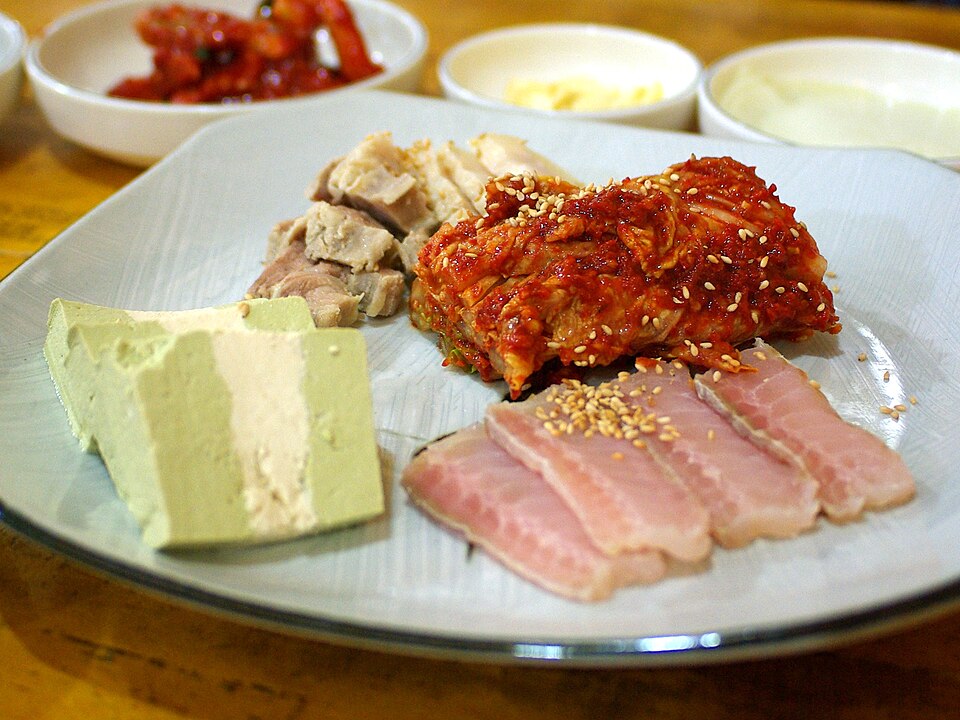
Few dishes test a newcomer like hongeo (홍어, hong-eo), Korea’s fermented raw skate. Open the lid and the smell hits first: a sharp, eye-watering blast of ammonia that more than one writer has compared to a public restroom. Then comes the bite — a cold, gelatinous slice of pale pink fish that fizzes against the tongue and clears the sinuses like wasabi turned up to eleven. It is, by near-universal agreement, an acquired taste. And in the southwestern province of Jeolla, it is also a dish of honor, served at weddings, funerals, and the biggest family gatherings of the year.
What hongeo actually is
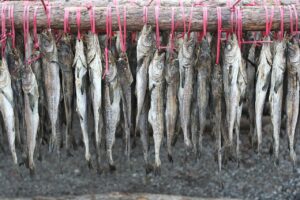
Hongeo is skate — a flat, kite-shaped cartilaginous fish related to the ray — that has been fermented rather than cooked. The chemistry behind the famous stink is unusual and worth knowing. Skates and rays don’t urinate the way most fish do; instead they carry urea and trimethylamine oxide in their flesh and excrete waste through their skin. As the fish ferments, that urea breaks down into ammonia, which both preserves the meat and produces the overpowering aroma. The same process that repels first-timers is exactly what kept the fish edible for weeks in an age before refrigeration.
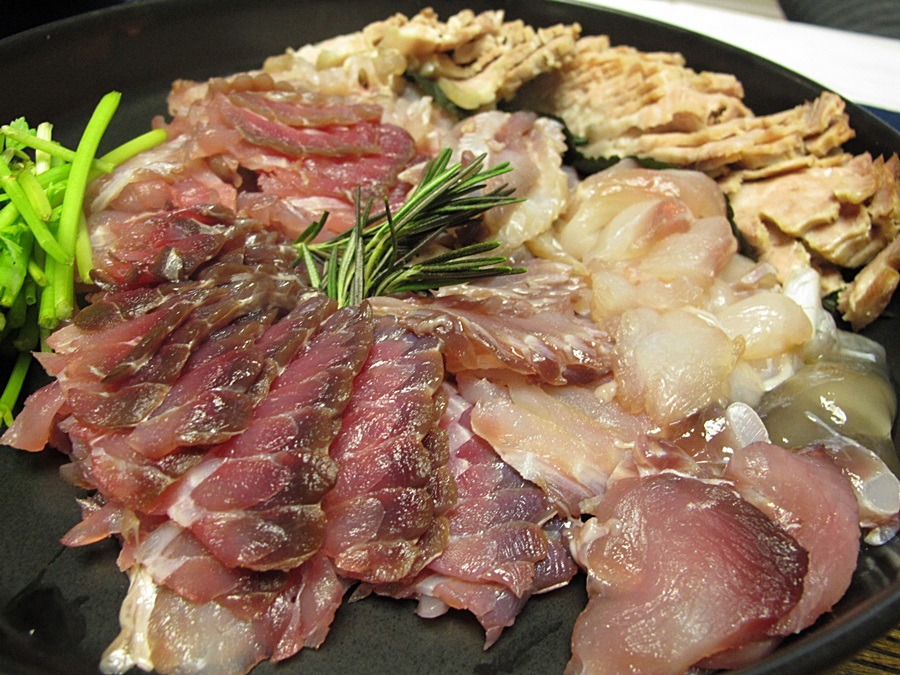
The most common preparation is hongeo-hoe (홍어회), the fermented flesh sliced thin and served raw. You’ll also meet hongeo-jjim (steamed), hongeo-jeon (battered and pan-fried), and hongeo-aetguk, a soup made with the liver and spring greens.
How it tastes and feels
The shock is mostly in the nose, not the flavor. Past the ammonia rush, well-made hongeo is faintly sweet, briny, and clean, with a firm-yet-yielding texture and tiny crunchy bits of cartilage. The ammonia vapor can genuinely sting the inside of your nose and even peel a little skin from the roof of your mouth if the fish is strongly fermented — a sensation locals describe almost fondly. Beginners are always advised to exhale through the mouth, not inhale through the nose, on the first chew.
The samhap ritual
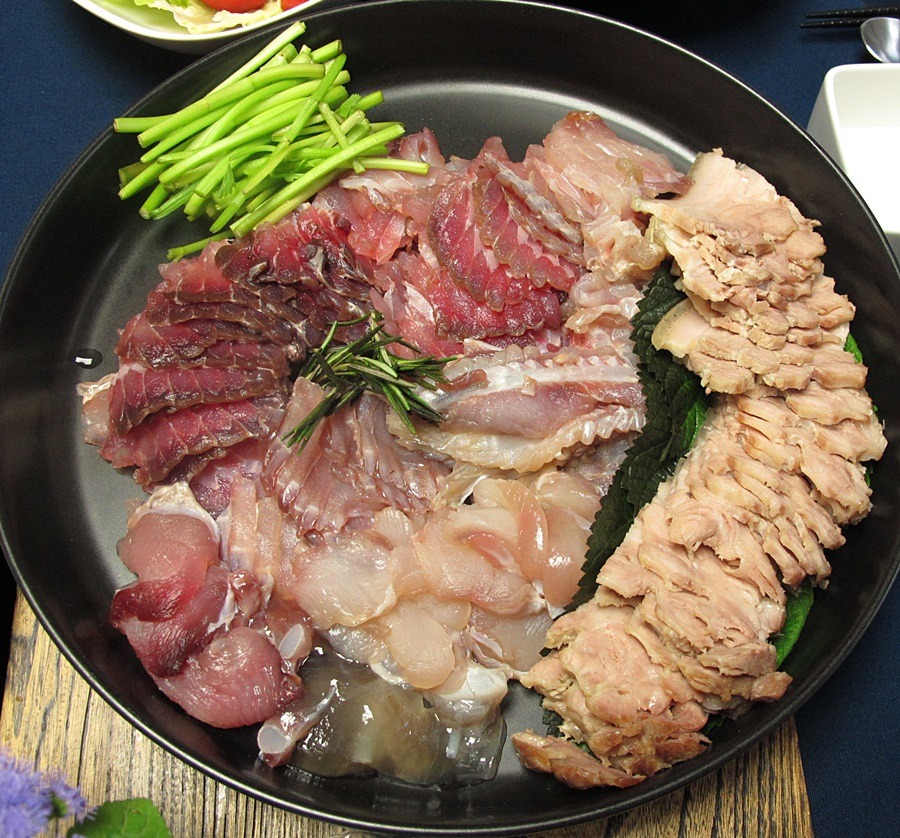
The classic way to eat hongeo is hongeo-samhap (홍어삼합) — the “three-way harmony.” A slice of fermented skate is stacked with a piece of warm boiled pork belly (bossam) and a strip of well-aged sour kimchi, then dipped in salted shrimp sauce (saeujeot) and eaten in one bite. The fatty pork rounds the sharp edges of the fish, the kimchi adds tang and crunch, and the trio is washed down with cloudy rice wine. Hongeo and makgeolli are such a fixed pairing that the combination has its own name, hongtak (홍탁) — and the wine really does take the burn down a notch.
Where it comes from
Hongeo’s heartland is the Jeolla southwest: the island of Heuksando, where the best wild skate is caught, and Yeongsanpo in Naju, the inland river town that became the spiritual home of aged skate. The origin story dates back roughly 600 years to the late Goryeo era, when islanders fleeing pirate raids sailed two weeks to Yeongsanpo. Most of the fish they carried rotted on the journey — but the skate, packed in jars, had fermented instead of spoiled, arriving pungent but perfectly edible. A delicacy was born by accident. Today Mokpo and Yeongsanpo’s “Hongeo Street” remain pilgrimage destinations, and roughly 11,000 tons of hongeo are eaten across Korea every year.
Traditional fermenting was low-tech and clever: skate layered with straw inside earthenware jars in spring, or tucked under the heated ondol floor in winter. Modern producers use temperature-controlled rooms, and the depth of fermentation — from mild to nostril-searing — is dialed in to taste.
Eating it in Seoul
You don’t have to travel south to try it. Seoul has long-running Jeolla-style restaurants — clustered around traditional-market areas and neighborhoods like Jongno, Yeongdeungpo, and the wholesale fish halls of Noryangjin Fish Market — that serve hongeo-hoe and full samhap sets, usually with a kettle of makgeolli. Many are run by Jeolla natives and cater to an older, devoted clientele, so they’re a reliable place for a guided first taste. Ask for a milder ferment if it’s your debut.
Honest cautions
- The smell is real. It permeates clothing and small rooms. Eat it somewhere ventilated, and don’t be the person who opens a vacuum pack on the subway.
- Raw seafood, handle with care. Hongeo is served raw, so freshness and reputable sourcing matter. The high-ammonia environment suppresses many spoilage bacteria, but buy from established restaurants or vendors rather than improvising at home.
- Go easy if you have respiratory or stomach sensitivity. The ammonia vapor is potent; people with asthma or a sensitive stomach should start with a tiny piece, well-buffered by pork and kimchi.
- Mind the source fish. Genuine Heuksando wild skate is expensive and increasingly scarce; much of the market is imported skate from the Atlantic or South America. It’s still good — just know that “domestic Heuksando” carries a premium for a reason.
Should you try it?
Yes — at least once, and ideally in good company who know the ropes. Hongeo isn’t a stunt food to most Koreans; it’s a marker of region, memory, and hospitality. Start with samhap rather than a naked slice, keep the makgeolli close, breathe out, and you may find that what smelled impossible turns out, three bites in, to be strangely irresistible.
Where to eat 홍어/홍어삼합 (hongeo, fermented skate) in Seoul
Hongeo (홍어), fermented skate, is one of Korea’s most polarizing foods — pungent, ammonia-sharp, and beloved in the southern Jeolla region. The classic way to try it is 홍어삼합 (hongeo samhap): a bite of fermented skate, boiled pork, and aged kimchi all at once, usually with rice wine. It’s an acquired taste, but these long-running Seoul specialists are where to take the plunge.
- 순라길 (Sunragil) — Jongno, on Seosunra-gil, the stone-wall lane just west of Jongmyo Shrine (nearest station: Jongno 3-ga, Exits 7–8, about a 7-minute walk). A second-generation hongeo 노포 (old-timer) running since 1966, famous enough to feature in Heo Young-man’s manhwa Sikgaek and his TV food show. Their domestic-skate 홍어삼합 is the dish to order. Closed Sundays, with a mid-afternoon break.
- 신안촌 (Sinanchon) — Gwanghwamun/Gyeongbokgung area, on Sajik-ro 12-gil (nearest station: Gyeongbokgung, Exit 7, about 130m). Open since 1986 and recognized as a Seoul “century-shop” (백년가게), this Jeolla-cuisine spot is run by a mother and daughter from Sinan in South Jeolla and brings ingredients straight from Mokpo for properly traditional 홍어삼합 and 홍어전. Closed Sundays.
- 신설홍어횟집 (Sinseol Hongeo Hoetjip) — Sinseol-dong, on Cheonggyecheon-ro 5-gil (nearest station: Sinseol-dong, Exit 9, about a 5–10 minute walk). A 50-year-plus hongeo institution opened in 1968, known for fermenting domestic skate in-house in traditional onggi crocks with pine needles from Gangjin. Beyond samhap, you can try 홍어무침, 홍어찜, and 홍어탕. Closed Tuesdays.
Hours and closing days at these family-run spots can change without notice, so it’s worth calling ahead or checking the latest listings (DiningCode, Siksin) before you go — especially for the weekend and mid-afternoon break times.




Leave a Reply