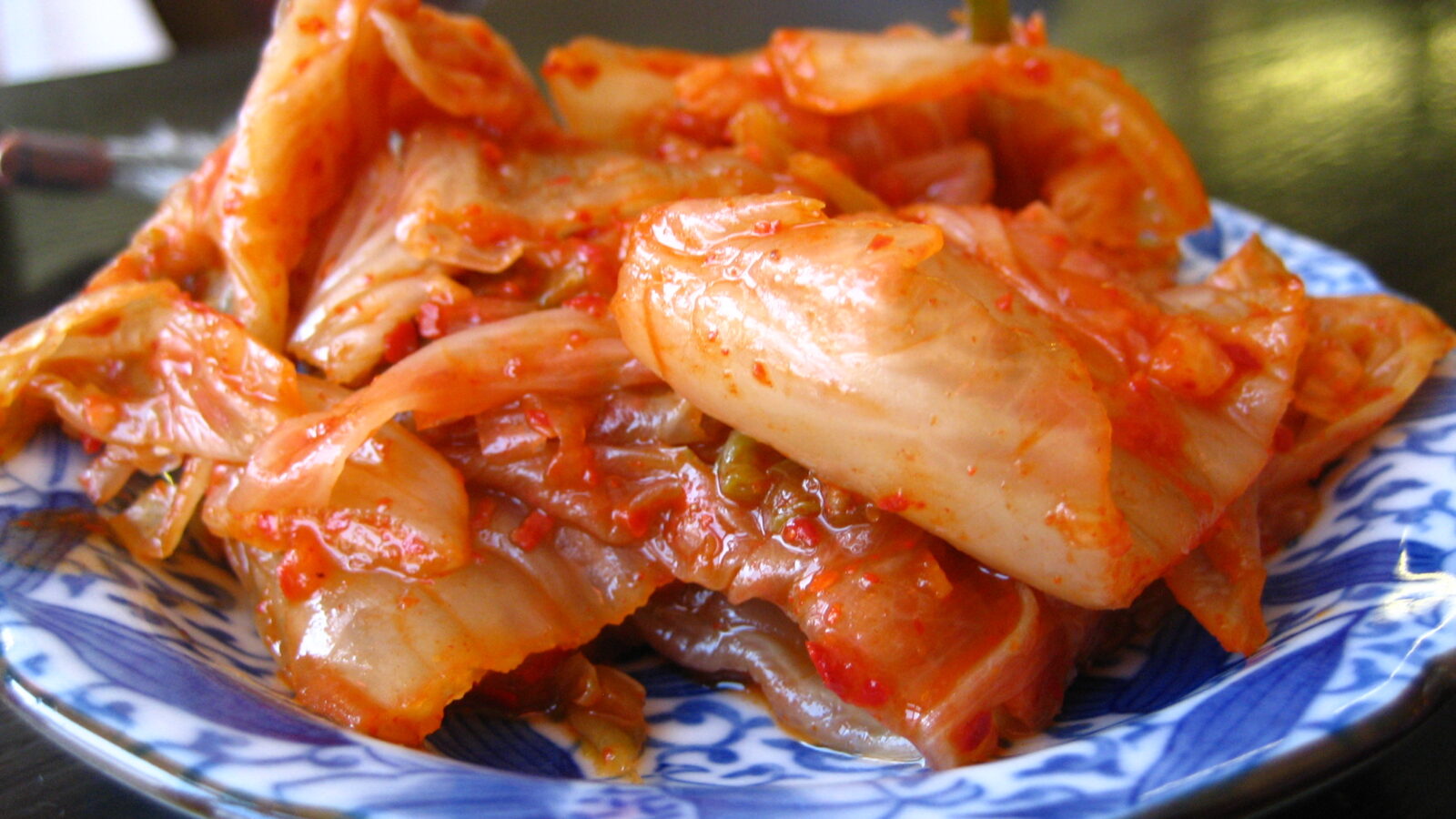
If Korean cooking had a single beating heart, it would be baechu-kimchi (배추김치) — napa-cabbage kimchi, the foundational and most iconic variety, the everyday banchan that shows up at nearly every Korean meal. This is the kimchi: brined napa cabbage (배추) coated leaf-by-leaf with a vivid red seasoning paste, then left to ferment into something alive. Unlike a dish you cook and serve, kimchi keeps changing. It is lightly sweet and crunchy on day one, tangy and gently fizzy after a week or two, and deeply, gloriously sour after months. Making it at home is a ritual as much as a recipe, and once you understand the rhythm of it, you will never buy a jar again.
Ingredients
- 1 large napa cabbage (배추, about 한 포기)
- ~1 cup coarse sea salt (천일염), divided — about 1/2 cup for the brine, 1/2 cup for sprinkling
- ~5 cups water (for brining)
- 1 Tbsp glutinous (sweet) rice flour (찹쌀가루)
- 1/2 cup water or kelp/dasima broth (for the porridge)
- 1 Tbsp sugar (plus a little more for the paste)
- 1/2 cup gochugaru (고춧가루, Korean red pepper flakes)
- 3-4 Tbsp minced garlic (마늘)
- 1 tsp grated ginger (생강)
- 3 Tbsp anchovy fish sauce (멸치액젓)
- 1/4 cup chopped salted shrimp (새우젓)
- 1/2 Korean pear (배), grated — or a little extra sugar
- 1/4 onion (양파), minced
- ~1 lb radish (무), cut into matchsticks (무채)
- 3-4 scallions or Korean chives (쪽파/부추), chopped — minari (미나리) optional
How to Make It
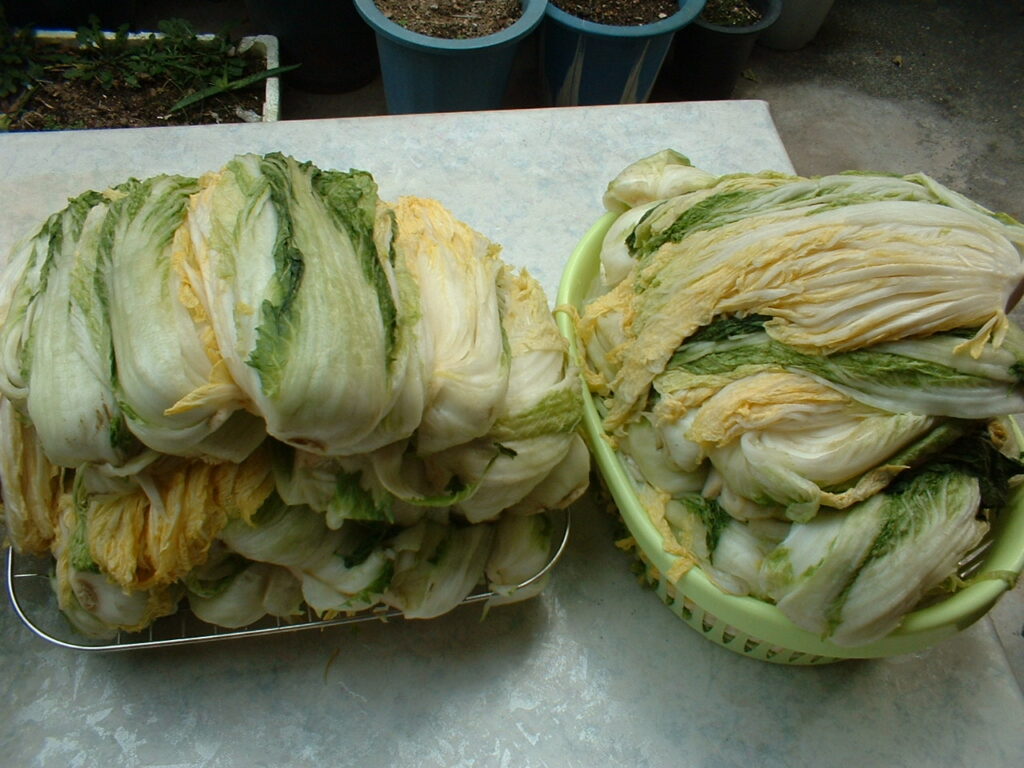
- Brine the cabbage (절이기). Halve or quarter the cabbage lengthwise through the core so the leaves stay attached. Dissolve ~1/2 cup salt in ~5 cups water, dunk each piece, then sprinkle another ~1/2 cup salt directly between the thick white leaf-bases — heavier on the white stems, lighter on the green tips. Brine 6-8 hours, rotating bottom-to-top every 2-3 hours. (Maangchi’s quartered method is faster: about 2 hours, flipping every 30 minutes.) It is done when a white stem bends without snapping. Correct salting is the make-or-break step.
- Rinse and drain. Rinse the cabbage 3 times in cold water to wash off excess salt, then set the pieces cut-side down to drain thoroughly.
- Make the 찹쌀풀 (glutinous-rice porridge). Whisk 1 Tbsp sweet rice flour into 1/2 cup water or kelp broth. Simmer on low ~5-10 minutes, stirring, until thick and translucent; stir in a little sugar and cool completely. This porridge binds the paste to the leaves and feeds fermentation.
- Make the paste (양념). Combine the cooled porridge with the gochugaru, garlic, ginger, anchovy fish sauce, salted shrimp, grated pear (or sugar), and minced onion. Fold in the radish matchsticks (무채), scallions, and any chives or minari until everything is coated red.
- Coat every leaf. Wearing gloves, spread the radish-paste over every single leaf, white parts first. Fold or wrap each piece into a tidy bundle and pack tight, cut-side up, into a clean container.
- Start the fermentation. Leave the sealed container at room temperature for 1-2 days to kick off fermentation — you may see tiny bubbles and smell a pleasant sourness.
- Refrigerate. Move it to the fridge (or a kimchi refrigerator) to slow things down. It is best after about 1-2 weeks and keeps for weeks to months, growing sourer over time.
김장: the communal kimchi-making
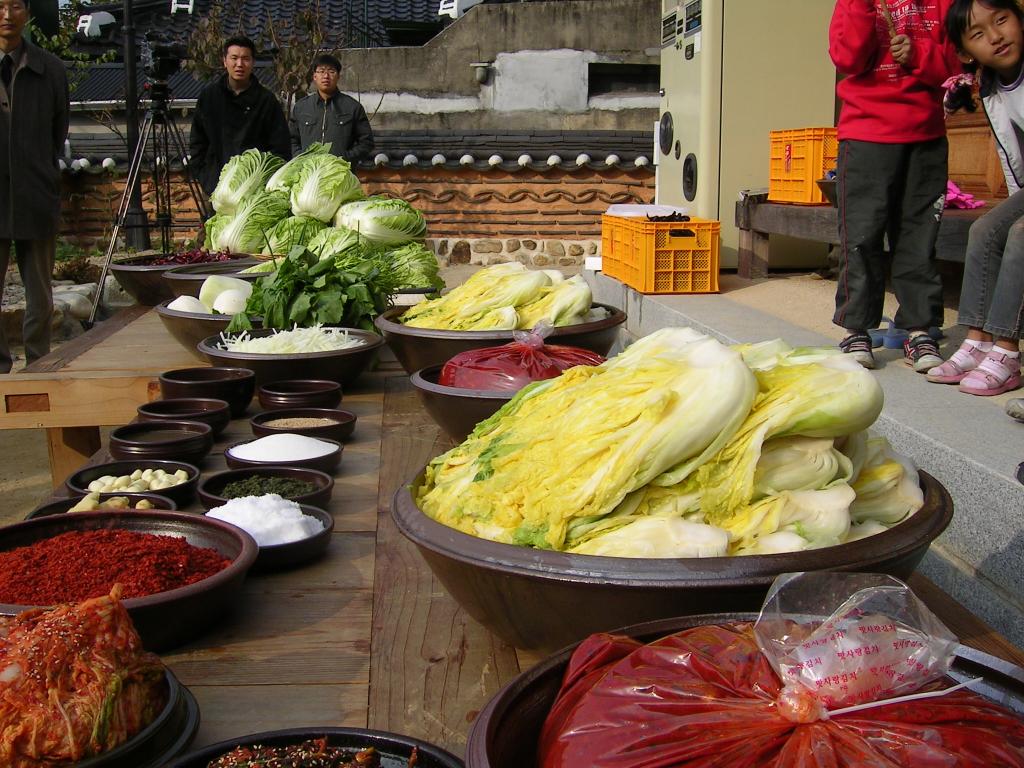
Kimjang (김장) is the communal late-autumn making of large kimchi batches to last the winter — traditionally in November, around the tenth lunar month. Families, relatives, and neighbors gather to salt, wash, and coat dozens of cabbages together, turning a labor-intensive preservation task into a major social and sharing event, with finished batches distributed among households. UNESCO inscribed “Kimjang: Making and Sharing Kimchi in the Republic of Korea” on the Representative List of the Intangible Cultural Heritage of Humanity in December 2013, recognizing it as a marker of Korean identity, cooperation, and generosity. The custom persists even with modern refrigeration — urban families keep jars fermenting on balconies or use dedicated kimchi refrigerators.
Variants worth knowing
- Geotjeori (겉절이): fresh, unfermented quick kimchi seasoned and eaten the same day — crisp, bright, slightly sweet; lovely with noodle soups, grilled pork, or oysters.
- Baek-kimchi (백김치): white, non-spicy kimchi made WITHOUT gochugaru — clean and mild, with pear, jujube, chestnut, and a gentle brine; kind to children and the elderly.
- Mukeunji (묵은지): kimchi deliberately aged from several months to over a year — soft leaves, sharp sourness, concentrated umami; mainly a cooking ingredient.
- Bossam-kimchi (보쌈김치): Gaeseong-style luxury kimchi, pieces wrapped in cabbage leaves with seafood, pear, chestnut, pine nuts, and jujube; eaten fresh as an elegant delicacy.
- Mak-kimchi (막김치): the everyday pre-cut version — same paste, cabbage chopped bite-size, quicker to make and serve.
From fresh to aged — and nothing wasted
Baechu-kimchi travels a flavor arc. Fresh (just-made) is lightly sweet, crunchy, and mild. Ripe (after about 1-2 weeks) is tangy, gently fizzy, and balanced — the prime eating window. 묵은지 mukeunji (aged months to a year or more) turns soft, deeply sour, and intensely umami. Sour aged kimchi can be too tangy for some to eat plain, so it becomes the BASE for cooked dishes where heat mellows the acidity into deep savory depth: kimchi-jjigae (김치찌개, kimchi stew), kimchi-jeon (김치전, kimchi pancake), and kimchi-bokkeumbap (김치볶음밥, kimchi fried rice), plus braised pork with aged kimchi (묵은지 김치찜) and stir-fried kimchi (kimchi-bokkeum). The deeper it ferments, the more cooking value it gains — nothing is ever thrown away.
A vegetarian and temple option
For a vegetarian or vegan version, omit the fish sauce (멸치액젓) and salted shrimp (새우젓) entirely. Replace the seafood umami with Korean soup soy sauce (국간장), salt, and a dried-kelp and shiitake (다시마 + 표고) broth, plus extra fruit (Korean pear, apple) or plum extract for depth — see Maangchi’s chaesik-kimchi (채식김치). Strict Buddhist temple (사찰) kimchi goes further and also omits garlic, onion, and scallion — the pungent “five forbidden vegetables” (오신채) — relying instead on ginger, mustard, and fruit for flavor. The brining, 찹쌀풀 porridge, gochugaru, and 무채 steps all stay the same.
So make a batch, taste it on day one, then taste it again next week and the week after — that is the whole magic of kimchi. And when your jar finally turns properly sour, do not toss it: that aged 묵은지 is the defining ingredient of Korea’s coziest comfort food. Head straight to our kimchi-jjigae (김치찌개) recipe to turn your ripe baechu-kimchi into a bubbling, soul-warming stew.




Leave a Reply