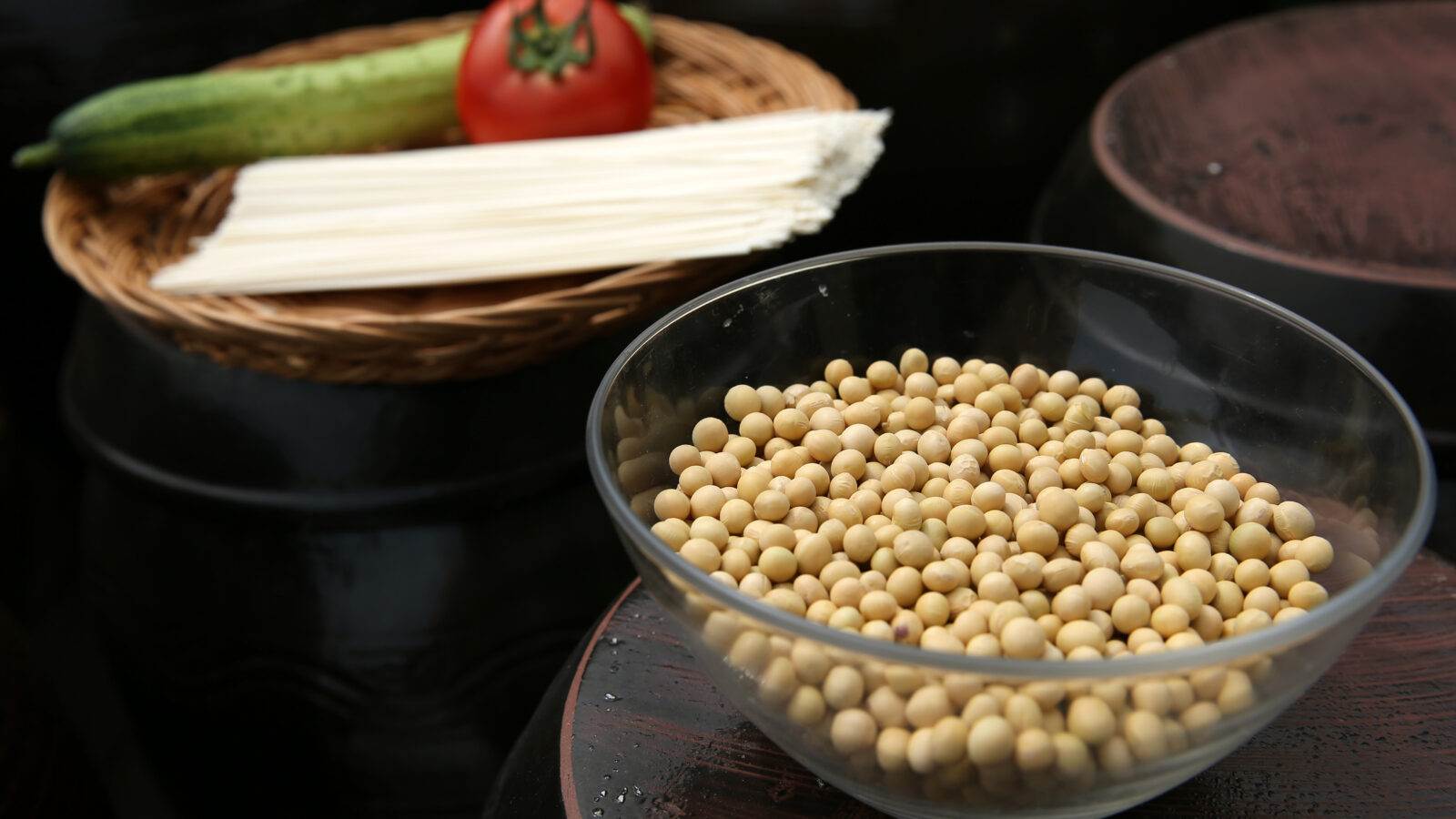
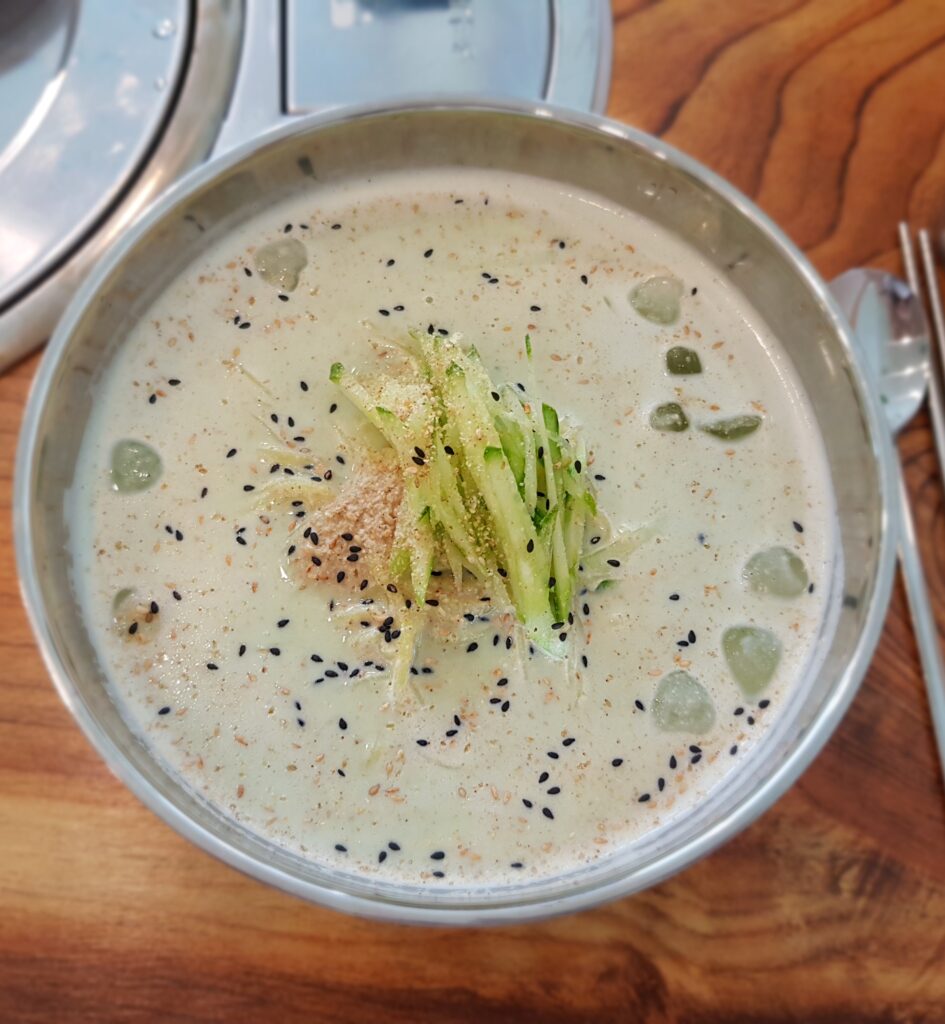
The Korean answer to a heavy, humid August is not the air conditioner — it’s a bowl of kongguksu (콩국수, kong-guksu) so cold the ice cubes haven’t melted yet. The name tells you everything: kong is soybean, guksu is noodles. Cold wheat noodles sit in a chilled, ivory broth of ground boiled soybeans — creamy, faintly sweet, deeply nutty. No stock, no chili, no fermentation. Beans, noodles, and a pinch of salt you add yourself at the very last second.
What Kongguksu Actually Is
It sits in Korea’s cold-noodle family next to the more famous mul-naengmyeon, but the two play opposite registers. Naengmyeon is tangy and icy; kongguksu is rich and mellow. The broth (콩국, kongguk) is really a thick, unsweetened soy milk made from scratch: whole soybeans soaked, briefly boiled, then blended with water — often with toasted sesame or pine nuts thrown in — until silky, strained, chilled, and poured over the noodles.
The catch, and the pleasure, is that the broth arrives almost unseasoned. You salt it yourself at the table, stirring it in to taste. The first sip is gentle and bean-forward; the salt is what turns it savory and suddenly crave-able. It’s naturally vegan, loaded with plant protein, and one of the rare traditional Korean dishes that soothes instead of stings.
Taste and Texture
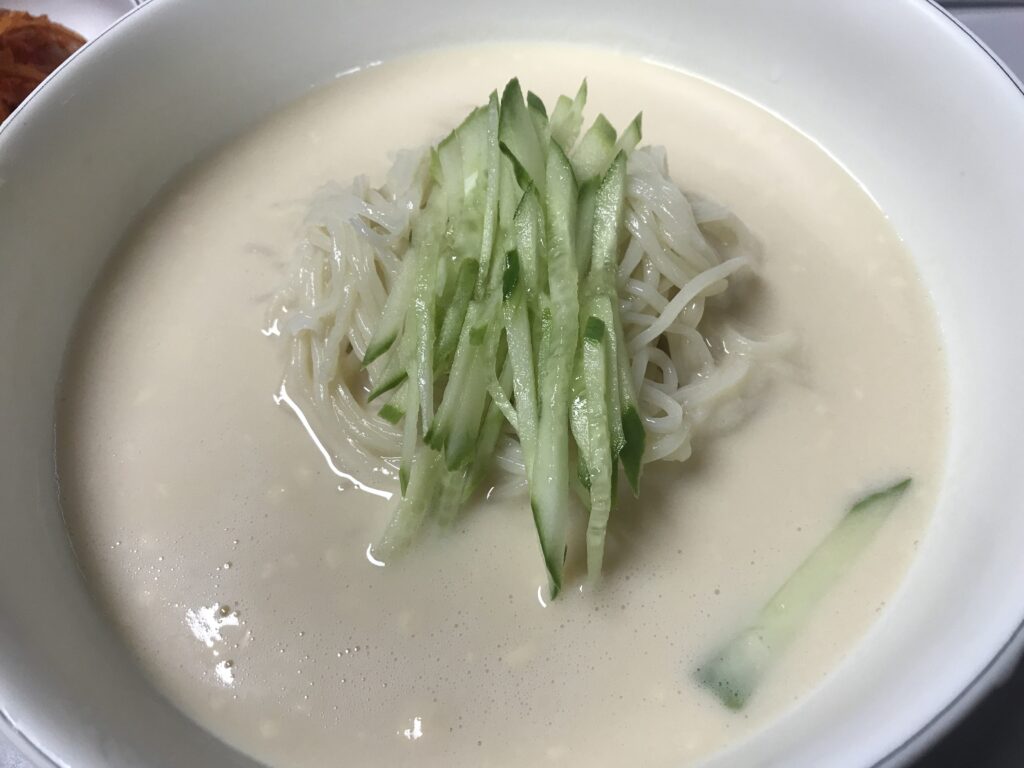
Good kongguksu broth coats a spoon but still drinks easily — somewhere between soy milk and a loose nut butter. The flavor is clean and grassy-sweet from the beans, with the toasty depth of ground sesame underneath. Noodles are usually a medium wheat noodle (somyeon, or the slightly thicker jungmyeon); if you want more chew, go thicker so they don’t disappear into the heavy broth. Cucumber brings crunch and cool; some cooks add tomato or a halved boiled egg for color.
Regional and Seasonal Notes
This is a summer dish, full stop — you’ll see it from roughly June through August, when hot soup is unthinkable. Two regional versions are worth seeking out. In the Jeolla provinces, cooks pour in so many toasted sesame seeds that the broth turns gray and intensely nutty, sometimes called kkaeguksu (sesame noodles). And nationwide you’ll find seoritae (서리태), black soybeans, swapped in for yellow, giving a pale purple-gray broth with a deeper, earthier edge.
How to Make Kongguksu at Home
The bean broth is the only real technique; the rest is assembly. Start the day before, because the soybeans need a long soak.
Ingredients
- 1 cup dried soybeans (yellow, or black seoritae for the dramatic version)
- 4–5 cups cold water for boiling, plus more for blending
- 3 tbsp toasted sesame seeds (use more, up to 1/2 cup, for a Jeolla-style nutty broth)
- 2 tbsp pine nuts (optional, for extra silkiness)
- 2 servings wheat noodles (somyeon or a medium wheat noodle)
- 1/2 cucumber, julienned
- Optional toppings: tomato wedges, halved boiled egg, a few ice cubes
- Sea salt and a little sugar, to serve at the table
Steps
- Soak. Rinse the soybeans and soak them in plenty of cold water for at least 6 hours, ideally overnight. In hot weather, soak them in the refrigerator so they do not sour.
- Boil briefly. Drain, add the beans to a pot with 4–5 cups fresh water, and boil uncovered for 7–8 minutes, until just tender but still slightly firm. Watch closely — soybeans foam up fast and overflow. Do not overcook, or the broth tastes flat.
- Cool and (optionally) peel. Drain, reserving the cooking water, and let the beans cool. Rubbing off the loose skins gives a smoother, sweeter broth, but it is optional.
- Blend. Put the beans in a blender with the sesame seeds, pine nuts, and about 2 cups cold water (some of it the reserved bean water). Blend on high until completely smooth, adding water until it reaches a thick but pourable consistency. For the silkiest result, strain through a fine sieve.
- Chill hard. Refrigerate the broth at least 1–2 hours. It must be genuinely cold; lukewarm kongguksu is unpleasant.
- Cook the noodles. Boil the noodles until just done, then rinse thoroughly under cold running water, rubbing off surface starch, and drain well. Cold, springy noodles are essential.
- Assemble. Nest the noodles in a bowl, pour over the cold broth, and top with julienned cucumber (and tomato or egg if using). Drop in a few ice cubes.
- Season at the table. Serve with salt and a touch of sugar on the side. Add about 1/4 tsp salt per bowl, stir, taste, and adjust. This final step is the whole point — do not pre-salt the broth.
Honest Cautions
Soy is a common allergen, so this one is off-limits for anyone with a soybean allergy, and the optional pine nuts and sesame add tree-nut and seed allergens. Undercooked soybeans are hard to digest and faintly bitter, so don’t skip the boil — but don’t push it too far either. The broth is perishable: keep it refrigerated and use within 4–5 days (it freezes well, too). And resist salting the whole pot ahead of time. Kongguksu lives or dies on that bright, last-second seasoning in the bowl.
Where to eat 콩국수 (kongguksu) in Seoul
Kongguksu (chilled soybean noodle soup) is deceptively plain: cold wheat noodles in a thick, unseasoned broth of ground soybeans, nutty and milky and finished with a pinch of your own salt. It’s almost entirely a warm-season dish, so these spots typically run it from late spring into autumn. A few long-running houses Seoulites trust:
- 진주회관 (Jinju Hoegwan) — Jung-gu Seosomun-dong, in the Sicheong/Mugyo-dong area; nearest stop is City Hall Station (Line 1/2), exit 9. Seoul’s most iconic kongguksu house, open since 1962 and now run by the third generation, with a thick, creamy, unseasoned soybean broth. It is even a designated Seoul Future Heritage site. Honest note: kongguksu is seasonal (roughly March to November), the restaurant is closed Sundays, and expect a 20-40 minute wait at lunch.
- 강산옥 (Gangsanok) — Jung-gu, on Cheonggyecheon-ro near Euljiro 4-ga and Bansan Market; nearest stop is Euljiro 4-ga Station (Line 2/5), exit 4. A genuine old-school 노포 open since 1958 and into its third generation, loved for hand-made soybean dishes (both kongbiji and kongguksu). Honest note: hours are very limited (lunch only, roughly 11:30-14:00), it’s closed Sundays, and kongguksu only appears around June and can sell out early, so go early.
- 진미식당 (Jinmi Sikdang) — Yongsan-gu Munbae-dong, in the Samgakji/Sinyongsan area; nearest stops are Samgakji Station (Line 4/6) and Sinyongsan Station (Line 4). A roughly 48-year-old Yongsan han-sik veteran using house-fermented meju and domestic soybeans, with a famously dense, richly nutty broth and no artificial seasoning. Honest note: it’s easy to miss (long tucked into a building by the station), kongguksu is a warm-season item, and as of mid-2026 the shop was reportedly relocating to a nearby building within the same Munbae-dong neighborhood, so double-check the exact address before you go.
One last reminder: kongguksu is highly seasonal and these are small, traditional kitchens, so hours, prices, and the start and end of kongguksu season all shift. Always confirm current hours and whether kongguksu is on the menu the day you plan to go.

Leave a Reply