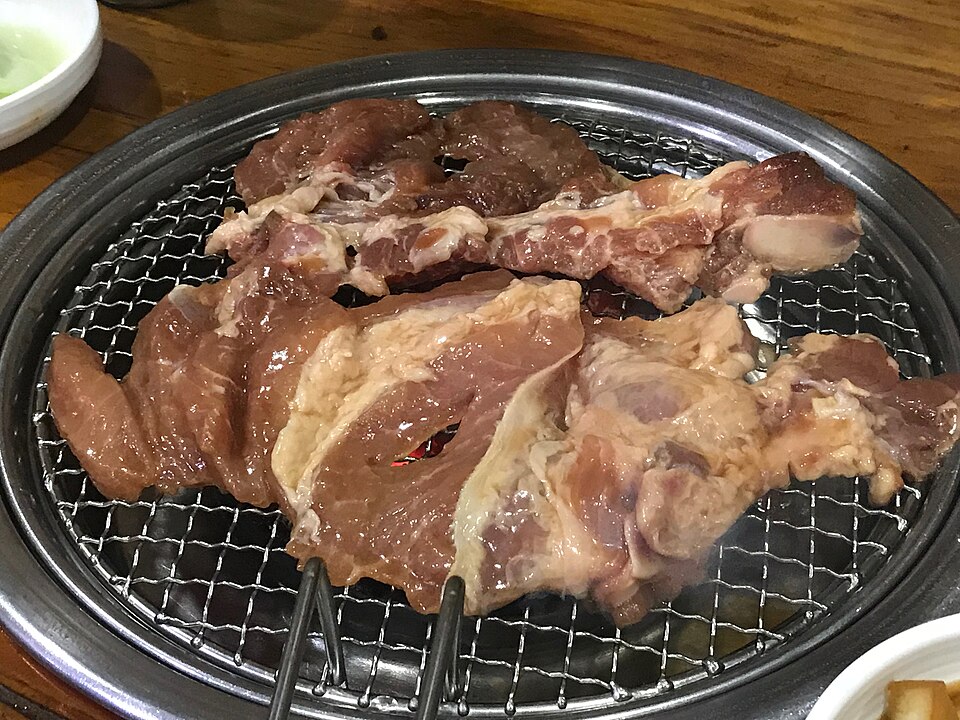
Dwaeji-galbi (돼지갈비, dwaeji-galbi) is one of the great pillars of Korean barbecue: pork ribs steeped in a glossy sweet-savory marinade, then grilled until the edges caramelize and char. “Dwaeji” means pig and “galbi” means rib, so the name is refreshingly literal. Where its more famous cousin, beef so-galbi, is a special-occasion splurge, dwaeji-galbi is the everyday hero of Korean grill houses, the dish friends pile around after work while the meat sizzles on a tabletop grill.
What It Is and How It Tastes
The cut is pork rib, often butterflied off the bone or cut into thin, fanned strips so the marinade penetrates fast. Because pork ribs are small, butchers and restaurants frequently fold in shoulder (pork butt) meat, giving you a mix of tender, fattier rib pieces and meatier bites. The marinade does the heavy lifting. Grated apple or Korean pear, onion, garlic, ginger, and a splash of rice wine tenderize the meat, while soy sauce, sesame oil, and sugar or honey build a deep, lacquered umami sweetness.
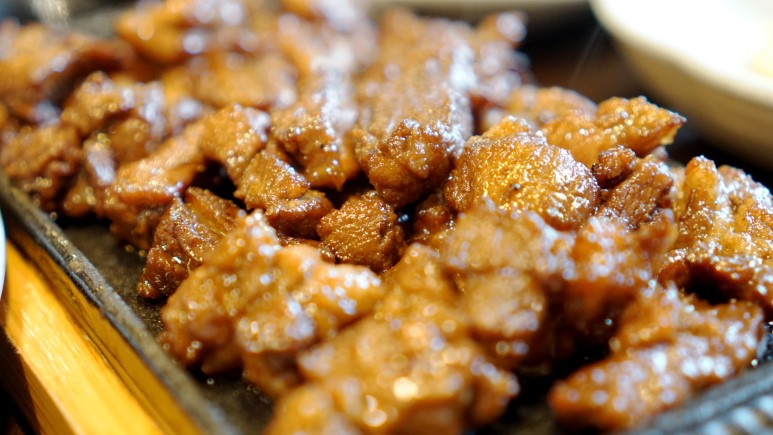
On the grill the sugars catch and blister into smoky-sweet char while the inside stays juicy. The flavor is rounder and more forgiving than beef galbi: sweet up front, savory underneath, with a whisper of garlic and sesame. There are two classic schools. The ganjang (soy) version is the mellow, family-friendly one. The gochujang (chili paste) version, sometimes called maeun (spicy) dwaeji-galbi, adds gochugaru and chili paste for a warming heat that plays beautifully against the sweetness.
How It’s Eaten: Ssam Culture
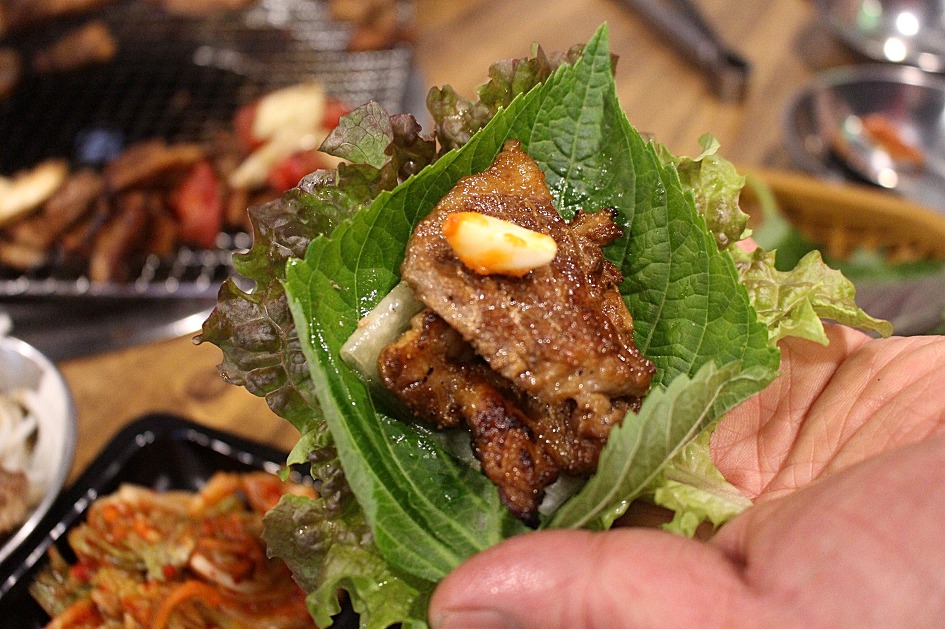
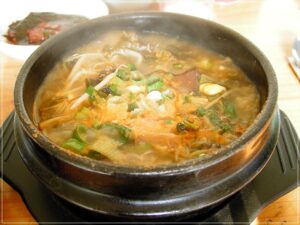
Dwaeji-galbi is rarely eaten alone. The standard ritual is ssam (쌈), the wrap: take a leaf of lettuce or perilla (kkaennip), add a piece of grilled rib, a smear of ssamjang (a savory dip of doenjang and gochujang), a sliver of raw garlic or grilled garlic, maybe a ribbon of green onion salad, then fold it into a one-bite parcel. Rice, kimchi, and a bubbling pot of doenjang-jjigae usually round out the table.
Mapo and the Charcoal Tradition
If dwaeji-galbi has a spiritual home, it is the Mapo (마포) district of Seoul, long famous for charcoal-grilled pork ribs. Mapo-style places lean into sutbul (charcoal) cooking, which lends a smokier, more aromatic char than a gas burner. The neighborhood’s grill-house alleys helped turn dwaeji-galbi into an affordable, sociable staple in the decades after the Korean War, and “Mapo galbi” still signals charcoal-grilled, no-frills, deeply satisfying pork ribs across Korea.
Recipe: Sweet-Savory Dwaeji-galbi
This is the approachable ganjang-based version; to make it spicy, swap in the gochujang option noted below. The single most important step is time: marinate at least 8 hours, ideally overnight.
Ingredients
- 2 kg (about 4.5 lb) pork ribs, membrane removed (or a rib-and-shoulder mix)
- 1/2 cup soy sauce
- 1/2 cup water
- 1/4 cup rice wine (mirin or cheongju)
- 4 tbsp honey (or rice syrup)
- 2 tbsp brown sugar
- 2 tbsp toasted sesame oil
- 3 tbsp minced garlic
- 1 tbsp grated ginger
- 1/2 onion, grated
- 1/2 apple (or Korean pear), grated
- 1/2 tsp black pepper
- 1 tbsp toasted sesame seeds
- For spicy version: add 2/3 cup gochujang + 1-3 tsp gochugaru, reduce soy sauce to 1/4 cup
- To serve: lettuce, perilla leaves, ssamjang, sliced garlic, steamed rice, kimchi
Steps
- If the ribs are thick, butterfly or score the meat so it lies flatter and absorbs marinade. Rinse and pat dry.
- Whisk all marinade ingredients (soy sauce through sesame seeds) into a smooth sauce. Add gochujang and gochugaru here for the spicy version.
- Coat the ribs thoroughly, massaging the marinade in. Cover and refrigerate at least 8 hours, preferably 24-48 hours, turning once.
- For tender results, slow-bake covered at 160C (325F) for 1.5-2 hours first, then finish on the grill or under a broiler. For thin restaurant-style strips, skip this and grill directly.
- Grill over charcoal or high heat, basting with leftover marinade, until lightly charred and caramelized, about 4-5 minutes per side. Watch closely; the sugars burn fast.
- Rest briefly, scatter with sesame seeds, and serve hot with lettuce, ssamjang, garlic, and rice for ssam.
Where to Eat It in Seoul
For the real charcoal experience, head to Mapo-dong, where decades-old grill houses still serve sutbul dwaeji-galbi to lunchtime office crowds and late-night drinkers alike. The Gongdeok and Mapo station areas are dense with rib specialists, and chains tracing their roots to Mapo can be found throughout the city.
Honest Cautions
Pork must be cooked through; unlike beef, there is no medium-rare here. Grill until the meat is opaque with no pink at the center, and avoid cross-contaminating fresh vegetables with the raw-meat platter or tongs. The marinade is sugar-rich, so it scorches quickly over high heat. Keep a cooler zone on the grill, flip often, and trim heavy char before eating. Finally, the soy-and-honey base is high in sodium and sugar, so balance the meal with plenty of fresh ssam vegetables and rice.
Where to eat 돼지갈비 (dwaeji-galbi) in Seoul
Dwaeji-galbi (돼지갈비) is marinated pork rib grilled over fire until the sweet-savory soy-and-garlic glaze caramelizes at the edges. Seoul has two great traditions to chase: the smoky old-school Mapo pork-BBQ lineage and the charcoal Taereung wang-galbi belt. Here are a few verified-open places to dig into the classic red marinade.
- 마포진짜원조최대포집 본점 (Mapo Jinjja Wonjo Choedaepo (Bonjeom)) — Gongdeok, Mapo-gu, about a 5-min walk from Gongdeok Station (Lines 5/6/Gyeongui-Jungang/Airport). This is the literal origin point of the “Mapo dwaeji-galbi” name: open since 1956 and designated a Seoul Future Heritage (서울미래유산) site, it’s credited with commercializing Mapo pork BBQ and still serves the classic red-marinade galbi (plus salt-grilled pork and pork skin). Honest note: it’s a worn, no-frills 노포 with a smoky atmosphere, so come for the heritage rather than the comfort.
- 원조 조박집 본관 (Wonjo Jobakjip (Bongwan)) — Tojeong-ro, Mapo-gu, roughly 3 min from Mapo Station (Line 5, Exit 1). Operating since 1979, it was featured on the TV show Sumeomisikhoe (수요미식회) and is a repeat Blue Ribbon winner, widely cited among Seoul’s top pork-galbi houses; the signature is grilled domestic 돼지갈비 served with cold dongchimi noodles (동치미 국수). Honest note: it’s very popular and often crowded with waits, and prices run higher than a typical neighborhood spot. Closed Sundays.
- 참만나 (Chammanna) — Gongneung-dong, Nowon-gu, right by Taereung-ipgu Station (Lines 6/7, Exit 6). A well-loved standard-bearer of the historic Taereung/Gongneung galbi tradition that still operates inside Seoul, specializing in charcoal-grilled marinated 돼지왕갈비 (with rib-wrap rice sets and spicy braised galbi too). Honest note: it’s a beloved neighborhood favorite rather than a nationally iconic destination, so come for the local Taereung-style wang-galbi experience.
Find them on the map: 마포진짜원조최대포집 본점 · 원조 조박집 본관 · 참만나
Hours and closing days shift, so double-check on the day before you head out, and expect waits at the most famous spots during peak meal times.


Leave a Reply