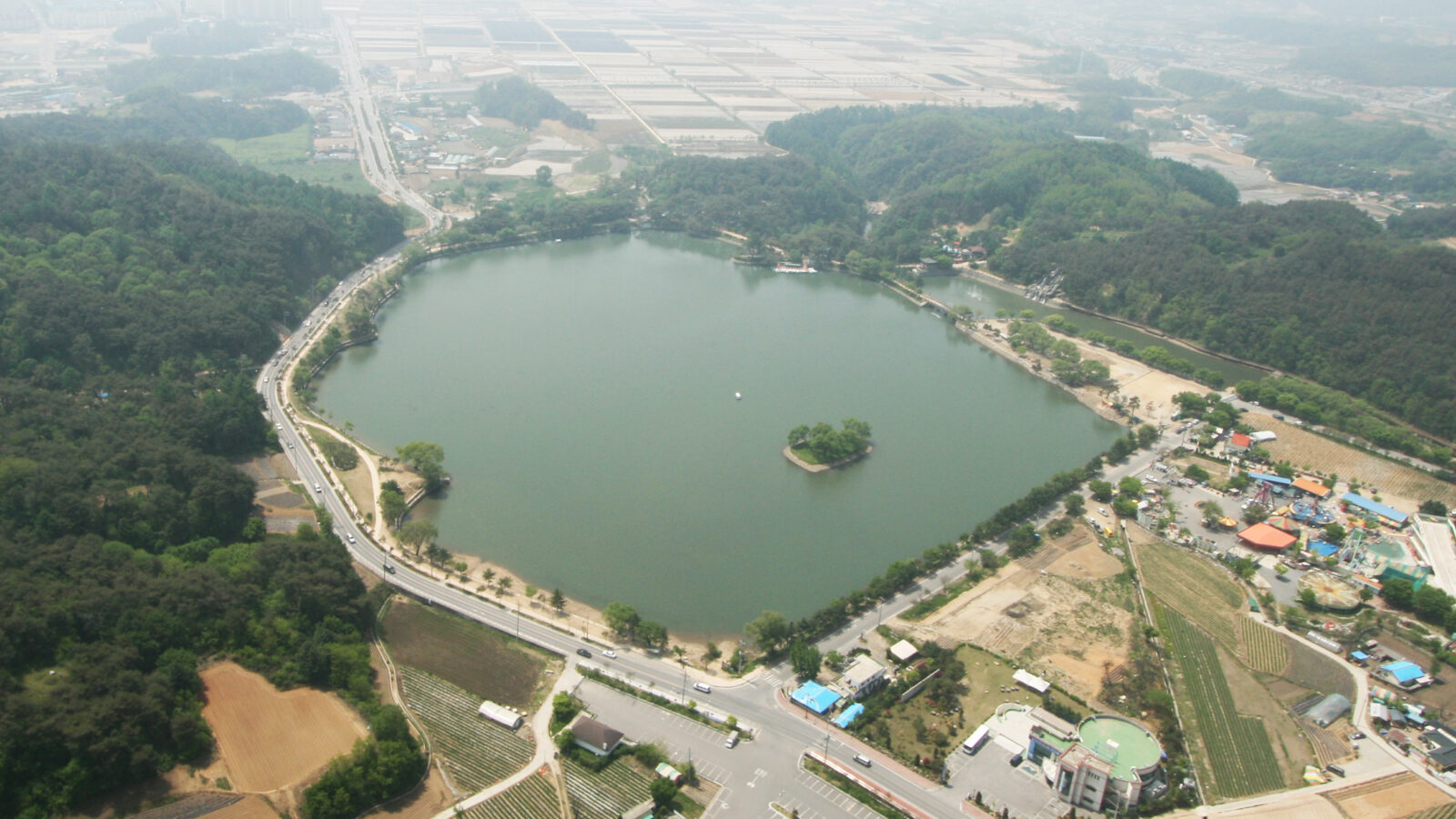
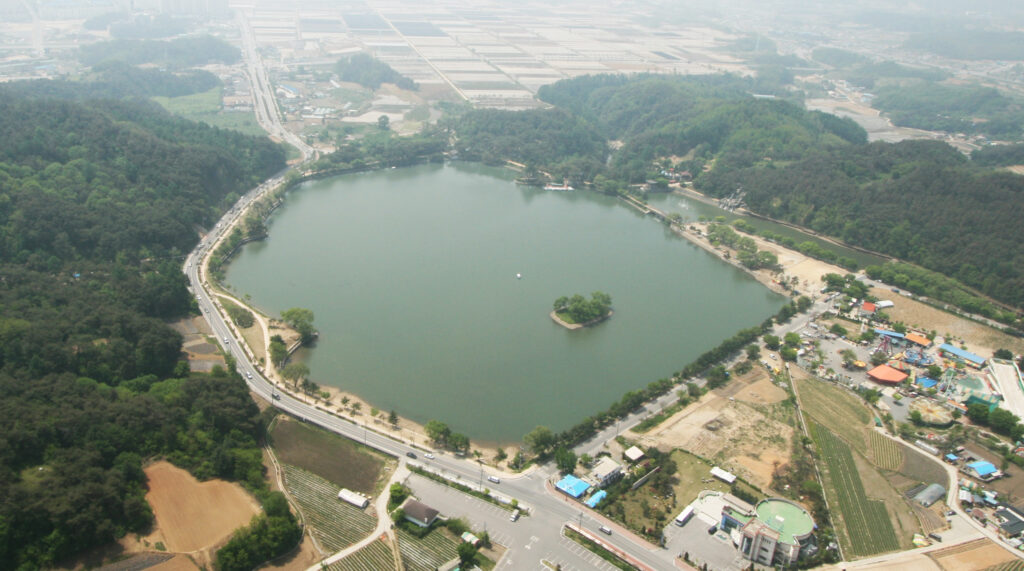
Farmers have been drawing water from Uirimji Reservoir (의림지, Uirimji) for roughly fifteen centuries. That alone is reason enough to come. Built during the Three Kingdoms period in what is now Jecheon (제천), North Chungcheong Province, it is widely regarded as the oldest surviving man-made lake in Korea, and it once ranked beside Byeokgolje in Gimje and Susanje in Miryang as one of the three great irrigation reservoirs of the ancient kingdoms. A local legend pins its name on the musician Ureuk, said to have been active under Silla’s King Jinheung in the 6th century, which is why you will also see the lake called Ureukho (우륵호).
What survives is a designated scenic and historic site about 1.8 km around, ringed by old pines and willows, a few traditional pavilions, and a tall man-made waterfall. Calling it ancient engineering undersells how ordinary and lived-in it feels — this is still a working reservoir that happens to be one of Jecheon’s defining views.
The Genie, Make a Wish connection
Netflix’s 2025 fantasy romance Genie, Make a Wish (다 이루어질지니), with Kim Woo-bin (김우빈) and Bae Suzy (배수지), shot part of its production in Jecheon, and the city leaned into it: stills from the drama turned up at a “Drama Filming Photo Zone” during a 2025 Jecheon expo. K-drama location guides point to Uirimji Lake and the neighboring Uirimji Park Land amusement park as part of the show’s Jecheon footprint, bundled together as its “romantic Jecheon” backdrop.
One honest caveat. The Uirimji area is credibly listed as a filming location, but public sources don’t say which scene was shot at the lake versus next door at the amusement park. Come for an “in the neighborhood” pilgrimage, not a frame-by-frame match, and you won’t be disappointed.
How to get there
From Seoul, Jecheon is about two hours by rail; KTX and regular trains run to Jecheon Station from Cheongnyangni Station. Once you arrive, the reservoir is a 10–15 minute taxi ride from the station, or a local city bus to the Uirimji stop. Drivers will find parking near the entrance. The lake sits just north of the city center, so it slots easily into a day with other Jecheon stops.
Practical notes
The park is open public ground, so the lakeside walk, the pine embankment, and the pavilions are free and open throughout the day — no booking, no ticket for a simple stroll. The catch is the neighbors: Uirimji Park Land’s rides run on their own hours and prices, so check those separately, especially off-season when things scale back. The water reads differently with each season — cherry blossom in spring, dense green in summer, autumn foliage burning on the surface, a frozen edge in winter — and the lakeside wind turns sharp in the cold months, so bring layers.
Where to eat nearby
Cafes and restaurants run along the water’s edge. Cafe Ddeul 906, a garden cafe near the lake, is the one for a slow coffee with a view; if you’d rather grab something quick and reliable, there’s an Ediya Coffee branch looking out over the reservoir. For an actual meal, walk or drive a few minutes to a local Jecheon spot — the area is known for medicinal-herb cuisine and hearty country cooking, which is more interesting than the cafes if you’re hungry.
Whether you’re tracing the K-drama trail or just here for one of Korea’s most storied bodies of water, give Uirimji an unhurried afternoon. Walk the pine embankment, let the old pavilions mirror themselves in the water, and remember that farmers have leaned on this lake for fifteen hundred years.
On the map: 의림지



Leave a Reply