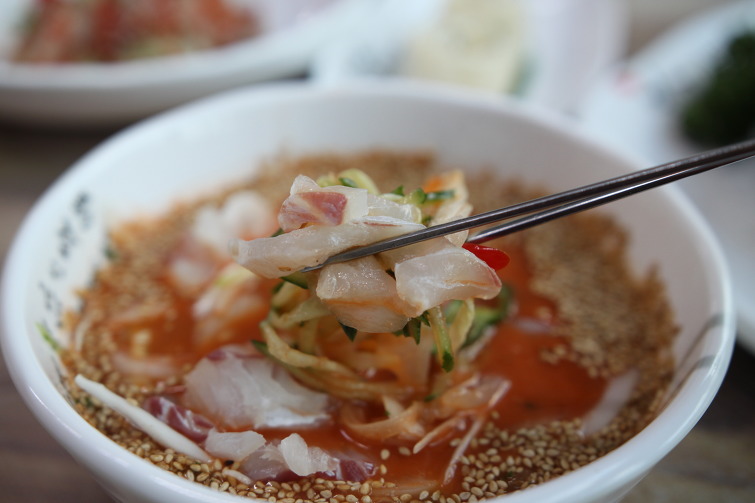
When a Korean summer turns thick and humid, the cure that coastal cooks reach for is not a hot stew but its opposite: a bowl so cold it makes your teeth ache. Mulhoe (물회) — literally “water” (mul) plus “raw fish” (hoe) — is a chilled raw-fish-and-vegetable dish served swimming in an icy, sweet-spicy-tangy broth. It is part sashimi, part cold soup, part salad, and it tastes like nothing else in the Korean repertoire.
What mulhoe actually is
At its core, mulhoe is thin slices of very fresh raw fish or seafood tossed with crisp, julienned vegetables and a punchy gochujang (red chili paste) seasoning, then flooded with cold water or chilled broth and finished with crushed ice. The result sits somewhere between a beverage and a meal — you drink the spicy-sour liquid as much as you eat the fish.
It is firmly a fisherman’s food in origin. Commercial mulhoe is generally traced to Pohang, on Korea’s southeastern coast, where it was being sold by the early 1960s as a fast, no-heat meal for crews who had fish but no time. From there it spread to Jeju Island, Sokcho, and the east-coast ports, each with its own signature.
Taste and texture
The flavor target is simple to say and hard to forget: freezing cold, spicy, sour, and a little sweet, all at once. The broth bites with chili and vinegar, the sugar rounds it off, and the ice keeps everything bracingly sharp. Against that liquid you get contrasts — the silky give of raw fish, the snap of cucumber and Korean pear, the crunch of radish, and the herbal lift of perilla leaves. It is refreshing in the literal sense: people eat it specifically to feel cooled down.
Regional styles
- Pohang / Guryongpo style: generous broth, often soured and slightly sweet, traditionally finished by stirring cooked rice or thin noodles (somyeon) into the leftover liquid.
- Jeju style — jari mulhoe (자리물회): made with tiny whole damselfish, bones and all, and seasoned famously with soybean paste (doenjang) and tangy citrus rather than only gochujang.
- Seafood versions:
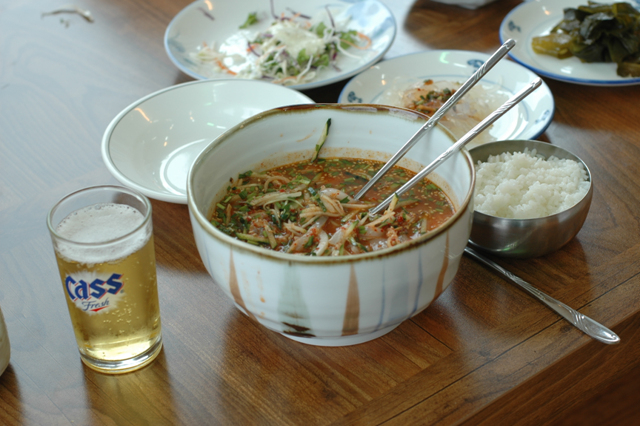
Hanchi mulhoe — sliced raw squid and vegetables in cold, spicy soup, a Jeju-style seafood version (Photo: SEEMS to be / Flickr, CC BY-SA 3.0 via Wikimedia Commons) squid (hanchi), abalone (jeonbok-mulhoe), sea squirt, whelks, and mixed seafood all appear, especially on Jeju and the east coast.
How it’s eaten
Mulhoe is a share-and-serve dish. A big chilled bowl arrives at the table; everyone ladles some into their own bowl. The classic move is to eat the fish and vegetables first, then add a small portion of cooked somyeon noodles or a scoop of rice to the spicy broth to finish — a built-in second course that soaks up every drop.
How to make mulhoe at home
The dish needs no cooking, which makes the quality of the fish do all the work. Buy sashimi-grade fish from a fishmonger you trust and keep everything ice-cold.
Ingredients
- 250–300 g sashimi-grade white fish (flounder, sea bream/snapper) or squid, sliced thin
- 1/2 cucumber, julienned
- 1/4 Korean pear (or other firm pear), julienned
- A handful of julienned Korean radish (mu)
- 4–5 perilla leaves, shredded; a little carrot and onion
- 2 tbsp gochujang, 1 tbsp gochugaru (chili flakes)
- 2 tbsp vinegar, 1 tbsp sugar (or honey), 1 tbsp soy sauce
- 1 tbsp minced garlic, 1 tsp sesame oil, toasted sesame seeds
- 1.5–2 cups very cold water (or chilled stock); plenty of ice cubes
- To finish: cooked somyeon noodles or steamed rice
Steps
- Make the sauce: mix gochujang, gochugaru, vinegar, sugar, soy sauce, garlic and sesame oil into a thick paste. Chill it.
- Slice the fish thin and keep it on ice until the last moment.
- In a large chilled bowl, combine the fish, cucumber, pear, radish, carrot, onion and perilla with the sauce; toss gently to coat.
- Pour in the cold water/stock to loosen it into a soupy consistency. Taste and balance spicy/sour/sweet.
- Add a big handful of ice. Top with sesame seeds.
- Eat the fish and vegetables, then drop in noodles or rice to finish the broth.
Honest cautions
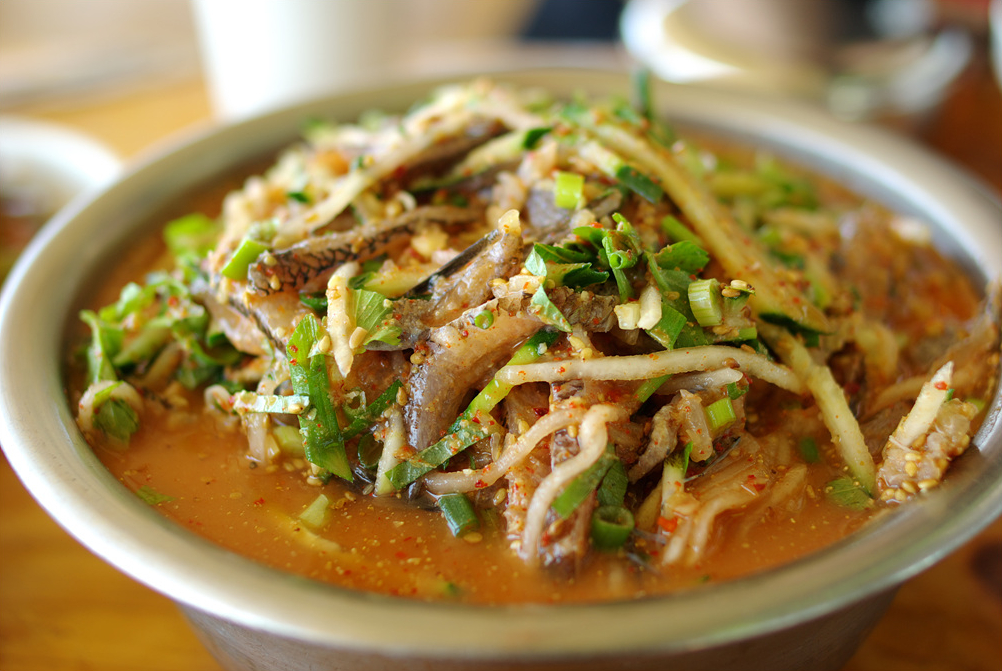
Because the fish is raw, freshness and safety are non-negotiable. Use only sashimi-grade seafood, keep it below 4°C throughout, and slice it just before serving. Marine fish can carry Anisakis parasites; commercial sashimi-grade fish is typically frozen to kill them, and home cooks should consider previously-frozen fish or a reputable supplier. Pregnant people, young children, the elderly, and anyone immunocompromised should be cautious with raw seafood. If the fish smells sour, ammoniated, or “off,” do not use it — fresh mulhoe should smell clean and of the sea.
Done right, mulhoe is one of the great pleasures of a Korean summer: a cold, electric, slurpable bowl that wakes you up and cools you down in the same spoonful.



Leave a Reply