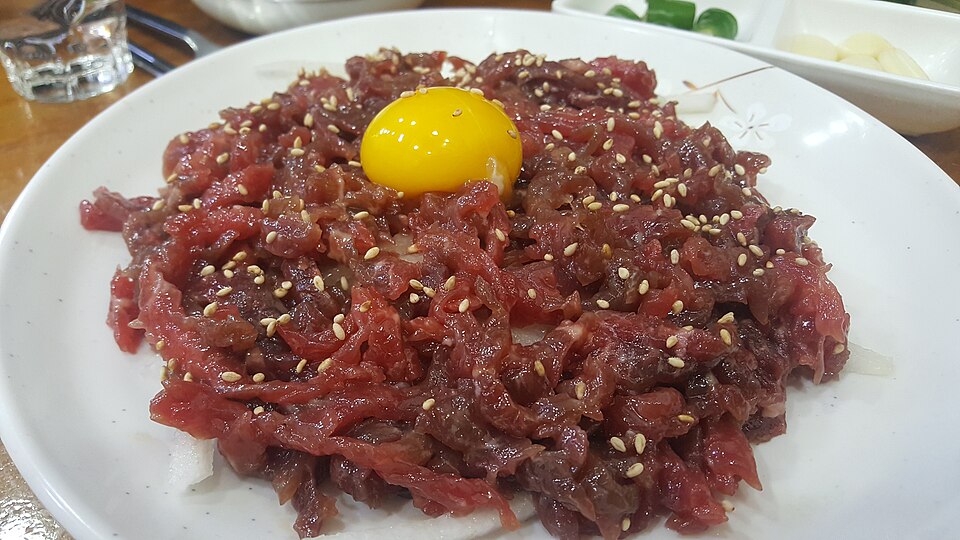
Yukhoe (육회, yukhoe) is Korea’s answer to steak tartare: lean raw beef cut into glossy ribbons, seasoned with sesame oil, garlic and a whisper of sweetness, then piled high and topped with a golden egg yolk. The name is simple math — yuk (육) means meat and hoe (회) means raw, sliced food. Unlike French tartare, which is minced, yukhoe is julienned into thin strands, giving it a slippery, almost noodle-like bite that is the whole point of the dish.
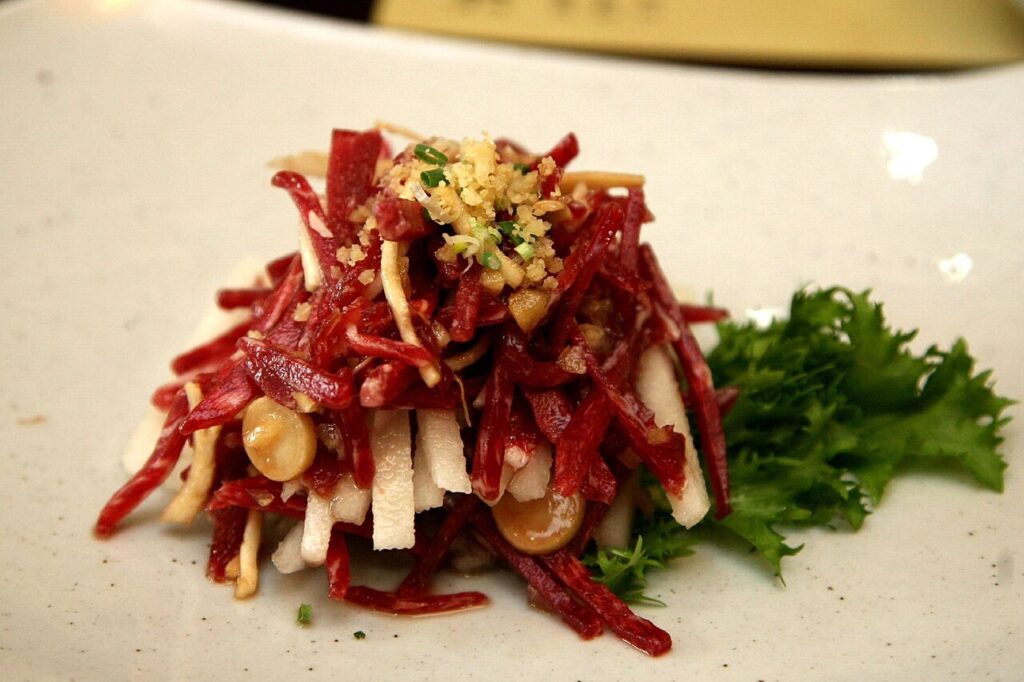
What it tastes like
The first surprise is how clean it tastes. Good yukhoe is not gamey or metallic — the beef is so fresh and lean that it reads as buttery and faintly sweet. Sesame oil brings a toasted, nutty richness; garlic and a little sugar and soy round it into Korea’s signature sweet-savory balance, which is what sets it apart from European tartare. The texture is silky and cool, with gentle resistance. When you break the raw egg yolk and toss everything together, the beef turns lush and coats each strand in a custardy sheen.
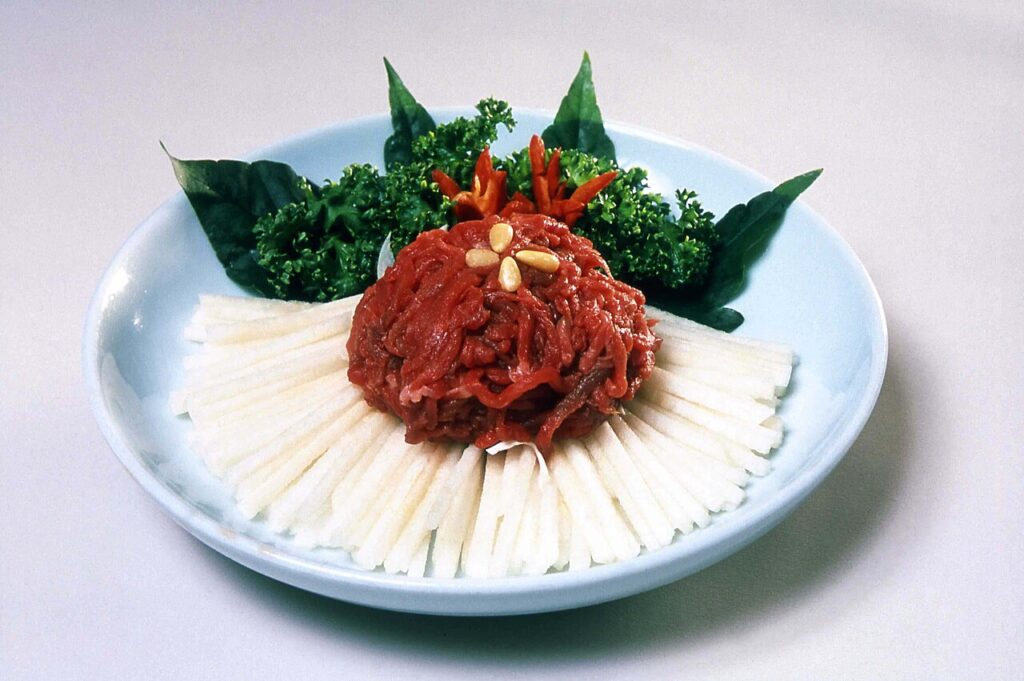
Then there is the Korean pear (배, bae). The crisp, watery, floral-sweet julienne tucked under or beside the beef is not garnish — it cuts the richness and adds a refreshing crunch that keeps the dish from feeling heavy. Pine nuts add a soft pop, and a few add toasted sesame seeds.
How it is eaten
At the table you mix the yolk through the beef, then eat it as is, often wrapping bites in lettuce or scooping it with the pear. It is classic anju — food made for drinking — and pairs beautifully with cold soju or makgeolli. A popular Gwangjang Market variant is yukhoe-nakji-tangtangi, where the beef shares the plate with chopped live octopus for an extra layer of chew.
Seoul eats: Gwangjang Market’s 육회골목
If you want the definitive yukhoe experience, go to Gwangjang Market (광장시장) in central Seoul. Hidden among the food stalls is a narrow Yukhoe Alley (육회골목) lined with specialist shops — names like Buchon Yukhoe and Changsin Yukhoe have served raw beef here for generations. Plates arrive fast, cold and mounded, and it is some of the best value in the city. Beyond the market, upscale Korean restaurants across Seoul plate refined versions, but the market alley is the one regulars send you to.
A note on history
Raw beef has deep roots in Korean cuisine, where hoe covers everything from raw fish to raw meat. One origin story ties yukhoe to Jinju, where it was said to be eaten quickly during the Imjin War of 1592. On Jeju Island you will even find malgogi-yukhoe, a horse-meat version reflecting the island’s Mongolian-influenced past.
Honest cautions before you make it
This is a raw-meat dish, so freshness and handling are everything.
- Buy the freshest possible beef and tell your butcher it will be eaten raw. Use a very lean cut — eye of round (우둔/홍두깨살) is traditional. In Korea, restaurants display Beef Traceability numbers; at home, buy from a trusted source.
- Keep it ice-cold. Chill the beef (and your knife and board) thoroughly; partially freezing the beef for 20–30 minutes makes it far easier to slice thin and keeps bacteria in check.
- Use it the day you buy it. Do not store seasoned yukhoe; mix and serve immediately.
- Raw beef carries risk from bacteria such as E. coli. Pregnant people, young children, the elderly and anyone immunocompromised should avoid raw meat dishes entirely. If you are at all unsure of your beef’s freshness, do not eat it raw.
- Egg yolk: use a very fresh, clean-shelled egg; pasteurized eggs are the safest choice for a raw yolk.
How to make yukhoe at home
This comes together in minutes once the beef is sliced. The key is cold beef, a sharp knife, and tasting as you season.
Ingredients
- 200 g very fresh lean beef (eye of round / top round), trimmed of all fat and sinew
- 1 tbsp sesame oil
- 1 tbsp soy sauce (or 2 tsp soy + a pinch of salt to taste)
- 1–2 tsp sugar (or honey)
- 1 clove garlic, finely grated
- 1 tsp minced green onion (optional)
- 1/4 tsp black pepper
- 1/4 Korean pear (or Asian/Nashi pear), peeled and julienned
- 1 fresh egg yolk
- 1 tsp toasted sesame seeds, plus pine nuts to garnish
Steps
- Wrap the beef and freeze 20–30 minutes until firm but not solid — this makes thin slicing easy.
- With a sharp knife, slice the beef thinly against the grain, then cut into matchstick-thin strips. Keep it cold.
- In a chilled bowl, whisk sesame oil, soy sauce, sugar, grated garlic, green onion and pepper.
- Add the beef and gently toss to coat. Taste and adjust salt/sugar. Do this just before serving.
- Line a plate with the julienned Korean pear. Mound the seasoned beef on top.
- Make a small well and slide the egg yolk into the center. Scatter sesame seeds and pine nuts.
- Serve immediately. Break the yolk and toss at the table, eating the beef with the crisp pear.
Yukhoe is proof that the simplest Korean dishes can be the most luxurious — a few cold ingredients, tossed with care, that taste like silk. Treat the beef with respect, keep everything icy and fresh, and you have a restaurant-grade plate in under fifteen minutes.
Where to eat 육회 (yukhoe, beef tartare) in Seoul
육회 (yukhoe) is Korea’s silky hand-cut raw beef, seasoned with sesame oil, garlic, and a touch of sweetness, usually crowned with a golden egg yolk and slivers of Korean pear. The whole city of Seoul orbits one spot for it: the famous yukhoe alley (육회골목) inside Gwangjang Market in Jongno-gu, near Jongno 5-ga Station (Line 1, Exit 8). Three legendary houses sit almost shoulder to shoulder there.
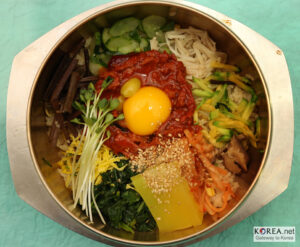
- 육회자매집 (Yukhoe Jamaejip) — Gwangjang Market yukhoe alley (육회골목), Jongno-gu, near Jongno 5-ga Station (Line 1, Exit 8). The single most famous yukhoe house in Seoul, running since 1974. Order the signature platter of fresh hand-cut yukhoe or the yukhoe bibimbap; expect a queue of locals and tourists, and note it is closed on Mondays.
- 부촌육회 (Buchon Yukhoe) — Gwangjang Market / Jongno 4-ga, Jongno-gu, near Jongno 5-ga Station (Line 1). A Michelin Bib Gourmand-recognized specialist and the alley’s most internationally celebrated name. Known for tender marinated lean raw beef and yukhoe topped with raw octopus; open daily, so it is a reliable fallback if the others are packed.
- 창신육회 (Changsin Yukhoe) — Gwangjang Market yukhoe alley, Jongno-gu, near Jongno 5-ga Station (Line 1, Exit 8). A long-popular, wallet-friendly favorite with several branches clustered together. Loved for fresh yukhoe, yukhoe bibimbap, and yukhoe-nakji tangtangi (raw beef with live octopus); the main branch is closed on Tuesdays.
These three are all within the same market alley, so it is easy to compare. Hours and weekly closing days vary by branch and can change, so please double-check the latest opening times before you go.



Leave a Reply