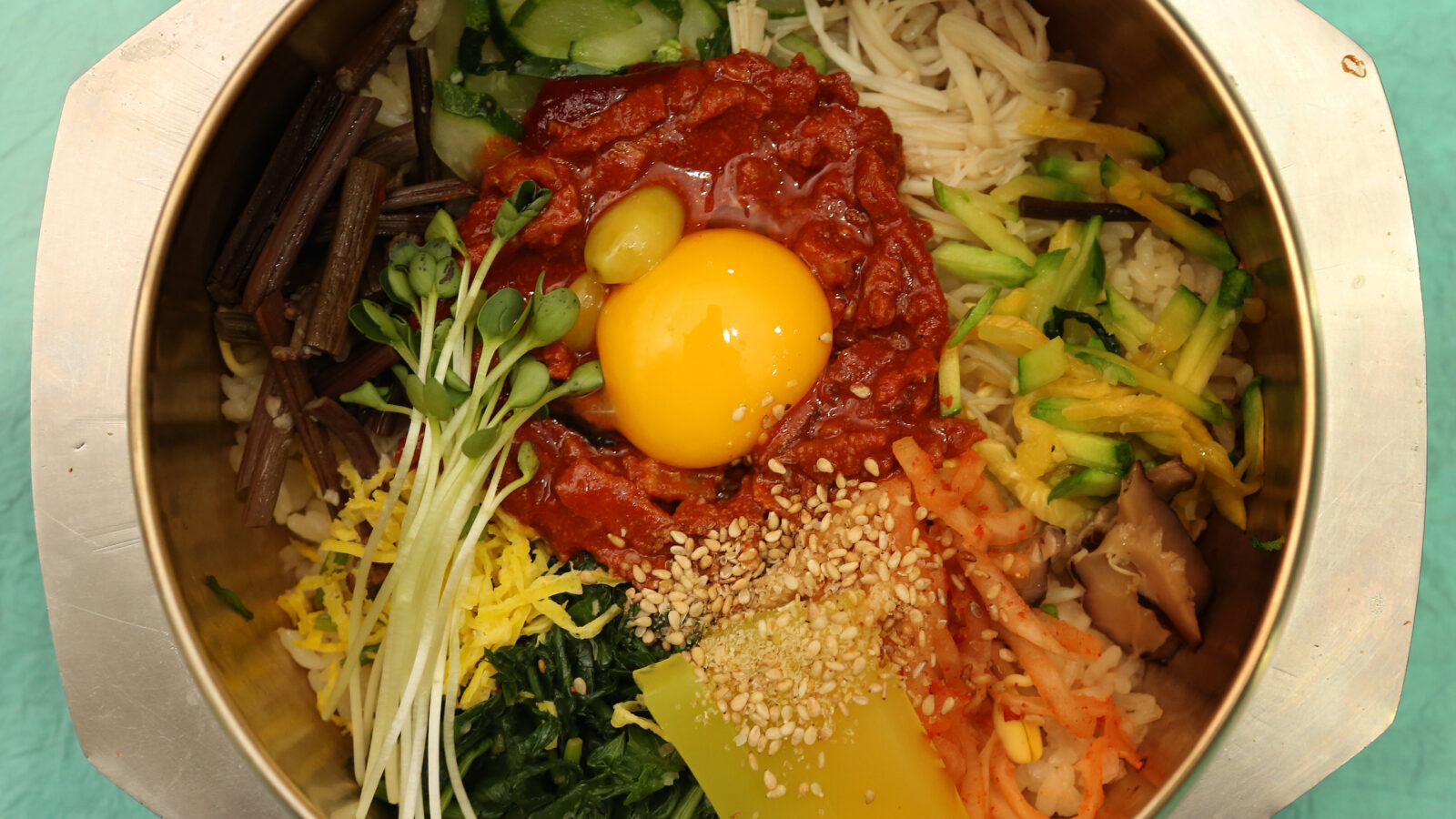
비빔밥 (bibimbap) literally means “mixed rice” — 비빔 (bibim, from 비비다, “to mix”) plus 밥 (bap, “cooked rice”). That name is also the instruction. The bowl arrives looking like a painting: warm white rice under neat mounds of separately seasoned vegetables, a little beef, a glossy fried egg, a spoon of red 고추장 (gochujang). Then you pick up a spoon and wreck the arrangement on purpose, folding everything together until the rice, the 나물 (namul, seasoned vegetables), the beef, the egg, the sesame oil, and the chili paste become one spicy-savory bowl. The “before” look is for the eye; the mixing is the point.
It started as a thrifty way to use up leftover side dishes (반찬), and it’s now one of Korea’s most recognizable meals — a balanced one-bowl dinner that happens to hit the five traditional colors (오방색): white rice, green greens, yellow egg, red gochujang, and dark mushroom or beef. It travels well too, which is why you’ll meet it as airline food and temple food.
What’s in the bowl
A home bibimbap is an assembly job. You season several vegetables one at a time, cook a little beef, fry an egg, stir together a quick gochujang sauce, and pile it all over rice. None of the steps is hard; the work is that there are several of them. Each namul gets the same base seasoning — minced garlic, sesame oil, sesame seeds, and a pinch of salt — so once you have that rhythm, the rest goes quickly. Quantities below serve about 4.
Ingredients
- Rice: 4 servings warm short-grain white rice
- Spinach (시금치): about 8 oz / 250 g
- Soybean sprouts (콩나물): about 8 oz / 250 g (the traditional choice; mung-bean sprouts, 숙주나물, also work)
- Korean zucchini (애호박): 1, cut into matchsticks
- Carrot (당근): 1, julienned
- Shiitake mushrooms (표고버섯): about 4-5, sliced
- Optional namul: rehydrated bracken fern (고사리), bellflower root (도라지), cucumber (오이), or seasoned radish (무생채)
- Namul base seasoning (per vegetable): minced garlic, toasted sesame oil, toasted sesame seeds, salt; chopped scallion for the spinach
- Beef (소고기): about 8 oz / 230 g tender beef in thin 2-inch strips (or ground beef)
- Beef marinade: 1 Tbsp soy sauce, 1 tsp sugar, 1 tsp sesame oil, 1 tsp rice wine (맛술), 1 clove garlic minced, 1 chopped scallion, black pepper
- Eggs (계란): 4, one per bowl
- Gochujang sauce (고추장 양념장): 4 Tbsp gochujang, 1-2 tsp sugar, 1 Tbsp sesame oil, 1 Tbsp water (optional splash of vinegar + sesame seeds)
- To finish: toasted seaweed (김), crumbled; extra sesame oil
How to make it
- Season each namul, one bowl at a time. Spinach: blanch 30-60 seconds until just wilted, shock in ice water, squeeze dry hard, cut into 3-inch lengths, then toss with chopped scallion, garlic, sesame oil, sesame seeds, and salt. Soybean sprouts: boil 2-3 minutes — decide whether you cook with the lid on or off and keep it that way the whole time, since switching mid-cook is what turns them bitter — then shock in cold water, drain, and season as above.
- Cook the firmer vegetables. Stir-fry the carrot 1-2 minutes until just tender with a little salt. Salt the zucchini matchsticks briefly, then stir-fry 2-3 minutes. Sauté the mushrooms 4-5 minutes until browned, seasoned with salt and pepper. If using bracken fern or bellflower root, sauté those with garlic and sesame oil too. Keep each one separate.
- Cook the beef. Marinate the strips about 20 minutes, then stir-fry 2-3 minutes over high heat until just cooked. Ground beef seasoned the same way is an easy swap.
- Fry the eggs. One per bowl, sunny-side-up with a runny yolk. The runny yolk is part of the sauce, so don’t cook it hard.
- Mix the gochujang sauce. Stir the gochujang with sugar, sesame oil, and water until smooth and spoonable. Taste and adjust — more water to loosen, more sugar to round it out.
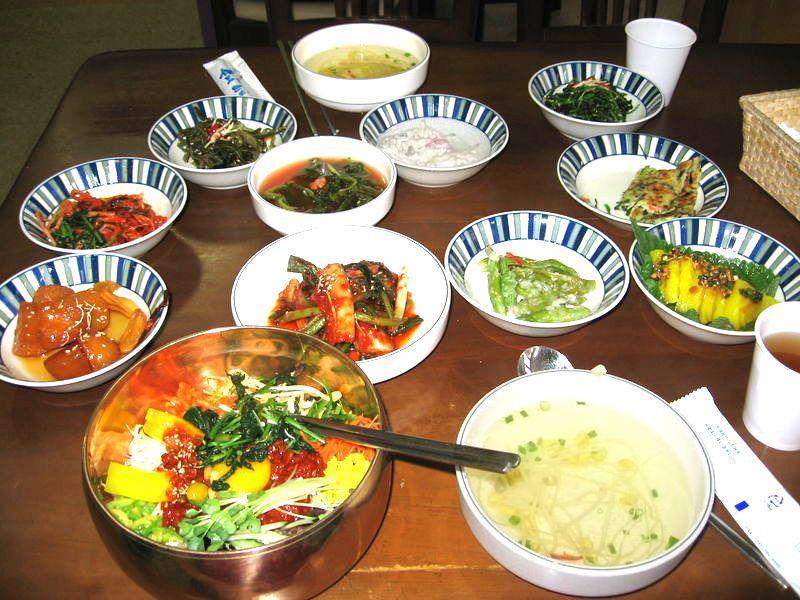
- Assemble. Put warm rice in a wide bowl. Arrange small mounds of each namul and the beef in neat radial sections over the rice — this is the photogenic part. Set the fried egg in the center, drizzle a little sesame oil, and scatter the crumbled seaweed. Add the gochujang sauce in the middle or serve it on the side.
- Mix and eat. Add gochujang to taste, then stir everything together thoroughly with a spoon, folding up from the bottom so the rice, sauce, oil, and toppings coat evenly. The goal is a uniform, glossy bowl, not tidy clumps. Eat while warm.
Variants worth knowing
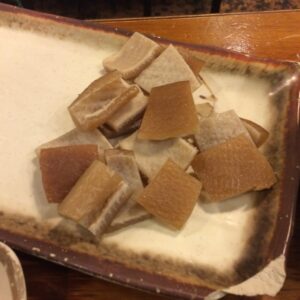
전주비빔밥 (Jeonju bibimbap) is the benchmark, from Jeonju in Jeollabuk-do and often traced to the royal court table. The rice is cooked in beef or bone broth for deeper flavor, there can be up to around 30 toppings, and it’s famous for Jeonju’s bean sprouts plus 황포묵 (hwangpomuk, yellow mung-bean jelly tinted with gardenia). It often features 육회 (yukhoe, seasoned raw beef) and a raw egg yolk, and is traditionally served in heated 유기 (yugi, brassware) bowls with a side of bean-sprout soup.
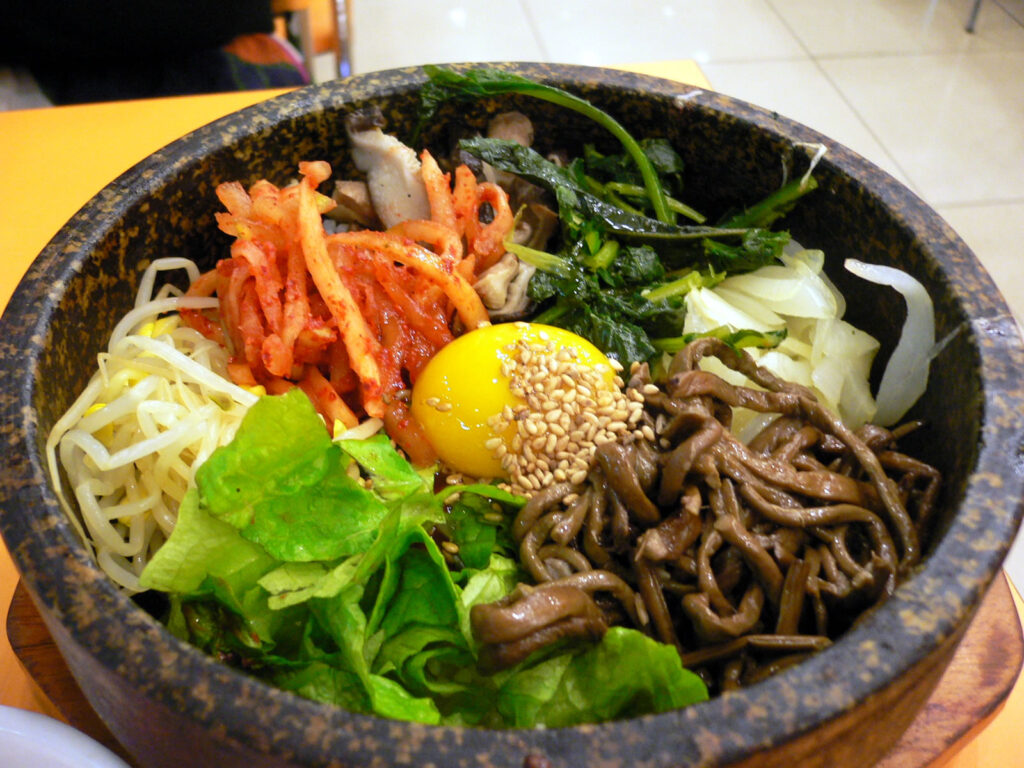
돌솥비빔밥 (dolsot bibimbap) comes sizzling in a heated stone pot brushed with sesame oil. The rice keeps cooking against the hot walls, and the signature payoff is the 누룽지 — a golden, crispy toasted-rice crust on the bottom that you scrape up at the end.
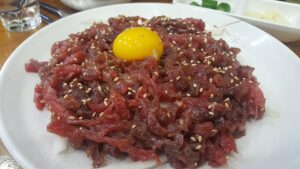
육회비빔밥 (yukhoe bibimbap) swaps cooked beef for fresh seasoned raw beef, usually a lean cut dressed with sesame oil and garlic. It’s tied to 진주 (Jinju) and 안동 (Andong) in the Gyeongsang region and prized for clean, rich umami. 산채비빔밥 (sanchae bibimbap) is built almost entirely from mountain and wild greens — bracken, bellflower root, and seasonal namul — with little or no meat, closely linked to Korean temple cuisine.
How to eat it
It looks tidy, but it isn’t meant to be eaten section by section. Start with the gochujang: add about a tablespoon if you’re unsure, since it carries both heat and salt, and you can always add more. Then stir everything together, folding up from the bottom so every spoonful is the same. Break the runny yolk into the rice as you go for richness. Adjust as you eat — a little more gochujang for heat, a drizzle of sesame oil for nuttiness. With dolsot bibimbap, mix promptly, let some rice press against the hot stone, and scrape up the crispy crust at the end. A side of soup, often 콩나물국 (bean-sprout soup), rounds it out.
Make it vegetarian
Bibimbap is one of the easiest Korean dishes to make vegetarian or vegan, because the core — warm rice, an array of seasoned namul, gochujang, and sesame oil — is already plant-based. Skip the beef, and either drop the egg or replace it with pan-fried seasoned tofu, which makes an excellent protein here. The 산채비빔밥 style is essentially a traditional vegetarian bibimbap by design. For a strict vegan version, check two things: that your gochujang has no fish or animal additives, and that the rice wasn’t cooked in meat broth (as some Jeonju styles are).



Leave a Reply