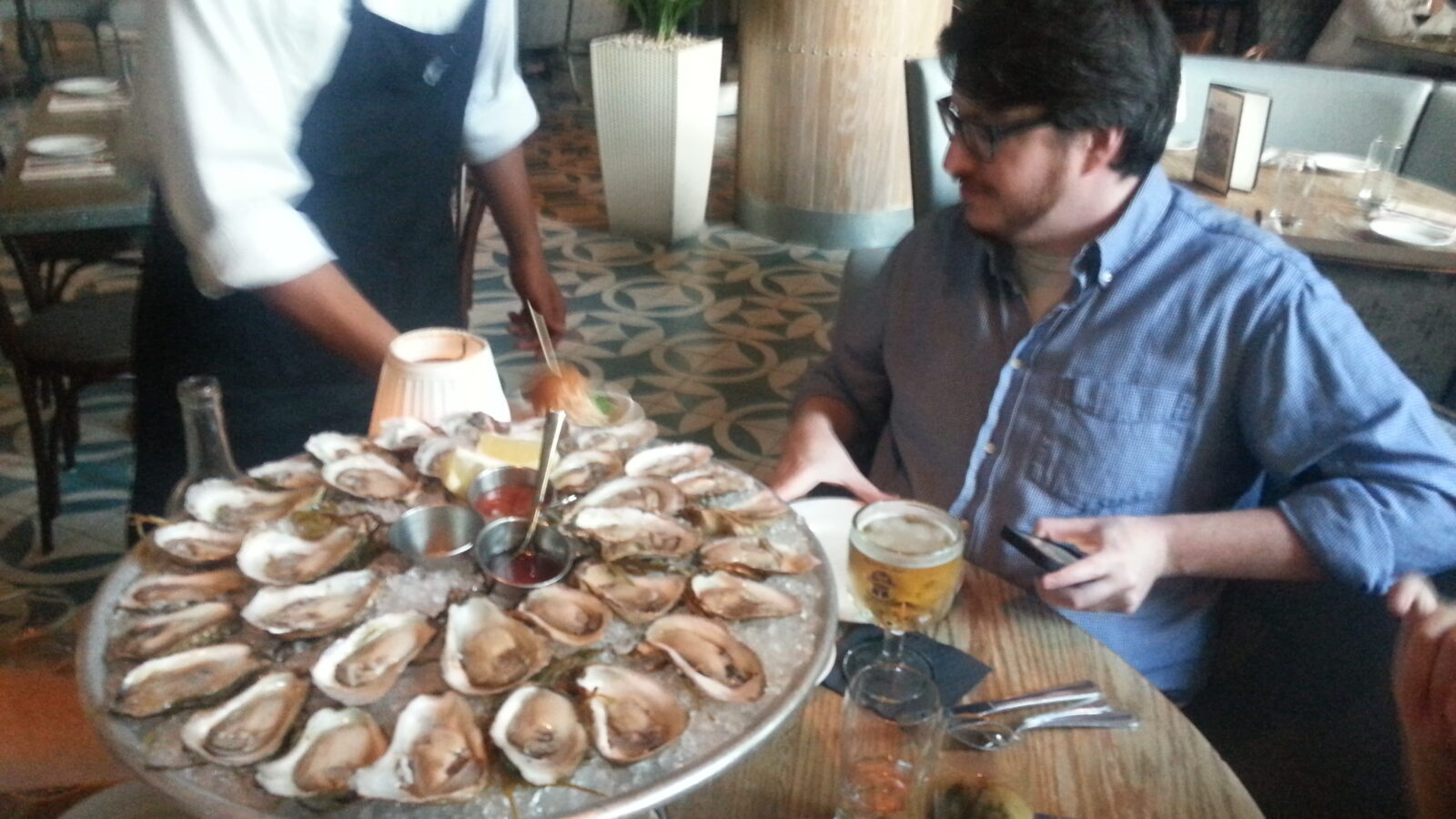
When the sea turns cold and the wind off Korea’s southern coast bites hardest, Koreans reach for gul (굴) — oysters. Often called “the milk of the sea” (바다의 우유, bada-ui uyu), gul are the single ingredient most tied to Korean winter. From late autumn through early spring the oysters fatten on stored glycogen, growing plump, soft, and impossibly briny. This is a guide to what gul is, how it tastes, the many ways Koreans eat it, and how to enjoy raw shellfish without getting sick.
What Is Gul?
Gul simply means “oyster” in Korean. Korea is home to more than a dozen oyster species, but the one you will almost always eat is the Pacific oyster — 참굴 (cham-gul), Crassostrea gigas — the country’s main farmed variety. Korean oysters tend to be smaller than the showy European or American half-shell oysters, but they pack an outsized, concentrated flavor.
Oysters have an astonishingly long history here. Shell middens along the coast show Koreans were eating them some 8,000 years ago, and Joseon-era records list oysters as an important harvest across many provinces. Today they are farmed on hanging ropes in the clean, nutrient-rich waters off the south and west coasts.
Taste and Texture
A fresh winter gul is soft and faintly creamy, with a clean rush of the sea — salty and mineral, finishing slightly sweet and milky rather than sharp. The texture is tender and yielding, never rubbery, which is exactly why timing matters: oysters harvested in their cold-water season taste sweeter and fuller than those taken in warmer months.
The Great Oyster Regions
Two places dominate. Tongyeong (통영) and nearby Geoje in South Gyeongsang Province handle a huge share of the national harvest; Tongyeong Port is ringed with restaurants that serve oyster dishes all winter. On the west coast, Seosan (서산) in South Chungcheong is the other famous name. Travelers genuinely make the trip just to eat gul at its freshest, straight off the boats.
How Koreans Eat Gul
- 생굴 (saenggul) — raw oysters: The purest way. Freshly shucked oysters are dipped in chojang (초장), a bright red chili-vinegar-gochujang sauce, sometimes with a squeeze of lemon and slivers of garlic. The briny softness against the tangy sauce is the heart of Korean oyster eating.
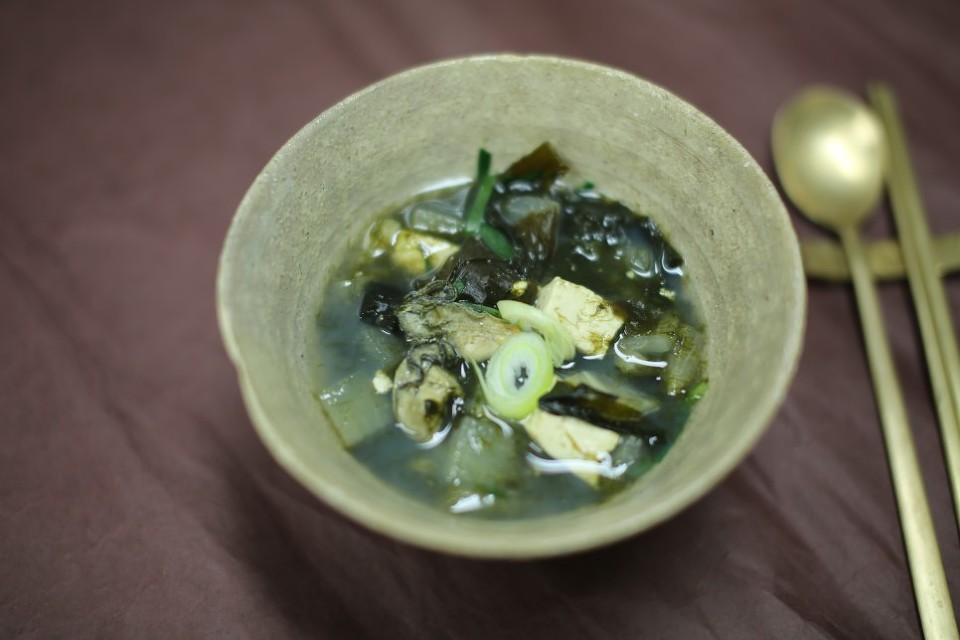
- 굴국밥 (gulgukbap) — oyster rice soup: A clear, refreshingly briny broth with rice, oysters, and vegetables. It’s the quintessential warming winter bowl and a Tongyeong specialty.
- 굴전 (guljeon) — oyster pancakes: Oysters dredged in flour and egg, then pan-fried golden. Crisp edges, custardy interior.
- 굴무침 (gulmuchim) — seasoned oysters: Raw oysters tossed with chili powder, scallions, and seasonings into a quick, punchy salad.
- 굴보쌈 (gul-bossam): The famous trio of boiled pork belly, fresh oysters, and napa-cabbage kimchi wrapped together in one bite.
You’ll also find gul folded into kimchi, fried as tangsuyuk (sweet-and-sour), or simmered with fishcake.
Make Gulgukbap at Home
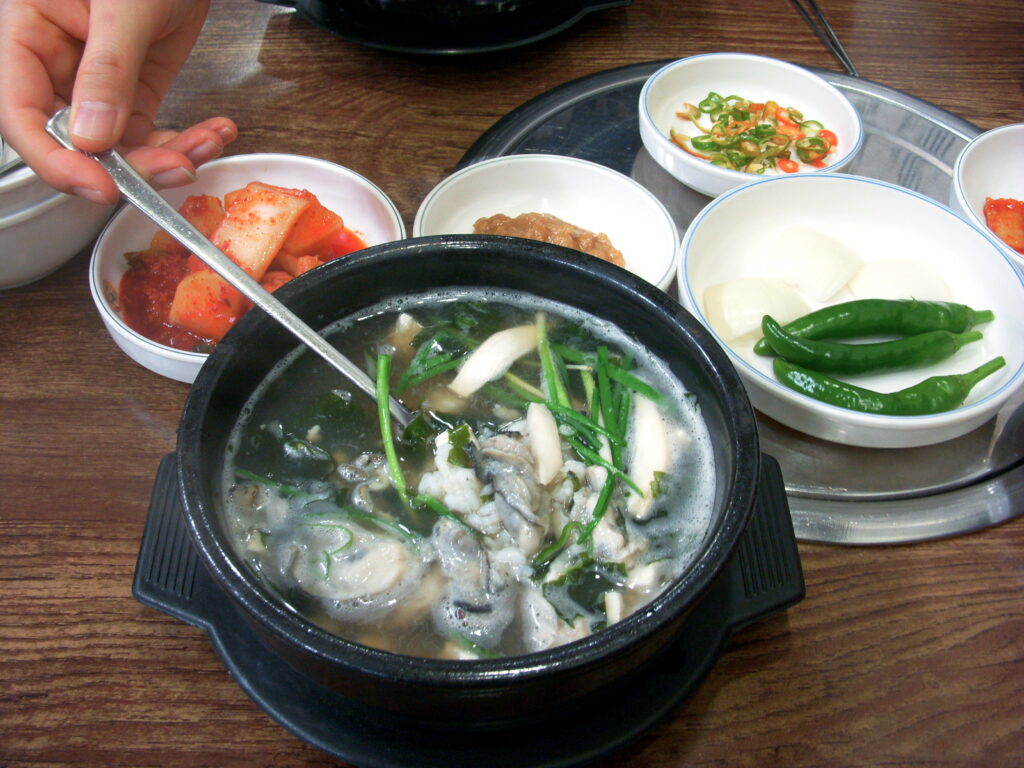
Oyster rice soup is the easiest entry point and forgiving for beginners. The method below makes a clean, briny bowl in about 25 minutes.
Tips
Add the oysters at the very end and cook them only until their edges curl — about a minute. Overcooked oysters shrink and toughen. Rinse them gently in lightly salted water and drain before use.
Honest Cautions: Raw Shellfish Safety
Gul is wonderful raw, but oysters are filter feeders and can concentrate norovirus and bacteria, especially outside the cold season. Eat raw gul this way:
- Stick to the cold months and buy from a reputable, refrigerated source. Avoid raw oysters in warm weather.
- Smell and look: fresh gul smells clean and oceanic, with plump, glossy flesh and clear liquor. Discard anything sour, slimy, or off-smelling.
- Keep cold and eat fast: refrigerate at all times and consume the same day you buy.
- Vulnerable eaters — pregnant people, young children, the elderly, and anyone immunocompromised — should eat oysters fully cooked, not raw.
- When in doubt, cook them. Gulgukbap and guljeon deliver the same flavor with the risk removed.
Handled with a little care, gul rewards you with one of the great seasonal pleasures of Korean cooking — the taste of a cold, clean sea in winter.




Leave a Reply