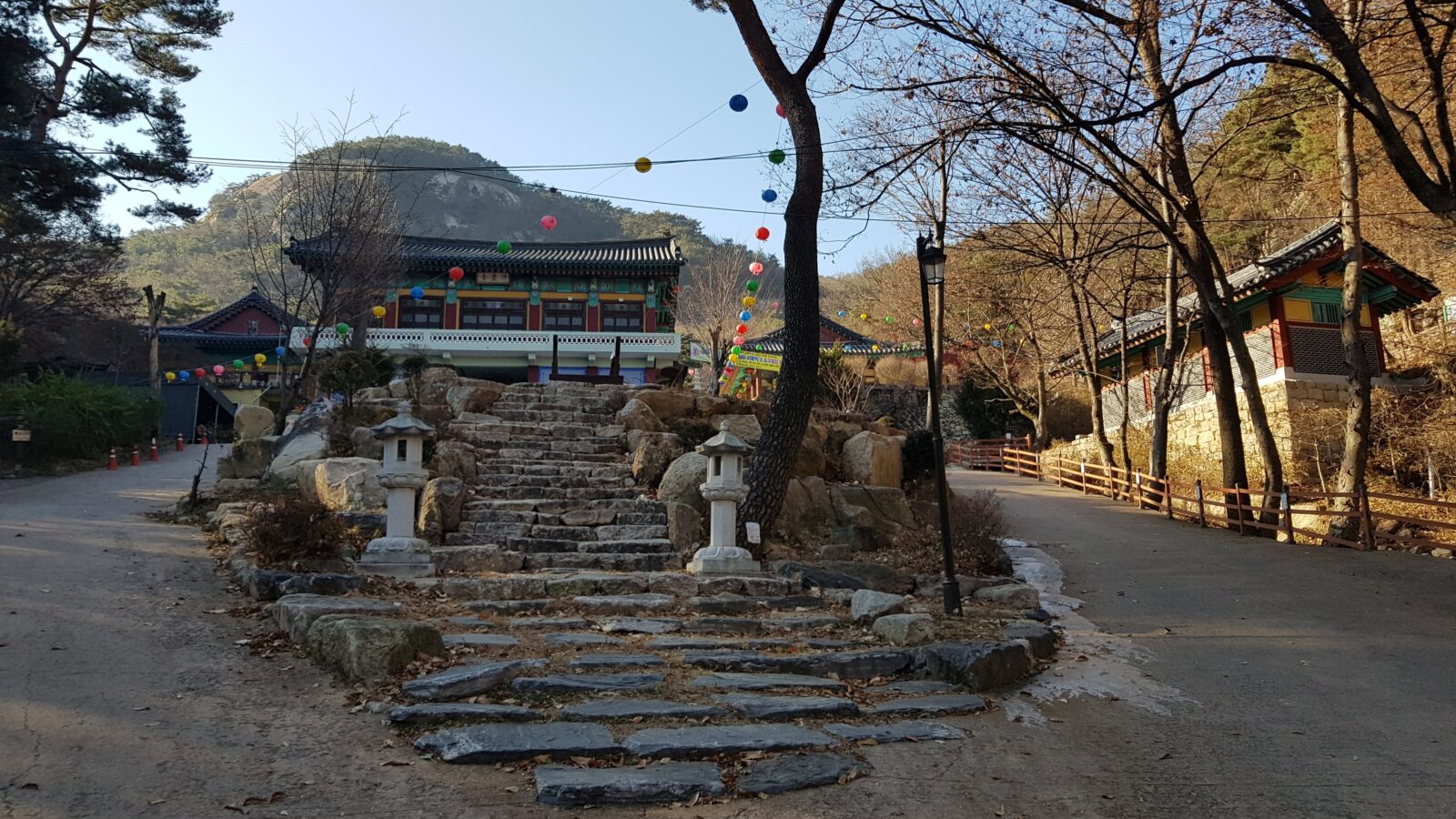
You hear Bulamsa (불암사) before you round the last bend to it: water sliding over stones, wind moving through the pines, now and then the dry knock of a wooden moktak from somewhere among the halls. It is a working temple at the foot of Bulamsan (불암산, “Buddha Rock Mountain”) in Namyangju, Gyeonggi-do — small, lived-in, and entirely uninterested in being a tour-bus stop. Stone lanterns and weathered statuary stand loose among the trees, and the grey granite cliffs of Bulamsan close in behind the buildings like a folding screen someone left propped against the mountain.
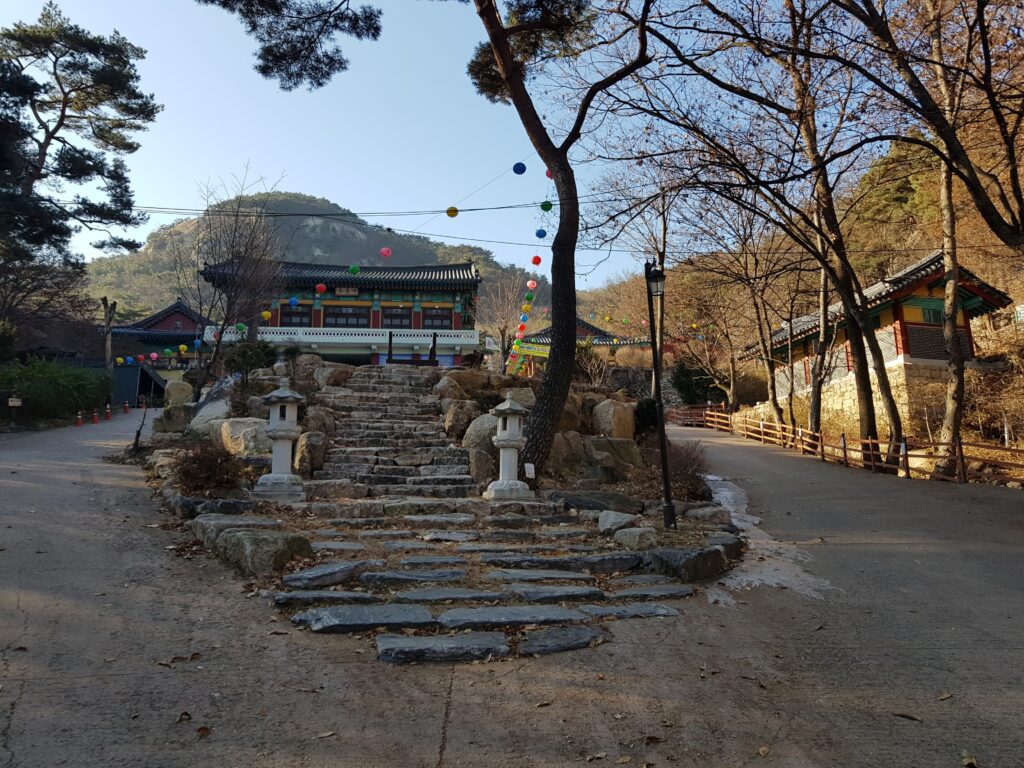
The history here runs deep. Local tradition traces the founding to the Unified Silla period, and the temple was torn down and rebuilt many times through the Joseon dynasty. What survives includes several registered cultural assets — a wooden seated Shakyamuni Buddha, old woodblock scriptures — so this is a place to walk slowly. If you like your temples patinated and historically layered rather than freshly repainted, give it time.
The Genie, Make a Wish connection
Bulamsa turns up on the location list for Genie, Make a Wish (다 이루어질지니), the 2025 Netflix fantasy romance with Suzy (배수지) and Kim Woo-bin, where K-drama location guides cite it as the production’s hushed Buddhist backdrop — fitting for a story about wishes, fate, and a thousand-year-old genie. A caveat worth stating plainly: most Korean coverage of the show points to the Jecheon and Gongju sets, especially the Cheongpung village scenes, and no source I could find pins down the exact episode or shot filmed here. So think of it as confirmed but quiet — documented as a Genie location, not the headline one. You come for the atmosphere the camera came to borrow, and that the temple hands over without trying.
How to get there
The temple sits on the Namyangju face of Bulamsan, a peak also known locally as Cheonbosan. By transit, the cleanest route is Seoul Subway Line 4 to Danggogae Station (당고개역), then a local green/village bus or a taxi toward the Bulamsan trailhead on the Byeollae (별내) side, and a short walk uphill from there. If you drive, there is a parking lot at the temple — fine on weekdays, tight on weekends and during peak autumn foliage. Build in a buffer either way: the final stretch is a walk through the woods, and that walk is half the point.
Practical notes
Bulamsa is an active temple, so entry is free and the grounds are generally open through daylight hours — no ticket, no booking for an ordinary visit. Dress modestly, keep your voice low near the main halls, and ask before you photograph monks or anyone mid-prayer. Spring brings cherry blossom and new green; autumn sets maples against the grey granite, and that contrast is the one to plan around. Winter is beautiful in a stripped-down way but turns the upper paths to ice. Some Korean temples run Templestay programs for a deeper stay — call or check online first, since availability varies and isn’t guaranteed here.
Where to eat nearby
Byeollae and the surrounding Namyangju neighborhoods reward a post-hike appetite. Near the trailhead, look for a sundubu-jjigae (soft-tofu stew) or sanchae bibimbap (mountain-vegetable rice bowl) house for something light and in keeping with the temple. Push a little further into Byeollae New Town and you’ll hit clusters of casual Korean barbecue and noodle spots around the station. The traditional reward, though, is a plate of dotori-muk (acorn jelly) with a bowl of makgeolli — the standard close to any walk down from a Korean mountain temple.
On the map: 불암사


Leave a Reply