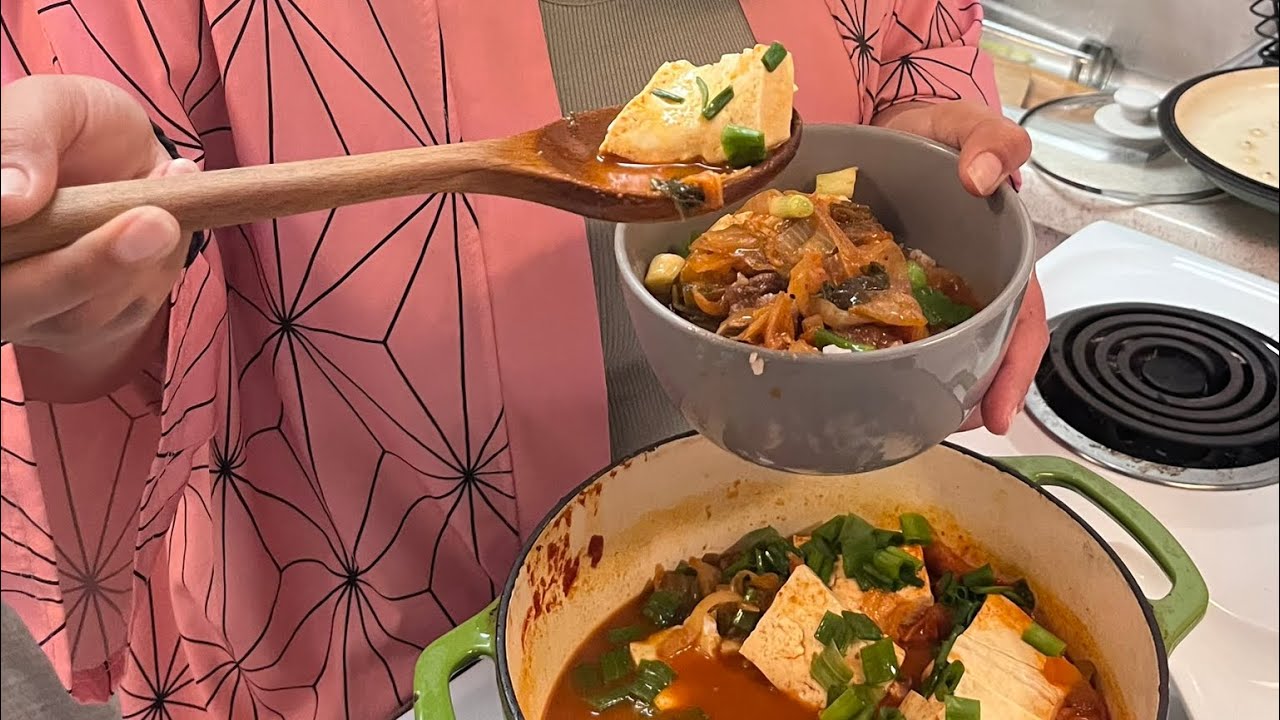

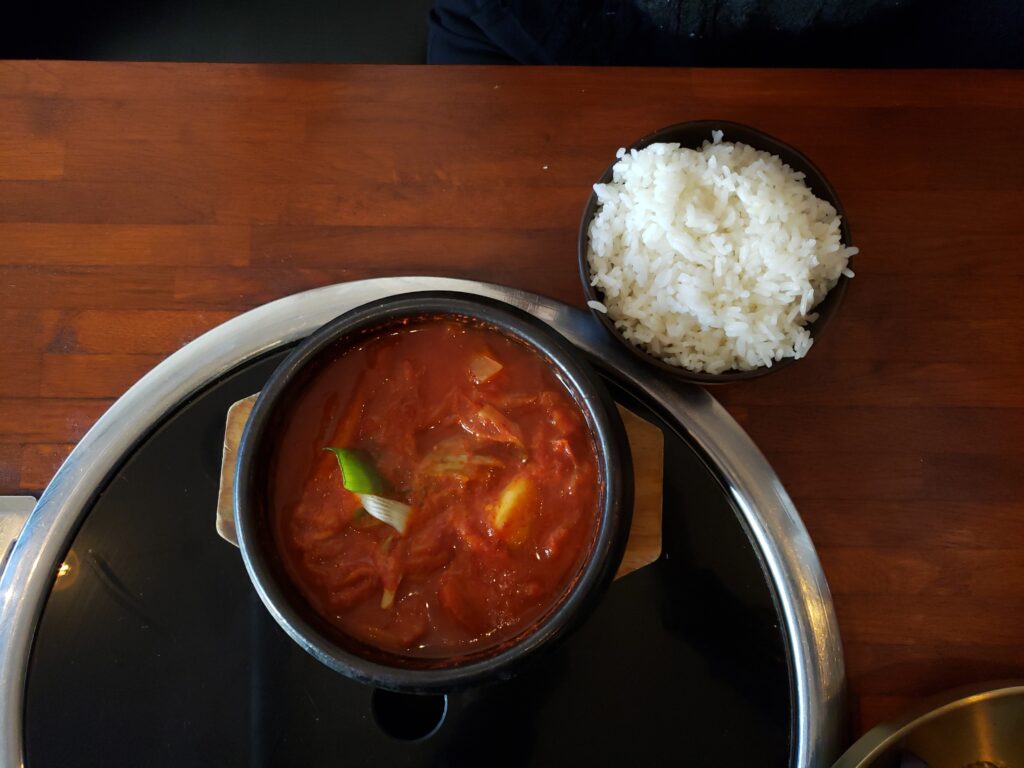
Kimchi-jjigae is the stew Koreans make when there’s nothing else in the fridge but a jar of kimchi that’s gone a little too sour to eat raw. That sourness is the whole point — it’s what gives this stew its deep, tangy backbone. Here’s how to make a proper pot for two to three people, plus the one thing that decides whether it tastes flat or fantastic.
The secret is old kimchi
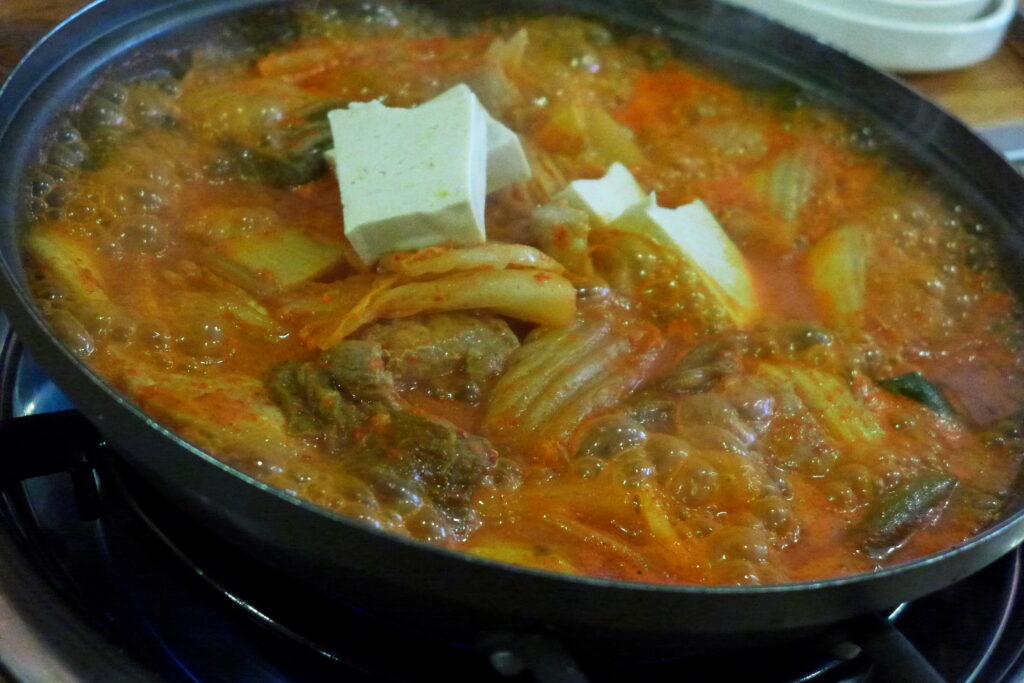
If you take one thing from this recipe, make it this: use well-fermented, sour kimchi, not fresh. Fresh kimchi is crisp and mild and makes a thin, dull stew. Kimchi that’s been in the fridge for a few weeks (or months) has turned tangy and soft, and that acidity is exactly what kimchi-jjigae is built on. If your kimchi is too fresh, you can fake some age by simmering it a little longer and adding a splash of its own brine.
What you’ll need (serves 2–3)
- 2 cups well-fermented kimchi, cut into bite-size pieces, plus 1/4 cup of its juice
- 150g pork belly, sliced (or a can of tuna, drained, for a quicker version)
- 1/2 onion, sliced
- 1/2 block (about 150g) soft or firm tofu, sliced
- 2 scallions, cut into 5cm lengths
- 2 cloves garlic, minced
- 1 tbsp gochugaru (Korean chili flakes)
- 1 tsp gochujang (optional, for body)
- 1 tsp sugar
- 1 tbsp sesame oil
- 2 cups anchovy-kelp stock or water
How to make it
- Heat the sesame oil in a pot over medium heat. Add the pork belly and cook until it loses its raw color, about 3 minutes. (For the tuna version, skip ahead and add the tuna with the stock.)
- Add the kimchi and onion and stir-fry for 4–5 minutes. Don’t rush this — frying the kimchi until it softens and smells toasty is where most of the flavor comes from.
- Stir in the garlic, gochugaru, gochujang, and sugar and cook for another minute so the chili blooms in the oil.
- Pour in the stock and the kimchi juice. Bring to a boil, then lower to a steady simmer for 15–20 minutes until the kimchi is fully tender and the broth turns a rich red.
- Lay the tofu slices on top and add the scallions. Simmer 5 more minutes — don’t stir hard, or the tofu will break apart.
- Taste and adjust. Serve bubbling hot with a bowl of short-grain rice.
The mistake that makes it taste flat
People skip step 2 and dump everything into the broth at once. That gives you boiled kimchi soup, not kimchi-jjigae. Stir-frying the kimchi in fat first concentrates and rounds out its flavor before any liquid goes in — it’s the difference between thin and tangy versus deep and savory. The second common error is under-seasoning because the kimchi seems salty enough; taste after step 4 and add a pinch of salt or a little more kimchi juice if it’s lacking punch.
Swaps and serving
Pork belly is traditional, but canned tuna (chamchi-kimchi-jjigae) is a beloved shortcut and naturally lighter. For a vegetarian pot, drop the meat, use kelp stock, and add mushrooms for savoriness. A spoonful of the broth over rice is the standard way to eat it; many Koreans also crack an egg into the simmering pot or add a handful of instant noodles at the end to stretch it into a full meal.
It’s cheap, fast, and gets better as it sits, so don’t be afraid to make extra and reheat it the next day — the flavor only deepens.



Leave a Reply