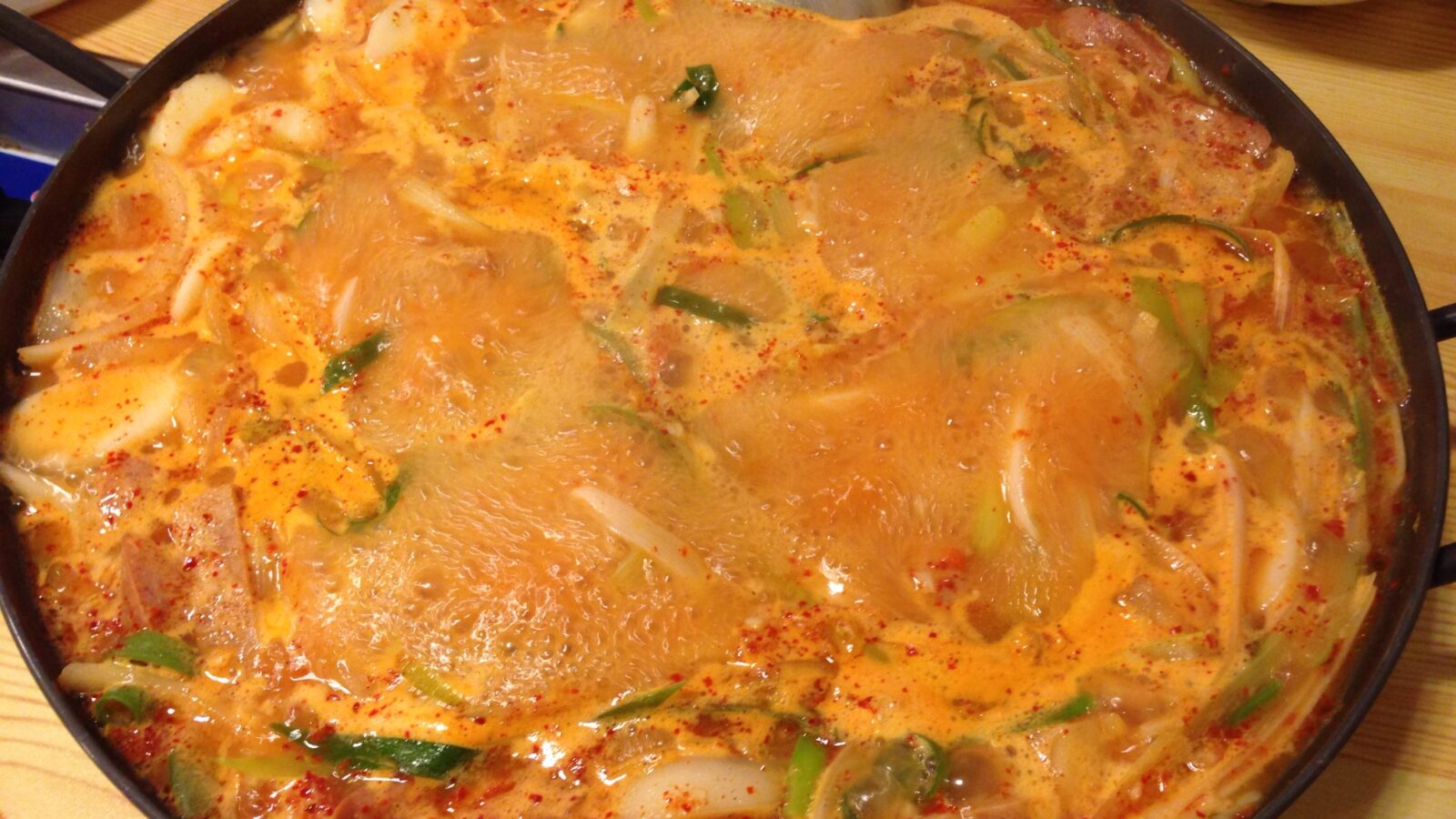
If you’re watching a drama about an army cook turning scraps into something people line up for, this is the dish to make first. Budae-jjigae — literally “army base stew” — was born from exactly that kind of resourcefulness, and it’s still one of the most satisfying pots of food you can put on a table for four. Here’s how to make it at home, plus the one step that separates a great pot from a salty, soggy one.
Where budae-jjigae comes from
After the Korean War, food was scarce and meat was a luxury. Near the US army bases — Uijeongbu, just north of Seoul, is the city most associated with it — people started cooking with the surplus American rations that made their way off-base: Spam, hot dogs, baked beans, processed cheese. They threw those into a pot with what they already had: kimchi, gochujang, tofu, scallions. The result was hearty, spicy, and cheap, and it stuck. Decades later it’s comfort food rather than survival food, but the spirit is the same — turn humble, mismatched ingredients into something everyone fights over.
What you’ll need (serves 4)
- 1 cup well-fermented kimchi, roughly chopped (the older and more sour, the better)
- 200g Spam or other canned ham, sliced
- 3–4 hot dogs or smoked sausages, sliced on the diagonal
- 1 block (about 300g) firm tofu, sliced
- 1 handful enoki or sliced button mushrooms
- 3 scallions, cut into 5cm lengths
- 1 packet instant ramyeon noodles (save the seasoning for another day)
- 1 slice American cheese (optional, but traditional)
- 4 cups anchovy-kelp stock or plain water
For the seasoning paste, stir together: 2 tbsp gochugaru (Korean chili flakes), 1 tbsp gochujang, 1 tbsp soy sauce, 1 tbsp minced garlic, and 1 tsp sugar.
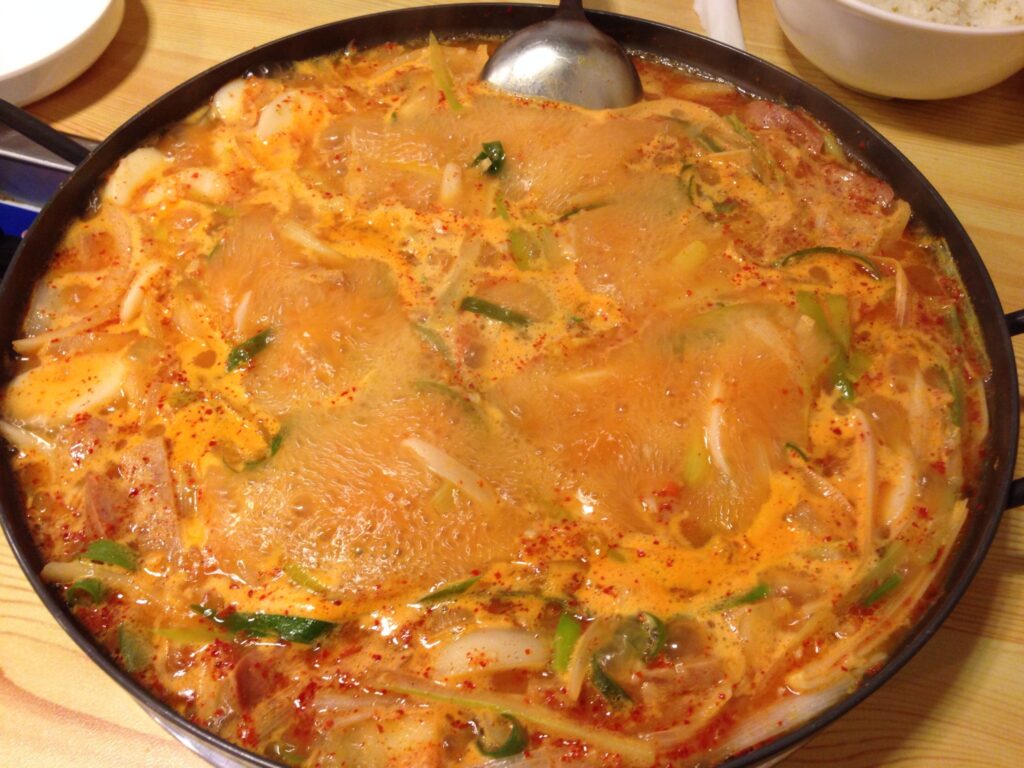
How to make it
- Arrange everything except the noodles and cheese in a wide, shallow pot. Group each ingredient in its own section so the pot looks tidy — this is half the appeal of budae-jjigae at the table.
- Spoon the seasoning paste into the middle and pour the stock around the edges until the ingredients are about three-quarters submerged.
- Bring it to a boil over high heat, then lower to a steady simmer. Let it bubble for 8–10 minutes so the kimchi softens and the sausage and ham release their salt and smoke into the broth.
- Taste the broth now. It should be spicy, savory, and a little tangy. Adjust with a splash more soy sauce or a spoon of gochugaru — but go easy (see the next section).
- Add the ramyeon noodles and cook for the 3–4 minutes the packet calls for, no longer. Lay the cheese slice on top in the last minute and let it melt into the broth.
- Serve straight from the pot at the table with a bowl of hot rice on the side, keeping the heat on low so it stays at a simmer while everyone digs in.
The one mistake that ruins it
Almost everyone over-salts budae-jjigae. Spam, sausages, kimchi, soy sauce, and gochujang are all heavily salted on their own, and the broth concentrates as it simmers. Resist the urge to season aggressively at the start. Build the pot, simmer it, and only adjust after tasting in step 4 — and even then, reach for water to loosen an over-salty broth rather than more paste. The other classic error is adding the noodles too early; ramyeon turns to mush fast, so it goes in near the very end and gets eaten right away.
Swaps, and how to serve it
Budae-jjigae is forgiving by design, so use what you have. No Spam? Any canned ham or even thick bacon works. Baked beans are a traditional add-in if you like a touch of sweetness; a handful of sliced rice cakes (tteok) makes it more filling. For a lighter version, skip the processed meat and lean on extra mushrooms, tofu, and kimchi — you’ll lose the smoky-salty backbone, so bump up the garlic and gochugaru to compensate.
This is a sharing dish, not a plated one. Put the pot in the middle, give everyone rice and chopsticks, and refill the broth with a little stock as it cooks down. It pairs well with a cold drink and zero ceremony — which, fittingly, is exactly how it was meant to be eaten.


Leave a Reply