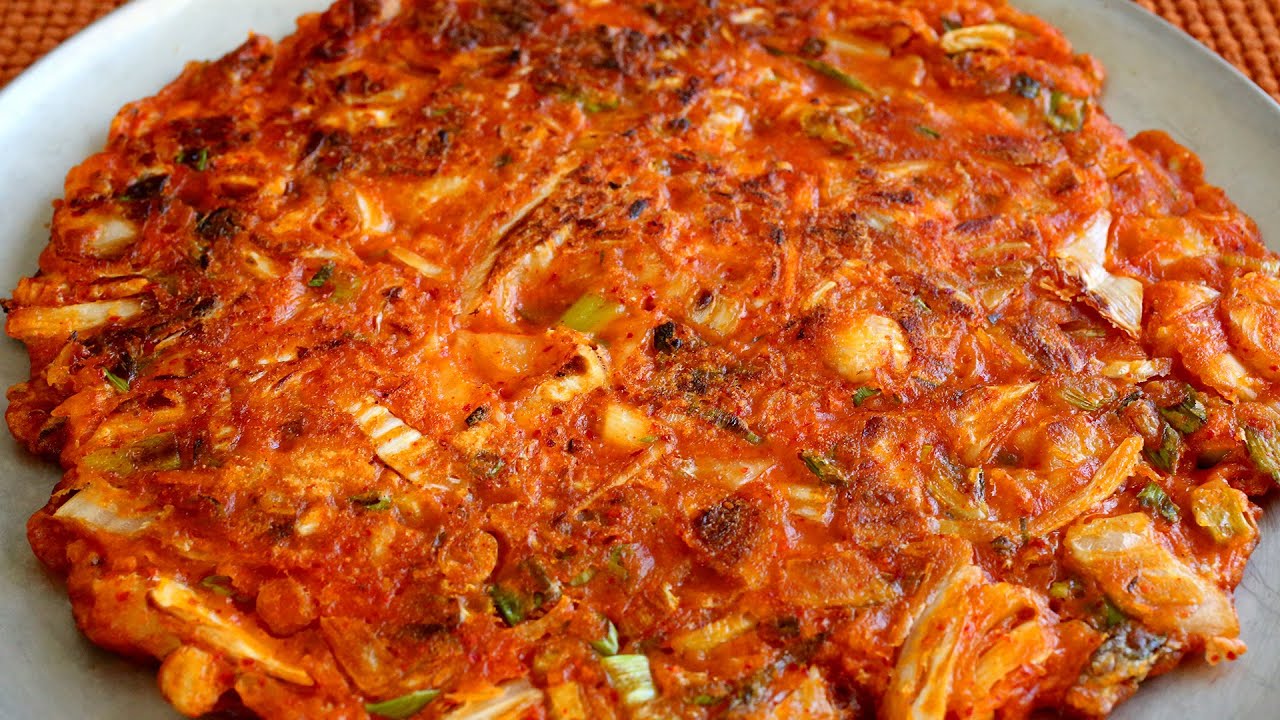

Jeon is the Korean answer to “I have some odds and ends and a frying pan.” It’s a whole family of thin, savory pancakes and fritters — vegetables, seafood, kimchi, or meat bound in a light batter and pan-fried until the edges go lacy and crisp. It’s party food, rainy-day food, and holiday-table food all at once. Here’s how the category works and how to make a good batch at home.
What counts as jeon
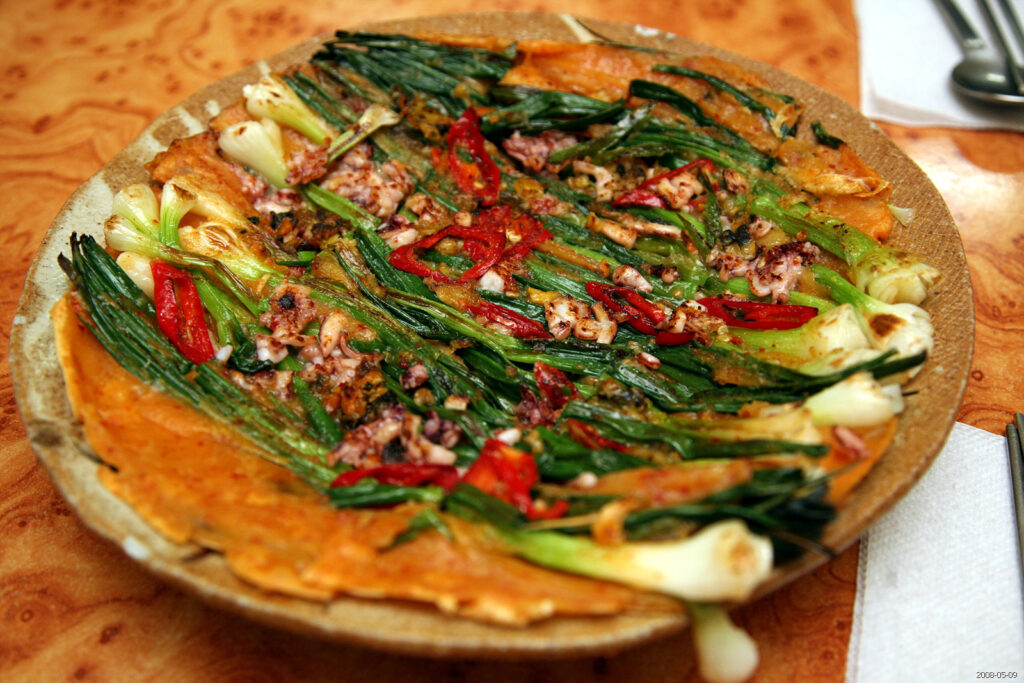
“Jeon” covers a lot of ground, but the idea is always the same: coat something in a thin batter and shallow-fry it. The ones you’ll meet most often are pajeon (scallion), haemul-pajeon (seafood and scallion), kimchijeon (kimchi), yachaejeon (mixed vegetable), and dongtae-jeon (battered white fish). On Korean holidays a spread of assorted jeon is a centerpiece. For your first attempt, kimchijeon is the most forgiving and the most flavorful, so that’s what the recipe below makes.
What you’ll need (makes 2 pancakes)
- 1 cup well-fermented kimchi, chopped, plus 2 tbsp of its juice
- 1/2 cup all-purpose flour (or a Korean pancake mix)
- 1/4 cup cold water
- 1 tbsp gochugaru, for color (optional)
- 1 scallion, chopped
- Neutral oil, for frying (be generous)
For a simple dipping sauce, stir together 1 tbsp soy sauce, 1 tsp rice vinegar, and a pinch of gochugaru and sesame seeds.
How to make it
- In a bowl, mix the kimchi, kimchi juice, flour, water, gochugaru, and scallion into a loose, pourable batter. It should be thinner than you expect — closer to heavy cream than cake batter.
- Heat a generous layer of oil in a non-stick or cast-iron pan over medium-high heat until it shimmers. The pan must be properly hot before the batter goes in.
- Pour in half the batter and spread it thin with the back of a spoon. Let it cook undisturbed for 3–4 minutes until the underside is golden and the edges look crisp and set.
- Flip once, press it flat with a spatula, and cook the second side for another 2–3 minutes. Add a little more oil around the edges if the pan looks dry.
- Slide onto a plate, cut into squares, and serve hot with the dipping sauce.
The mistake that makes jeon soggy
Two things ruin jeon, and they’re related: batter that’s too thick, and a pan that isn’t hot enough. A thick batter steams instead of frying and never crisps; a cool pan with too little oil leaves you with a pale, greasy pancake. Keep the batter thin, get the oil genuinely hot before pouring, and don’t be stingy with the oil — jeon is shallow-fried, not dry-cooked. Flip only once; poking and re-flipping breaks the crust you’re trying to build.
Swaps and serving
Once you’ve got the method, the filling is up to you. Swap the kimchi for a handful of chopped scallions (pajeon), mixed vegetables (yachaejeon), or scallions plus shrimp and squid (haemul-pajeon). The batter and technique stay identical. Jeon is best eaten straight from the pan while the edges are still crisp, with the soy-vinegar sauce on the side — and it’s traditionally shared, so make a stack and put it in the middle of the table.


Leave a Reply