
Why Seochon, and why west of the palace
Most first-time visitors head north of Gyeongbokgung to Bukchon for its postcard hanok rooftops. Skip the crowds and go west instead. Seochon (서촌, literally “West Village”) is the cluster of old neighborhoods — Tongin-dong, Ogin-dong, Sajik-dong, Cheongun-dong and more — squeezed between the palace’s western wall and the foot of Inwangsan Mountain. Where Bukchon was the aristocratic yangban quarter, Seochon belonged to the jungin middle class: interpreters, court physicians, scribes and merchants. That looser, more open atmosphere turned it into a bohemian haven for poets and painters in the 20th century, and Korea’s own tourism board sums up the difference neatly: Seochon for artistic vibes, Bukchon for timeless tradition.
The result is a real, working neighborhood rather than a staged showpiece — narrow alleys, traditional houses, free indie galleries, old shops and cheap-eats restaurants, all running uphill toward the mountain. The painter Jeong Seon, pioneer of Korean “true-view” landscape painting, was born and raised here and painted the local scenery. The modernist poet Yi Sang lived in these lanes, and resistance-era poet Yun Dong-ju walked them “counting stars.” Treat it as an unhurried half-day walk that braids together alleys, a stream valley, literary sites and serious market food.
The route, stop by stop
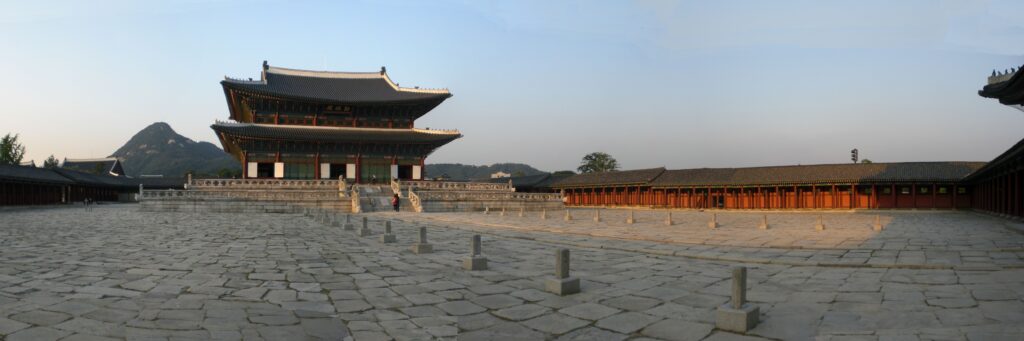
Begin at the western edge of Gyeongbokgung near Sajik-dong and cross Jahamun-ro into the neighborhood. Just steps from Gyeongbokgung Station Exit 2 is the Sejong Village Food Culture Street (세종마을 음식문화거리), a dense restaurant lane that’s perfect for a first bite — neighborhood spots for stews, sundae-gukbap (blood-sausage soup), kalguksu and tteokbokki.
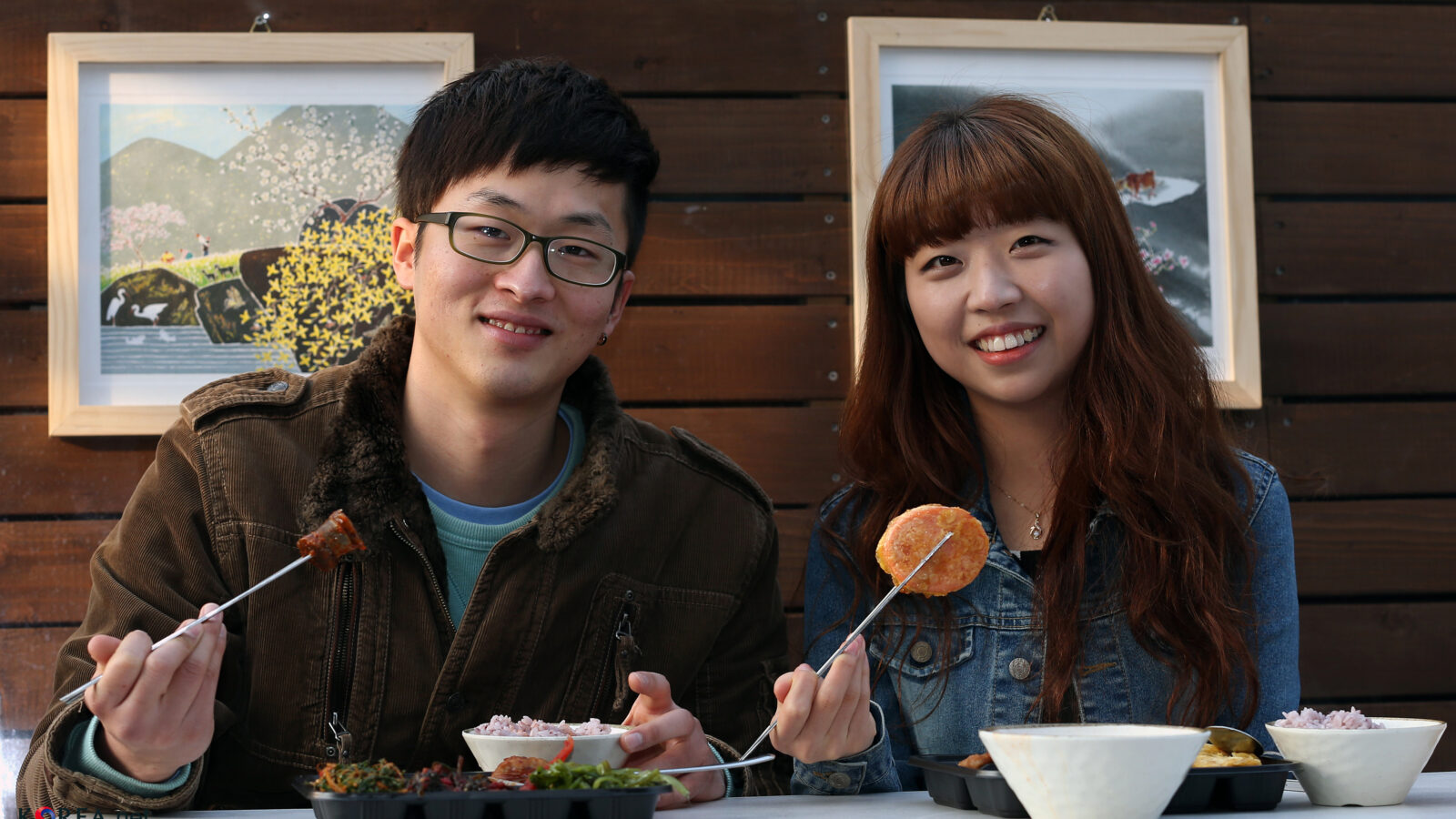
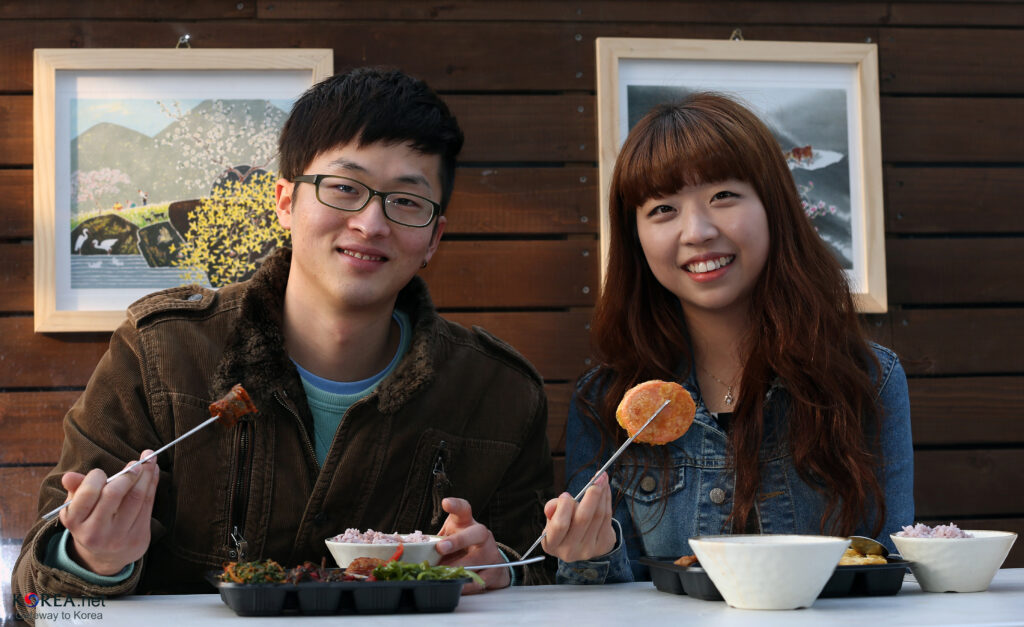
From there it’s a roughly 10-minute walk up Jahamun-ro to Tongin Market (통인시장), the heart of the tour. This covered market, founded in 1941, has about 75–80 stalls and is famous for the “yeopjeon dosirak” brass-coin lunchbox. Pay around 5,000 won at the Dosirak Cafe for old-style brass coins, shop the stalls — tteokbokki, jeon, fried snacks, japchae, dakkochi — to fill your compartment box, then eat upstairs. It’s a genuinely distinctive way to build a custom Korean side-dish tray.
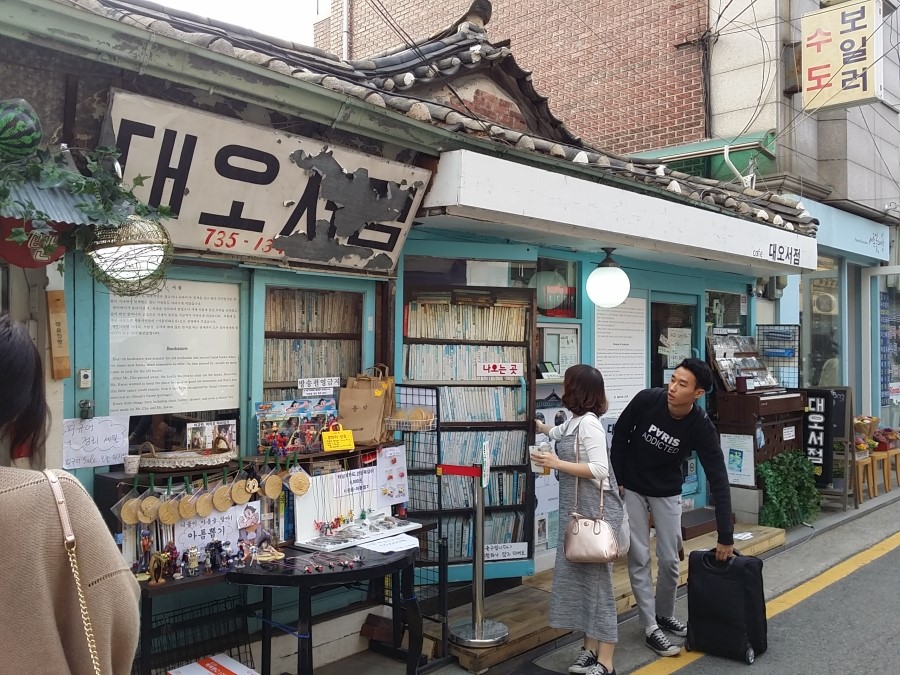
A short wander away sits Daeo Bookstore (대오서점), said to be Seoul’s oldest surviving bookstore, in place since the early 1950s and now a photogenic hanok cafe and gallery (IU filmed a music video here; BTS’s RM has visited). Spend the next stretch simply getting lost in the hanok alleys and indie galleries of Tongin-dong and Ogin-dong — small free-admission galleries, craft and design shops, vintage stores and old-meets-new cafes tucked into traditional buildings.
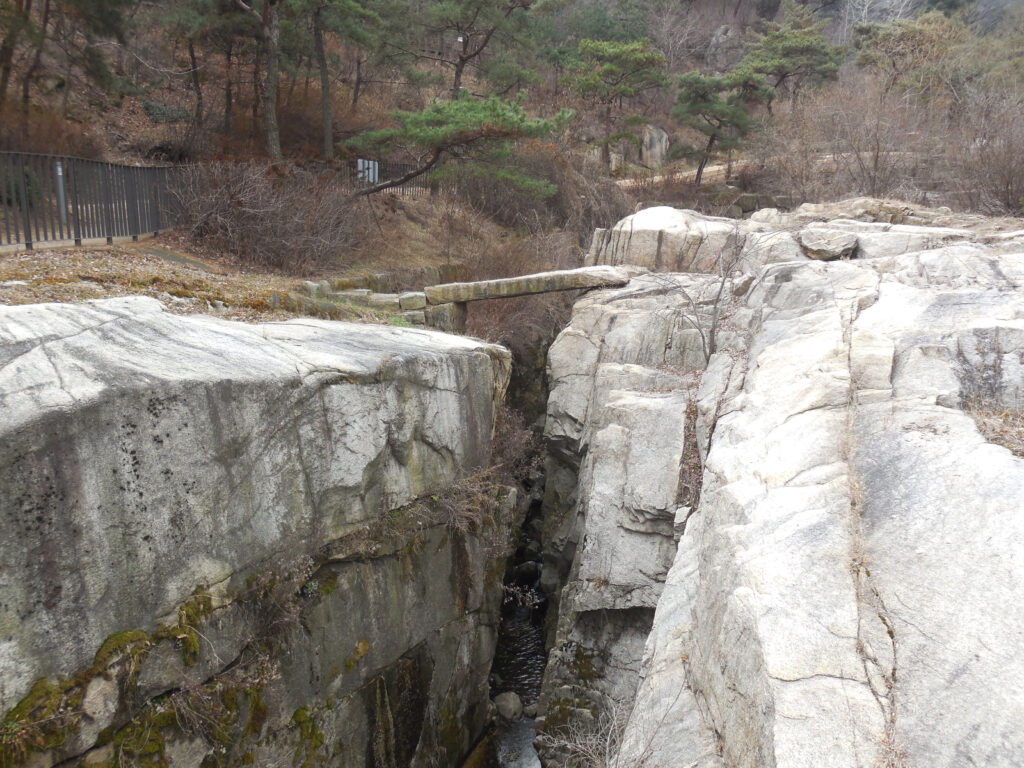
Don’t miss Boan 1942 (보안1942), the former Boan Inn that once housed Joseon-modern artists and poets — hard-up creatives are said to have paid their bills with paintings — now reborn as a culture complex with exhibition spaces, a book cafe and a stay. From here, climb to the top of the neighborhood for Suseong-dong Valley (수성동계곡), a restored stream gorge on the eastern slope of Inwangsan, named for the “sound of water” and painted by Jeong Seon himself. It’s a quiet, free turnaround point with a Joseon-era stone bridge and city-and-mountain views. With energy to spare, finish at the Yun Dong-ju Literature House and Poet’s Hill (윤동주 문학관·시인의 언덕) in the northern foothills — a small museum plus a hilltop viewpoint over central Seoul, a fitting end to a poets’-quarter walk.
The food: market trays and a bowl of jjigae
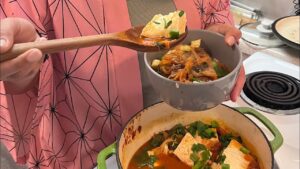
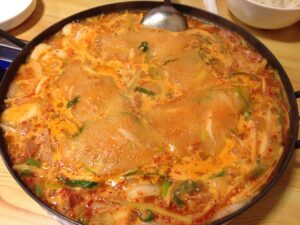
Seochon’s food hook is two-fold. The first half is the market: Tongin Market’s brass-coin lunchbox plus classic street snacks — fried and stir-fried tteokbokki, jeon, gimbap, dumplings and skewers. The second is what the local stew joints do best. Tucked into the alleys and along Sejong Village Food Culture Street are the kind of bubbling, unpretentious stews locals actually eat: a bowl of kimchi-jjigae or a steaming pot of budae-jjigae, gukbap and noodle soups, generally in the 7,000–10,000 won range. These are the “jjigae matjip” of the neighborhood — cheap, hearty and aimed at residents rather than tour groups.
One honest caveat: treat any single tiny eatery you spot in a vlog as a suggestion, not an institution. Names, hours and even whether a small shop still exists can change. The reliable, lasting draw is the overall market-and-stew scene, with Tongin Market as the durable centerpiece.
Getting there and when to go
Take Seoul Subway Line 3 (orange) to Gyeongbokgung Station (경복궁역, #327) and use Exit 2 onto Jahamun-ro (some guides also note Exit 3). Tongin Market is about a 10-minute walk — head up Jahamun-ro and turn left near the Woori Bank corner — and Sejong Village Food Street begins just a short stroll from the exit. Because the same station serves the palace’s main entrance, and the neighborhood begins directly across the road on Gyeongbokgung’s west side, you can easily pair a palace visit with Seochon on foot in a single outing.
Autumn (roughly September–November) is widely called Seochon’s best season, with golden ginkgo trees lining the alleys; winter brings atmospheric snow-dusted hanok rooftops. For the day itself, go on a weekday and arrive late morning (around 10am–noon) for the quietest alleys and to catch the Tongin Market brass-coin lunchbox, which typically runs daytime hours (about 10:30am–2:30/4pm) and can close early when food sells out — so don’t come too late, especially on weekends. Note that Tongin Market is generally closed on Mondays, and many small shops and galleries take a weekday off, so check before you go.
Leave a Reply