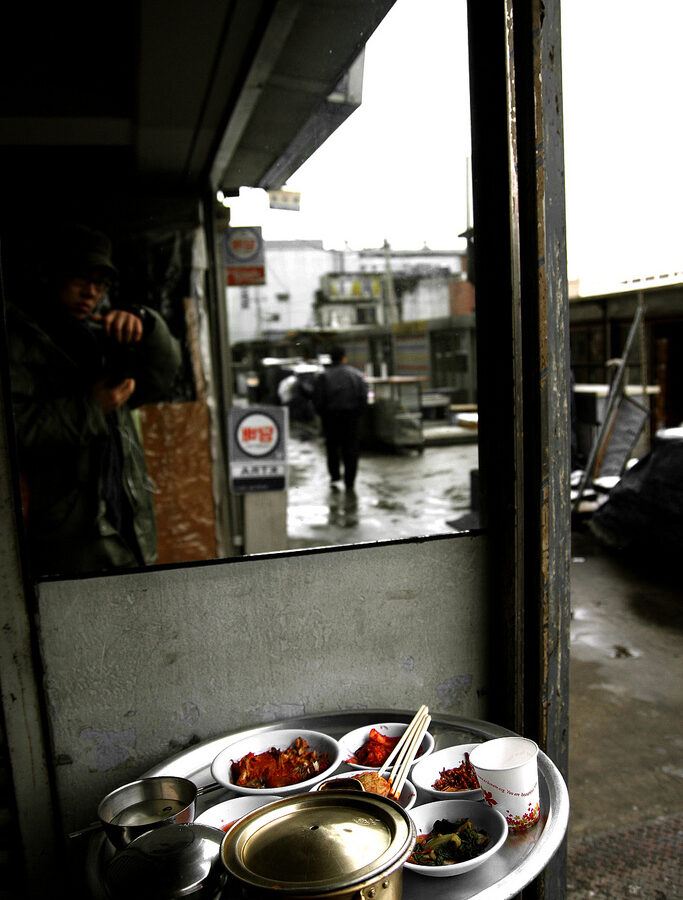
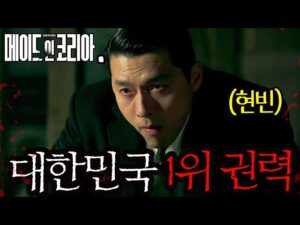
Period dramas like Made in Korea live and breathe in the Seoul of the 1970s — a city of smoky alleys, neon signboards, machine workshops, and the raw energy of a country remaking itself. The film sets are recreations, but you can still walk through pockets of the real thing. Here is a one-day itinerary through the corners of Seoul where mid-20th-century Korea hasn’t been paved over.
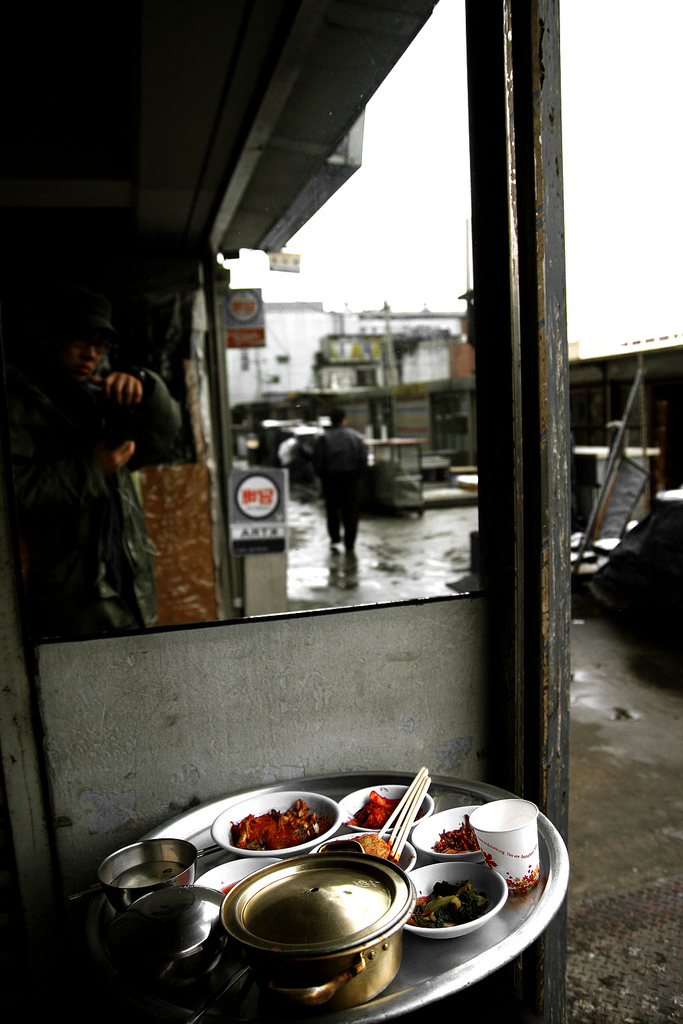
Euljiro & Sewoon Sangga — the working city
Start in Euljiro, the district of tiny print shops, lighting wholesalers, and metal workshops that has powered Seoul’s hands-on economy for generations. At its spine stands Sewoon Sangga, the pioneering residential-commercial megastructure completed in 1968 and designed by the influential architect Kim Swoo-geun. In its day it was a symbol of the modernizing city; today its walkways and the surrounding lanes are a layered mix of decades-old electronics stalls below and a new generation of retro bars and cafés above — locals nicknamed the scene “Hipjiro.” Come in the late afternoon and the old and new versions of the neighborhood overlap in the same frame.
Ikseon-dong — hanok alleys frozen in time
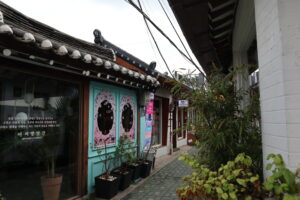
A short walk north, Ikseon-dong is one of Seoul’s oldest surviving hanok (traditional house) neighborhoods, with a warren of narrow alleys laid out in the 1920s. The tiled roofs and low gates are genuinely historic; the cafés, vintage shops, and tailors tucked behind them are the modern overlay. It’s the easiest place in central Seoul to feel the human scale of the pre-skyscraper city, and the lanes are tight enough that a single turn can drop you a few decades back.
Donuimun Museum Village — a recreated streetscape
If you want the era staged for you, Donuimun Museum Village near Gyeonghuigung Palace reconstructs the look of mid-20th-century Seoul block by block: an old-style barbershop, a comic-book rental store, a vintage photo studio, a retro theater. It leans nostalgic and is built for visitors, but it’s a low-effort, photogenic way to step into the decade — and it’s free to wander.
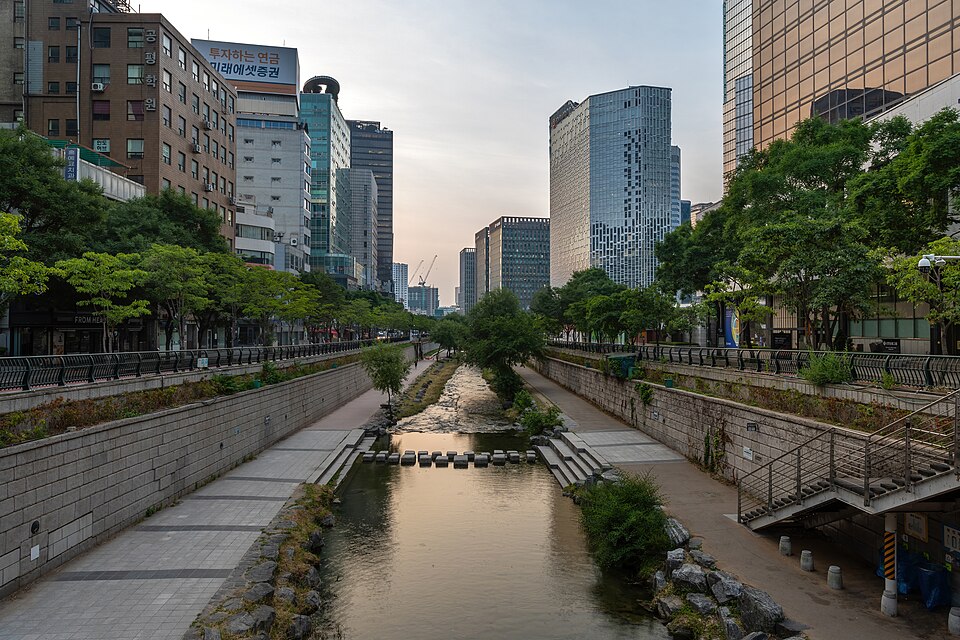
Cheonggyecheon — the stream that tells the story
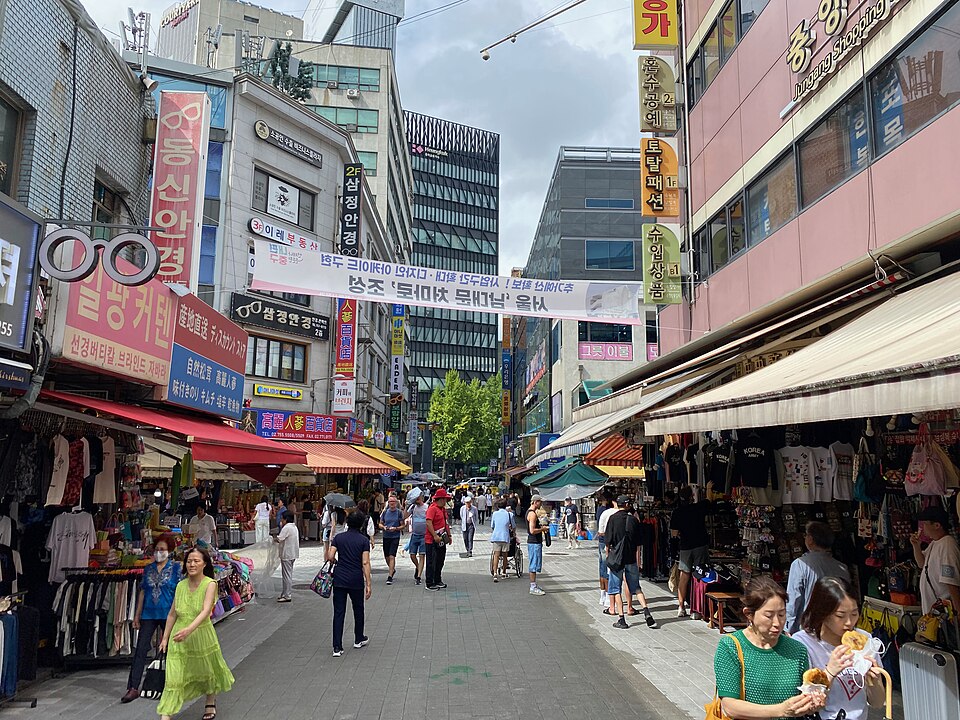
No single place captures the arc of 1970s Seoul better than Cheonggyecheon. During the rapid-industrialization years the stream was covered over and crowned with an elevated expressway — concrete progress, literally poured on top of the old waterway. Decades later the city reversed course, tore the highway down, and restored the stream, reopening it as a walkable greenway in 2005. Stroll a stretch of it and you’re tracing the exact tension a 1970s drama trades on: ambition, speed, and what gets buried along the way.
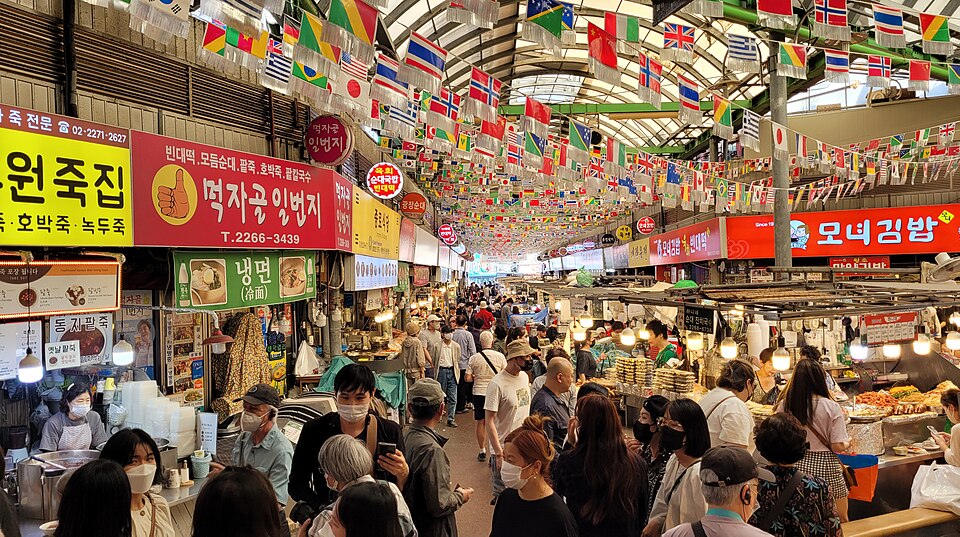
Gwangjang & Namdaemun Markets — eat where the era ate
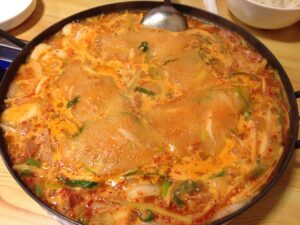
Close the loop at one of Seoul’s historic markets. Gwangjang Market, one of the country’s oldest, is a covered maze of food stalls where vendors have ladled out bindae-tteok (mung-bean pancakes), mayak gimbap, and stews for generations. Namdaemun, the sprawling market beside the great south gate, is the older, rowdier sibling. Both keep the unpretentious, elbow-to-elbow eating culture that defined the period — and they’re the right place to end the day with something hot in a bowl.
How to do it in a day
The route threads together on foot and by subway Line 1 and Line 2. A loose order: Euljiro and Sewoon Sangga first, north to Ikseon-dong for lunch, west toward Donuimun Museum Village, back along Cheonggyecheon, and finish at Gwangjang or Namdaemun for dinner. Save Euljiro’s bars for the evening, when the workshops shutter and the retro scene above them switches on.
You can’t visit the 1970s, but you can walk the streets that remember it — and a drama like Made in Korea is the perfect excuse to start.

Leave a Reply