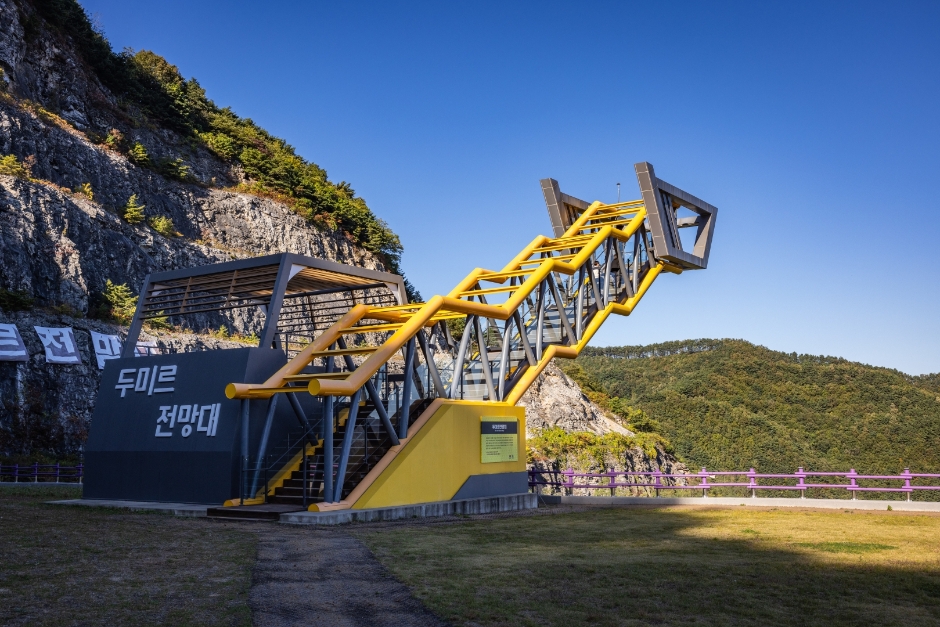

First, a spelling note: the video calls it “무릎별유천지,” but 무릎 means “knee,” and there is no such place. The real name is 무릉별유천지 (Mureung Byeolyucheonji), in Samhwa-dong, Donghae, on Korea’s East Sea coast. It is one of the country’s more surprising day trips — a former limestone mine turned into a park of turquoise lakes and purple flowers. Here’s what it is, when to go for the lavender, and how to reach it from Seoul.
From cement quarry to park
The name 무릉별유천지 (武陵別有天地) borrows from old poetry — 무릉 from the “peach-blossom paradise” tradition, and 별유천지 from a line by the Tang poet Li Bai meaning “a world apart from the ordinary one.” It earns the name in an unlikely way. From around 1968 to 2017, Ssangyong C&E (쌍용C&E, formerly Ssangyong Cement) quarried limestone here for cement. When the pit was worked out, the company donated the land to Donghae City, which remodeled it and opened it to the public on November 16, 2021. The old 쇄석장 (stone-crushing plant) now holds a gallery, a multimedia hall, a cafe, and the ticket office — the heavy industry literally rebuilt into the attraction. It draws roughly 200,000 visitors a year and is listed in Korea’s Tourism 100 Selection as a model of regenerating a disused industrial site.
The emerald mine-lakes
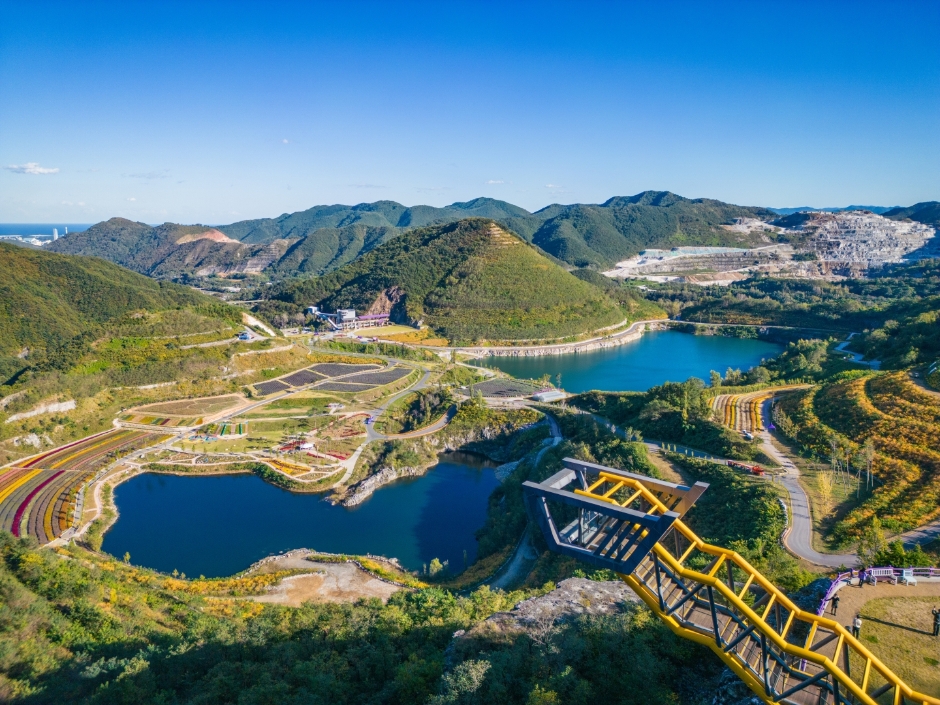
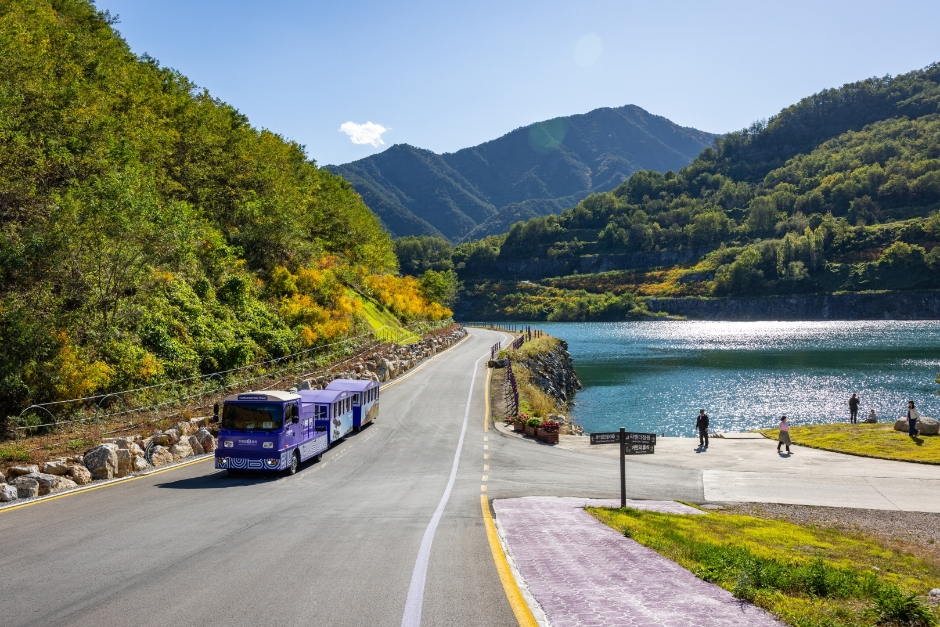
The signature sight is two startlingly blue-green lakes that pooled in the old excavation pits, fed by spring water from the nearby valley: 청옥호 (Cheongok-ho, “green-jade lake”) and 금곡호 (Geumgok-ho). The color comes from dissolved limestone, and the hue shifts from pale turquoise to deep green with the weather and the angle of the sun. Set against the white cut-stone cliffs of the old quarry, they look more like a flooded marble canyon than anything you’d expect from a cement mine. A viewpoint and observatory look down over both, and in summer the lakes host water-leisure (small boats and kayaks) and a fish-feeding experience.
The lavender garden and festival
Planted across the old mine terraces is a lavender garden of roughly 18,000 ㎡, in several zones. It blooms from about mid-June to early July, and that short window is the main reason to time a visit. The annual Mureung Byeolyucheonji Lavender Festival anchors the season; in 2026 it runs June 13–21, with lavender workshops, a personal-color studio, singing-bowl meditation, acoustic busking, and evening lighting shows. The payoff is the combination you won’t see elsewhere: purple fields in the foreground, white limestone cliffs behind, and turquoise water below.
The sky glider and other rides
If flowers aren’t enough, the park leans hard into thrill rides. The headliner is the 스카이글라이더 (Sky Glider), promoted as Asia’s first four-person reciprocal glider — you ride prone, roughly 777 m each way (about 1.5 km round trip) over a drop of around 125 m, for 30,000 KRW. Alongside it are an Alpine Coaster (about 1.5 km, ~40 km/h, 20,000 KRW), an off-road luge (15,000 KRW), and a roller-coaster-style zipline (20,000 KRW). A “Fun Fun” package bundling all four runs 70,000 KRW — worth it only if you’ll do three or four. Each ride has height and weight limits (luge 120 cm+, zipline and glider 130 cm+, coaster 140 cm and up to 150 kg), and a shuttle train moves visitors between the zones. The rides cost extra on top of the modest park admission.
Night opening and the “starlight” theme
You may see the park described as a “별빛마을” (starlight village), but there is no attraction by that name. What exists is a seasonal night opening (야간개장) on Friday and Saturday evenings in the warm months, with a starlight light show (별빛 조명쇼) over the lakes and night water-leisure. It’s a nice add-on if your visit lands on a weekend, but check the current night-opening calendar before you build a trip around it.
Getting there from Seoul
The cleanest route is the Gangneung-line KTX (KTX-eum) from Seoul Station (or Cheongnyangni) direct to Donghae Station (동해역) — about 2h30m–2h40m, from roughly 26,000 KRW, several departures a day. It runs through Mukho and into Donghae with no transfer, so don’t be put off by route planners that suggest a change. Intercity buses from Seoul (Express Bus Terminal or Dong-Seoul) to the Donghae bus terminal take about three hours and cost less. Book ahead either way, especially on summer weekends.
From the station or terminal, the park sits about 15–20 minutes inland to the west. Easiest options are a taxi, the Donghae City Tour Bus (departing Donghae or Mukho station, around 5,000 KRW adult / 3,000 KRW child), or city bus 111 — get off at 쌍용자원개발입구 (for the first lot) or 쌍용후문 (for the second). Driving from Seoul via the Yeongdong Expressway takes about three hours, and there are two on-site car parks (parking is roughly 2,000 KRW for a small car). There’s no dedicated rail link to the gate, so confirm current bus and shuttle details on Donghae City’s official page before you go.
Hours, tickets, and when to go
The park is open 09:30–17:30 (ticketing closes 16:30, rides around 17:00) and is closed Mondays — the next day if a Monday is a public holiday — so plan around that. Admission is modest: adults 6,000 KRW in peak season (June–September) and 4,000 KRW off-season, with teens and children cheaper, under-three free, and discounts of around 50% for Donghae and Gangwon residents and 20% for groups of 20 or more. During the 2026 festival (June 13–21), Donghae residents get free weekday entry. For the lavender, aim for mid-June to early July; prices and festival dates shift year to year, so verify the current details on Donghae City’s site (dh.go.kr/mubu) and VisitKorea before traveling.
Make it a coast trip
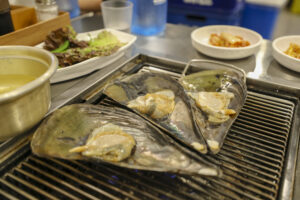
Donghae is a working East Sea port town, so the natural way to end the day is at the water with a seafood grill. Grill the day’s catch on the coast with jogae-gui (Korean grilled clams), the hands-on shellfish-over-charcoal meal that suits a seaside afternoon. And if this is your kind of getaway — a coastal escape you can reach by KTX from Seoul — see our guide to Busan in summer for another train-friendly trip to the sea.
Where to eat near Mukho and Mangsang Beach
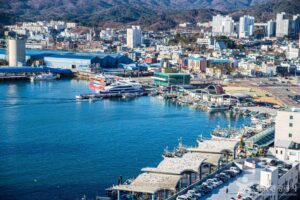
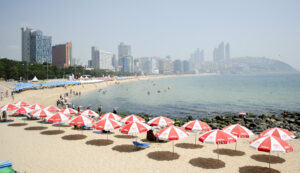
The Mukho harbor stretch in Donghae is one of Gangwon’s great seafood corners, famous for cold-cure fish soups, icy mulhoe, and gutsy gochujang noodles. A few spots near the port and the Kkamakbawi coast are local institutions worth the short hop from Mangsang Beach.
- 동해바다곰치국 (Donghae Bada Gomchiguk) — Signature: gomchiguk (물곰탕), a clear, hangover-friendly snailfish soup simmered with aged kimchi. Right by Mukho port, it’s a reliable, no-frills place that serves this regional specialty all year rather than only in winter.
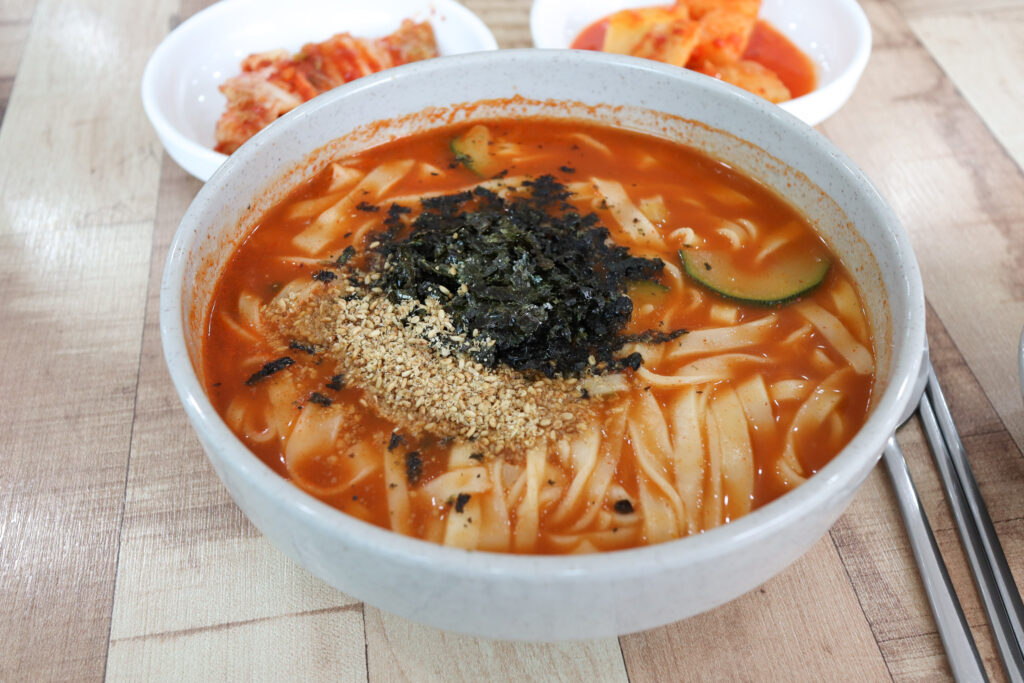
- 대우칼국수 (Daeu Kalguksu) — Signature: jang-kalguksu, knife-cut noodles in a deep, spicy gochujang broth. This tiny, decades-old shop run by an elderly couple (a short walk from the port) is treated as one of Donghae’s defining jang-kalguksu spots, so expect a wait and a very short menu.
- 부흥횟집 (Buheung Hoetjip) — Signature: mulhoe (cold raw-fish soup) and fresh sashimi. Set in the Kkamakbawi (까막바위) raw-fish strip along the Mukho coast toward Mangsang, it’s a representative pick for just-landed catch with an ocean view.
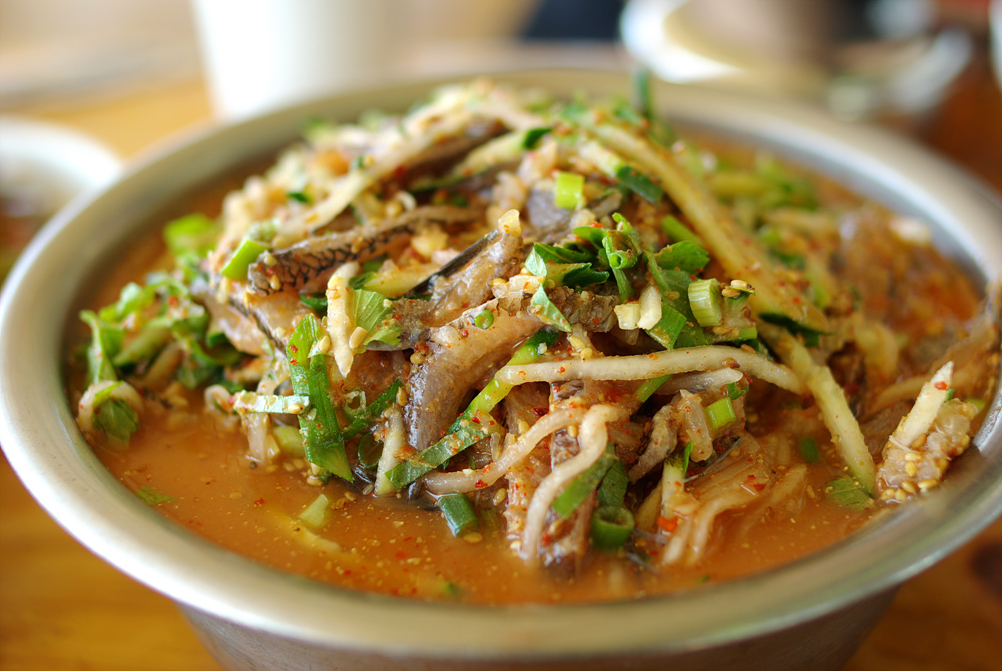
These are small, family-run eateries, so menus, prices, and hours shift with the season and the day’s catch — several close on a fixed weekday (for example, Tuesdays). Always verify opening hours and closing days before you go.

Leave a Reply