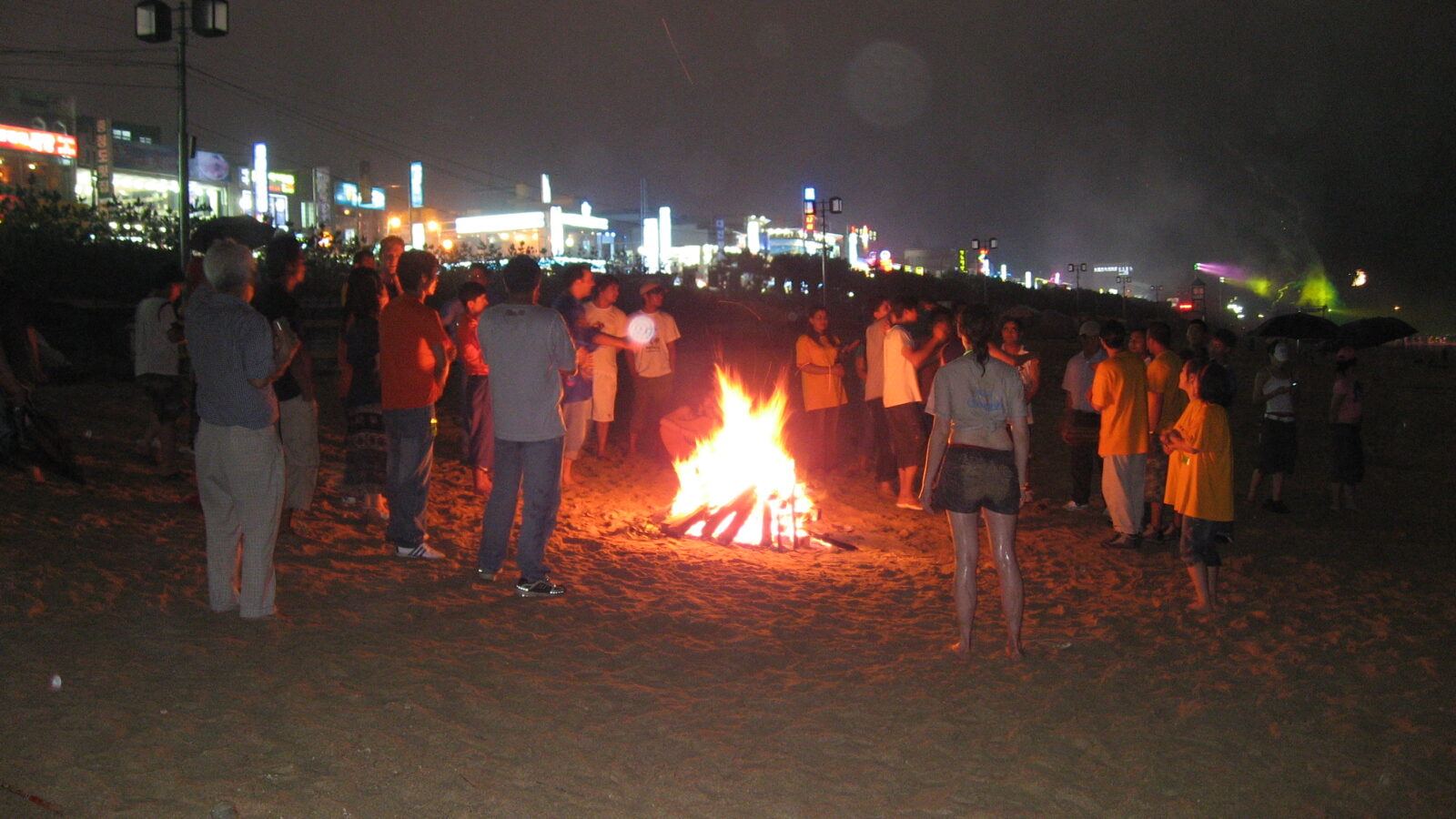
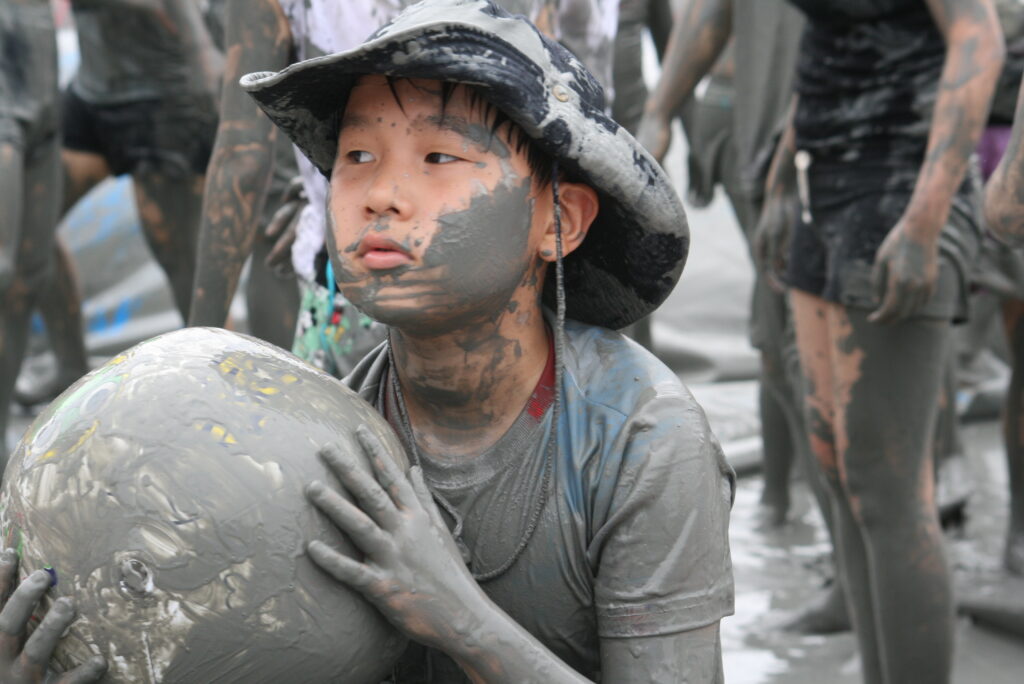
Boryeong Mud Festival is the one Korean summer event that’s worth planning a trip around. For 2026 — the 29th edition — it runs Friday, July 24 to Sunday, August 9 on Daecheon Beach, and it’s exactly what it sounds like: a stretch of west-coast sand turned into mud pools, slides, and a giant, gleeful mess. Here’s how to get there from Seoul, what it costs, and how to do it without wasting a day.
When and where
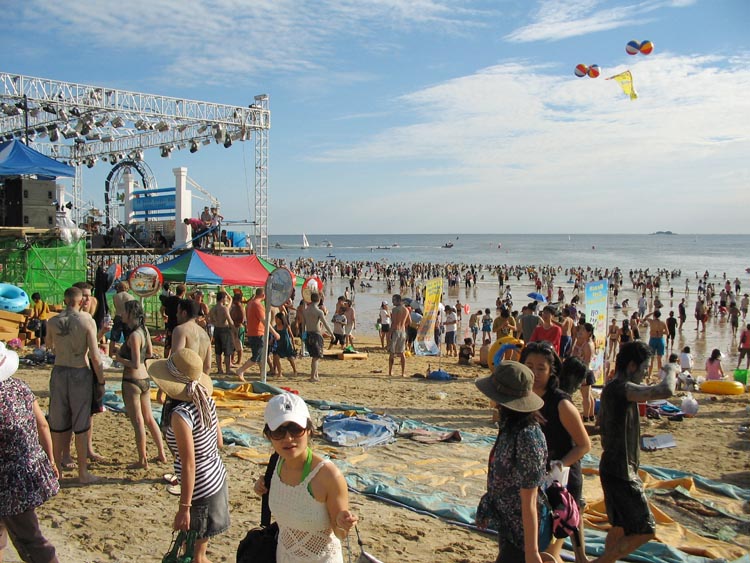
The festival takes place on Daecheon Beach in Boryeong, Chungcheongnam-do, about two hours southwest of Seoul. The 2026 run is 17 days (July 24–August 9), which is longer than many visitors expect — you don’t have to cram into a single weekend. Weekdays are noticeably less crowded than Saturdays. Note that the organizer has flagged a couple of schedule quirks for 2026: extended night hours (to around 9:30 pm) on July 24 and August 6, and a possible experience-zone closure on August 5 for a safety inspection. Schedules shift year to year, so confirm these on the official festival site before you lock in a date.
How to get there from Seoul
You have two realistic options, both around 2–3 hours:
- Express bus (simplest): from Seoul Central City Terminal (Express Bus Terminal) to Boryeong/Daecheon Bus Terminal, roughly 2–2.5 hours. From the terminal it’s a short local bus or taxi (about 10–15 minutes) to Daecheon Beach.
- Train: from Yongsan Station to Daecheon Station on the Janghang Line, roughly 2.5–3 hours, then the same short hop to the beach.
Fares for either are modest — figure roughly 10,000–30,000 KRW one-way depending on mode and class. Book the bus or train on the official sites (kobus.co.kr for buses, Korail for trains) a few days ahead in peak summer, because seats sell out around weekends.
What it costs
Walking on the beach is free, but the actual mud zones require a paid wristband. Per the festival’s official ticketing, a Regular Zone adult wristband runs roughly 10,800–14,400 KRW (weekday vs. weekend), with cheaper teen and Family Zone options. The wristband typically bundles a small gift voucher and includes the Water Park Zone, and an early-bird discount was advertised ahead of the season. Treat these numbers as approximate and check the official English ticket page for the current year — prices and inclusions change.
What to actually do once you’re muddy
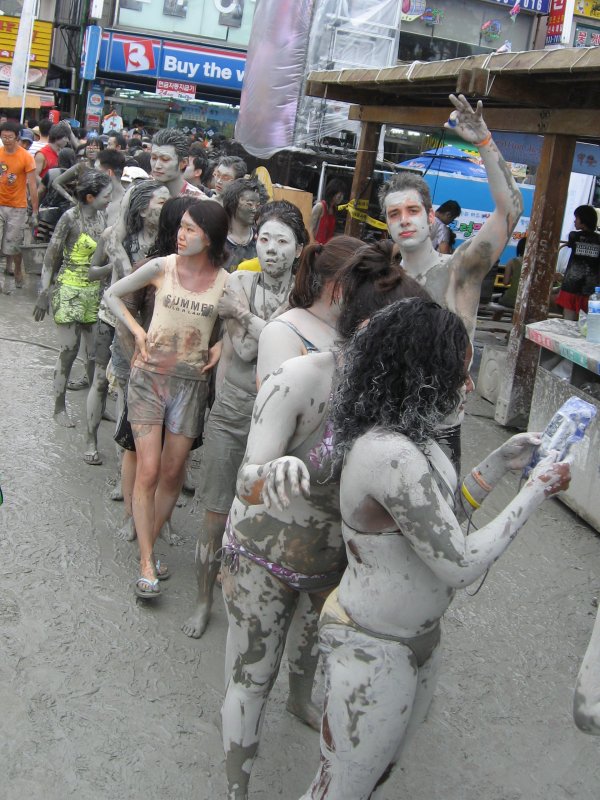
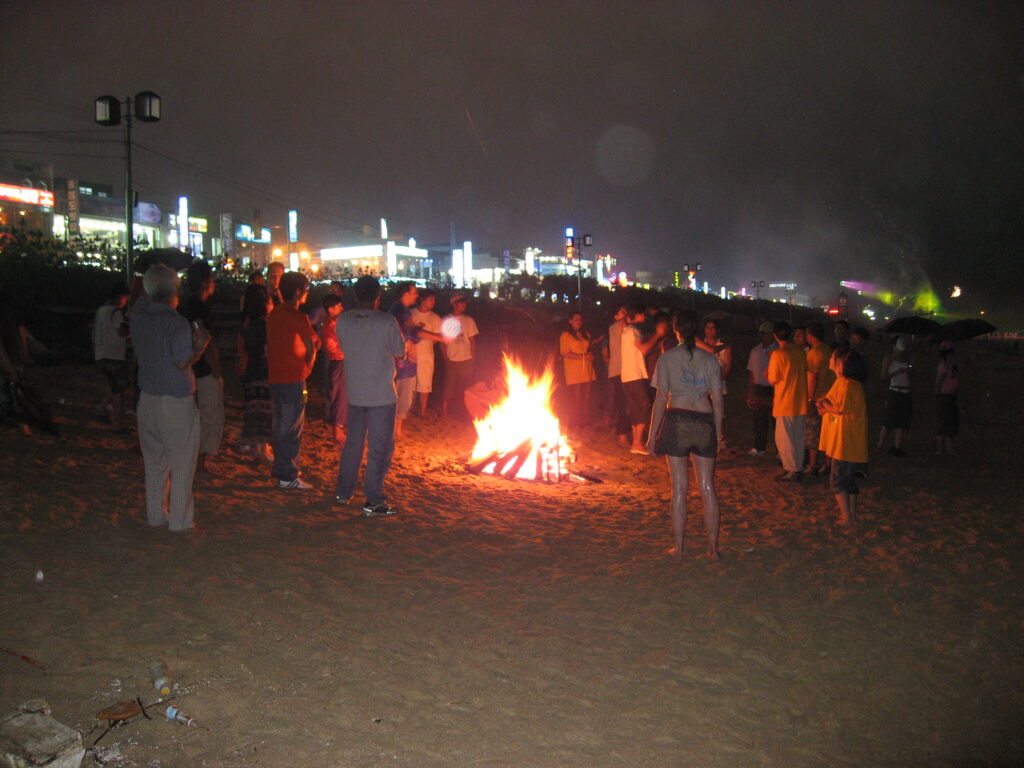
Don’t overthink it. The core experiences are the mud pools, the inflatable mud slides, the mud bath, and the Mud Run obstacle course. There’s a self-mud massage area (the Mud Cask Zone), color mud and body painting, and a Water Park Zone for rinsing off and cooling down. In the evenings the beach turns into a party with an ocean fireworks show and busking performances. Plan on the mud in the daytime and the fireworks at night.
What to eat at Daecheon Beach
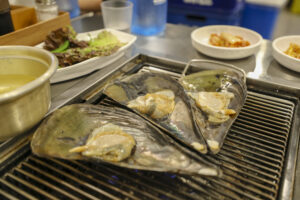
When you have washed the mud off, eat where the locals do: Daecheon Beach is famous for jogae-gui, charcoal-grilled clams and scallops cooked at your table, often finished with melted butter and cheese. Rows of clam-BBQ restaurants line the beachfront, and most also serve kalguksu (knife-cut noodle soup) to round things out. It is the ideal post-festival meal — see our guide to jogae-gui for what to order and how it is done.
Practical tips that save the day
- Book a room early. Boryeong’s beachfront accommodation fills months ahead for festival weekends; if it’s full, base yourself nearby and commute in.
- Pack for water. Wear a swimsuit under quick-dry clothes, bring flip-flops you don’t mind trashing, a waterproof phone pouch, and a dry bag for valuables. Lockers exist but lines are long.
- Sun, then mud. The west-coast sun is brutal at midday — sunscreen goes on before the mud, not after.
- Go on a weekday if you can. Same mud, a third of the crowd.
It’s loud, chaotic, and one of the easiest “I can’t believe I did that” days you’ll have in Korea. Lock in a weekday, sort your bus or train in advance, and the rest takes care of itself.

Leave a Reply