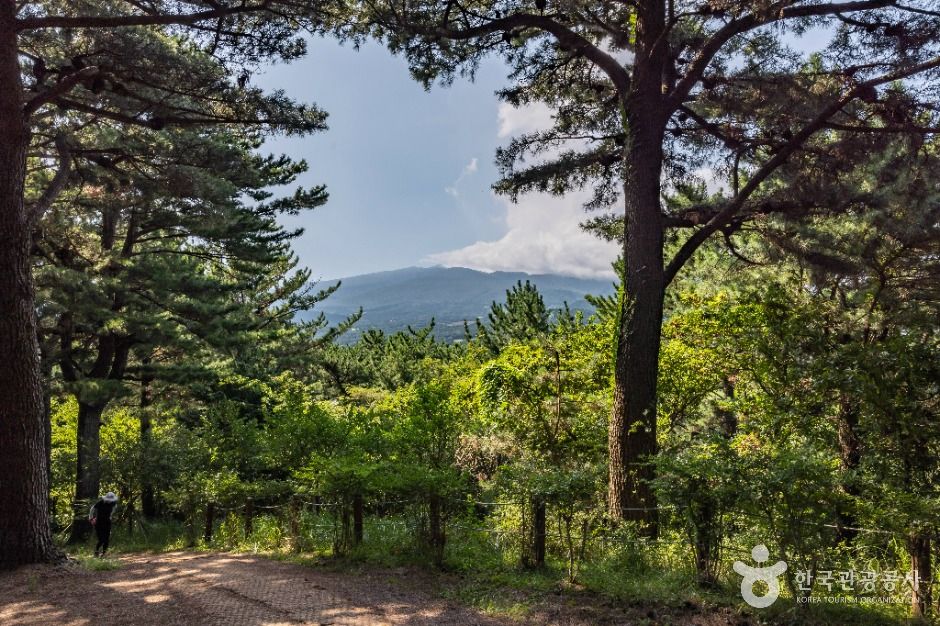

Some cafes are a stop between places. Yuji Coffee Works (유지커피웍스) is more like a small piece of contemporary Jeju architecture you happen to be allowed to drink coffee inside. It sits about a ten-minute drive from Jeju International Airport, on the hillside in Ora-dong (오라동) where the road climbs toward the We-Park complex, past Halla Library and the Jeju Art Center. That proximity to the airport is the practical hook: it makes a genuinely good first stop after you land, or a last, unhurried hour before you fly home.
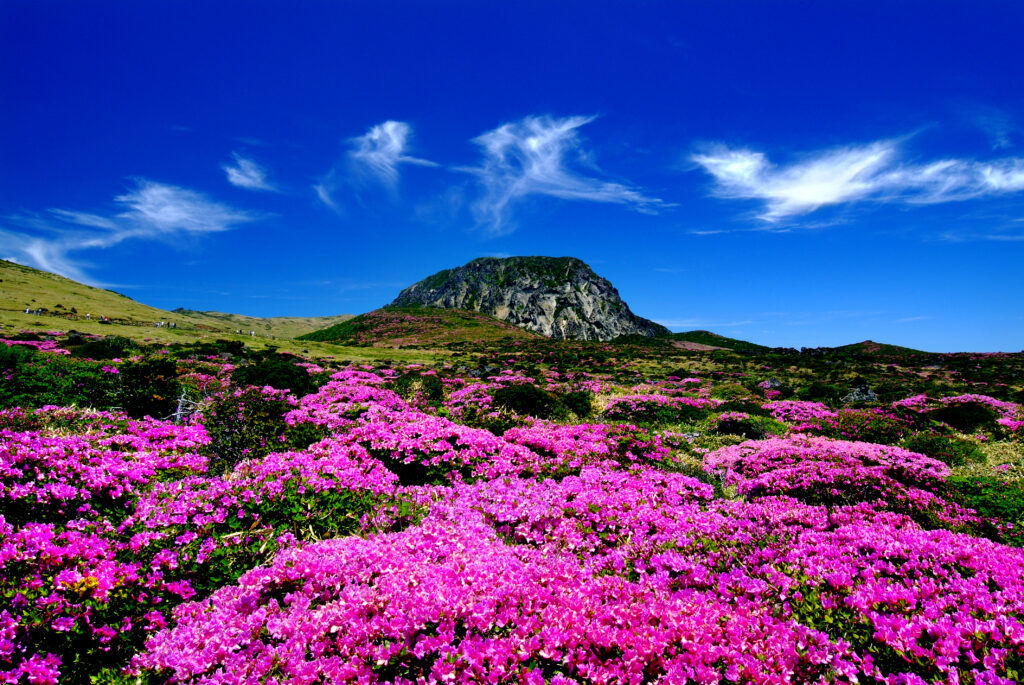
Two triangular buildings, set into the land
The cafe is built as two low, triangular, almost pyramid-like buildings under natural slate roofs, finished in muted, low-saturation tones so they sit quietly against the greenery rather than shouting over it. They were designed by the architect Lee Seong-beom (이성범) of Lee Seong-beom Architects (이성범건축사사무소), and the design lets the slope of the land and the movement of air through the site guide where things go, rather than flattening the ground into a parking lot with a box on top. The buildings were recognized at the 2025 목조공간대전 (a national wood-architecture competition) for that approach.
One thing worth getting right, because it is easy to find stated wrongly online: the architect, Lee Seong-beom, won the 2024 아천건축상 (the Acheon Architecture Award of the Korean Institute of Architects) — but for a different project, a house called 연안재 (Yeonanjae), not for this cafe. Yuji Coffee Works is by the same architect and the same firm, which is why the two often get mentioned together, but the cafe itself was not the award-winning work. Its own recognition is the 2025 wood-architecture award above.
The garden and the old tree
The buildings are really there to frame a garden of more than 1,000 pyeong — over 3,300 square meters (the official project data lists a site area of 3,306 m²). It is landscaped in a restrained, Jeju-native style: low colors, mature native trees, and citrus, arranged so the planting feels like it was always there.
At the heart of it is a single old tree near the entrance that acts as the spatial centerline, with the rest of the layout reading off it. Sources differ on exactly what that tree is, so it is worth being honest about: the cafe’s own accounts and the architect-side write-ups describe a centuries-old 팽나무 (Jeju hackberry) together with native citrus as the central axis, while several travel posts instead describe a roughly 500-year-old 조록나무 (Distylium racemosum). Those are two different species — and a couple of auto-translations have mangled 조록나무 into “zelkova” or “juniper,” both wrong. Either way, the point holds: you are sitting in a young building arranged around a very old tree, and the cafe’s own telling leans toward the hackberry.
Their own citron, in the bread and the cup
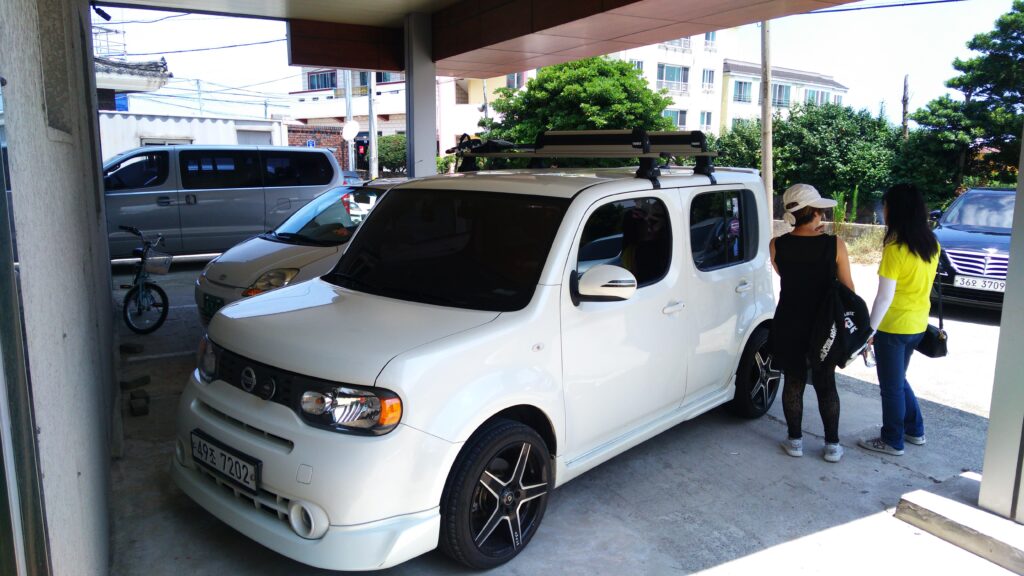
The name is part of the story. 유지 nods to the Jeju-dialect word for citron, and the cafe grows its own 댕유자 (a Jeju citron, the 당유자 variety) right on the grounds. That homegrown fruit goes into the things you actually order: 댕유자 bread and 댕유자 drinks, alongside the cafe’s own coffee (reported from around 6,000 KRW) and bakery items.
It helps to set expectations: this is a design-and-garden destination cafe, not a restaurant. Come for coffee, citron bakery, and the slow walk through the garden, not for a full meal. Menus and prices shift with the seasons, so treat any figure here as “reported” and check the cafe’s own Instagram (@yuji_coffee_works) for what is actually being poured this month.
Getting there and hours
The address is 제주시 오남로 297 (Onam-ro 297, Ora-dong, Jeju City). From Jeju International Airport it is roughly a ten-minute drive, and realistically you will want a car or taxi — this is a hillside spot above town, not a walkable-from-downtown errand. The road up passes Halla Library and the Jeju Art Center on the way to the We-Park complex. There is parking on the large garden grounds.
It is open daily from 10:00 to 21:00, with last order at 20:30. A note for trip planners: multiple travel posts report it as a no-kids / no-pets space. I could not confirm that on an official page, so treat it as reported — if you are traveling with young children or a pet, check the cafe’s own channels before you build it into your day.
Where it fits on a Jeju trip
Because it is so close to the airport, Yuji Coffee Works slots cleanly onto the front or back end of a wider island loop. If you are doing a driving itinerary, it pairs naturally with our 2-day Jeju driving guide — pick up the rental car at the airport, and let this be the calm, unhurried stop before the early-morning headlands and Hallasan trails begin. As a first impression of the island, a quiet building set into an old garden is a hard one to beat.
Where to eat in Jeju City
Jeju’s food is built on the island itself: pork simmered into rich noodle soups and stews, black-pork BBQ over open flame, and dishes the haenyeo (women divers) pull from the sea. These three Jeju-City spots are easy to reach from the airport and cover the classics most first-timers come for.
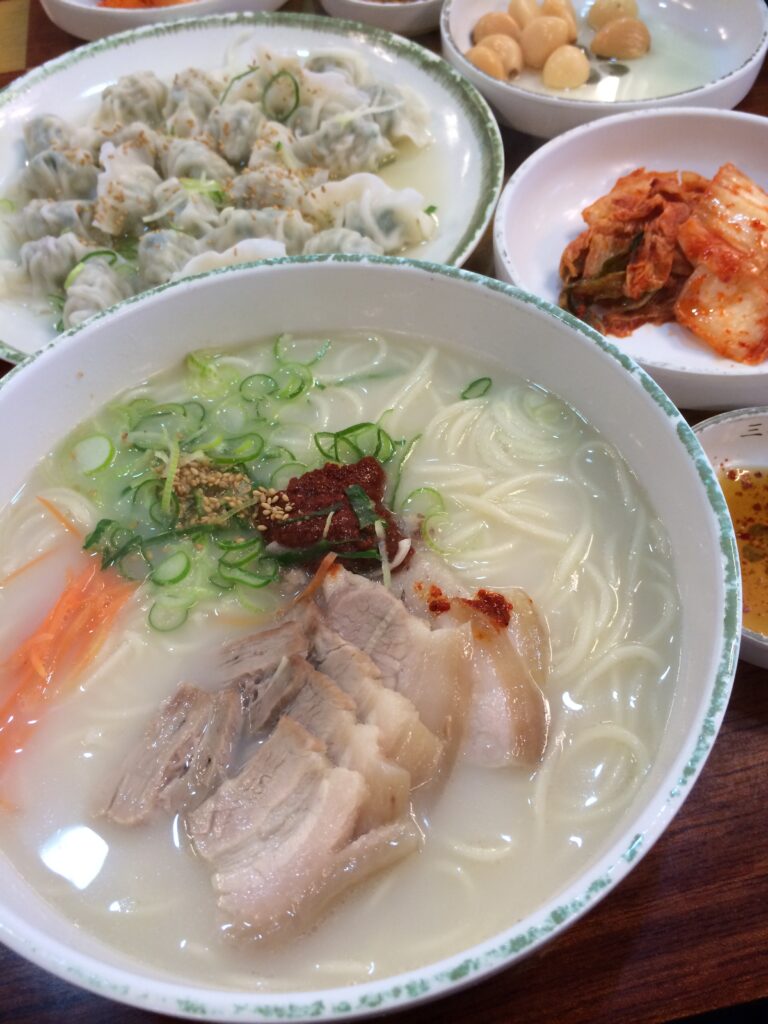
- 자매국수 (Jamae Guksu) — The dish to order is 고기국수 (gogi-guksu), Jeju’s milky pork-bone noodle soup crowned with sliced pork. It’s one of the island’s most recommended noodle houses, so expect a line and register on the CatchTable remote queue before you arrive.
- 우진해장국 (Ujin Haejangguk) — Despite the “haejangguk” (hangover soup) name, regulars come for the 고사리육개장 (gosari-yukgaejang), a porridge-thick fern-and-pork stew, and 몸국 (momguk), a traditional seaweed-and-pork soup. A genuine local institution downtown; meal-time waits can top an hour.
- 돈사돈 (Donsadon) — For 흑돼지 근고기 (heukdwaeji geun-gogi), thick-cut Jeju black pork grilled over charcoal/briquettes and dipped in salted-shrimp sauce. Open since 2006 and a TV-famous BBQ standby in Nohyeong-dong.
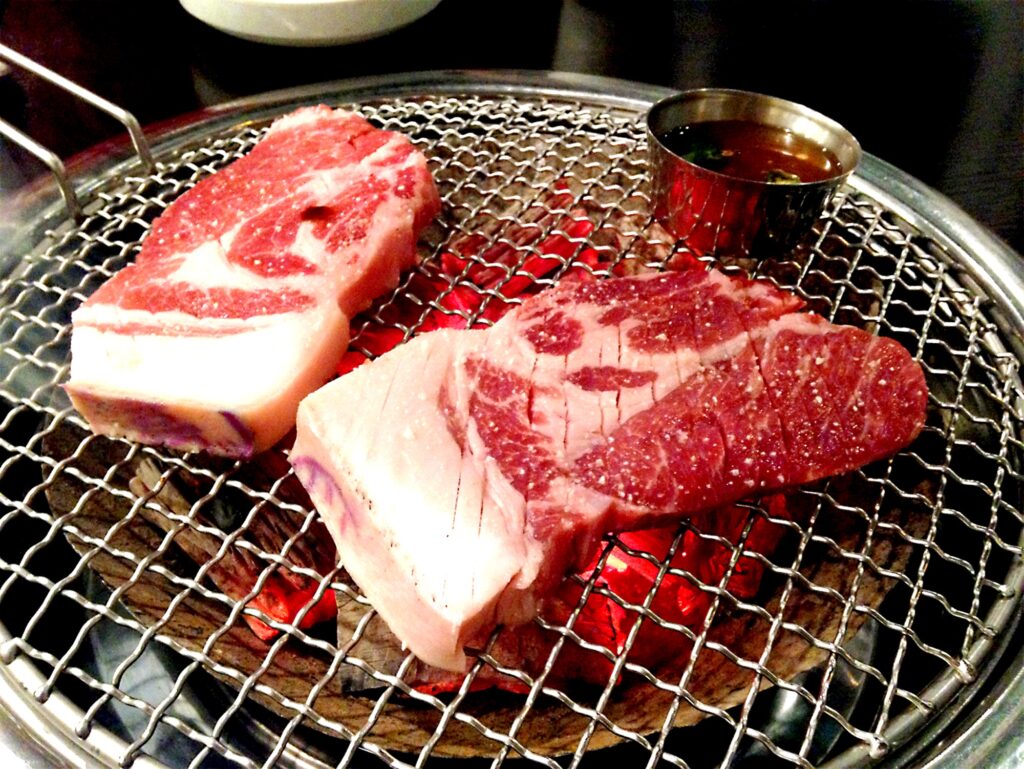
One honest note before you go: confirm opening hours and closing days first — Jeju favorites often take a midweek day off (Jamae Guksu typically closes Wednesdays; Donsadon’s main hall closes Tuesdays, though its annex stays open), and the most popular spots run long queues, so off-peak timing and remote waitlist apps make a real difference.




Leave a Reply