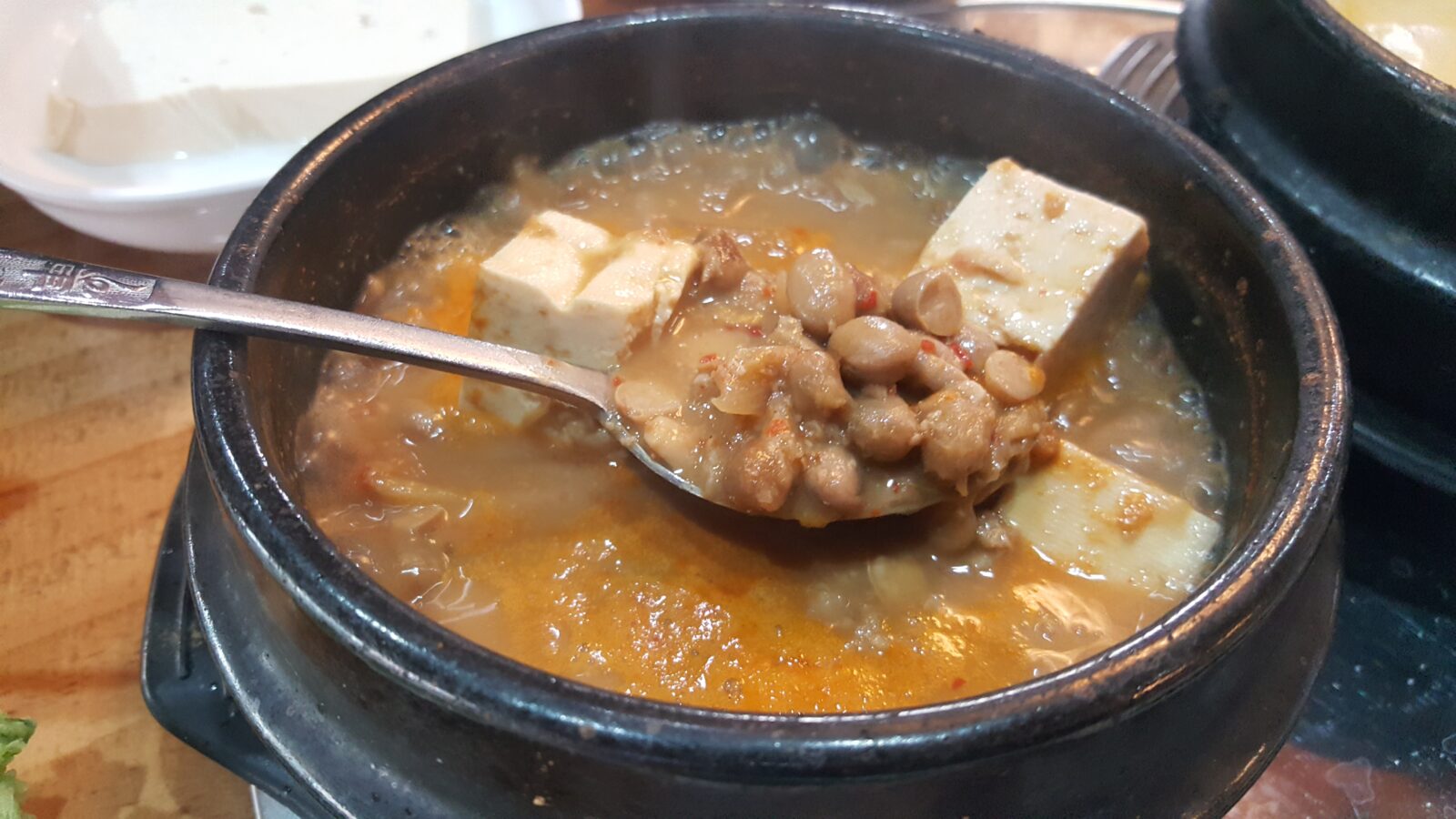
If doenjang is the friendly, mellow soybean paste that anchors everyday Korean cooking, cheonggukjang (청국장) is its bold, unmistakably pungent cousin. Made by fast-fermenting whole soybeans for just two to three days, it carries a powerful aroma that Koreans either adore or politely tolerate, and a flavor that is among the deepest and most savory in the entire Korean pantry. Simmered into a bubbling stew, cheonggukjang jjigae is the ultimate cold-weather comfort food: rustic, protein-rich, and intensely nourishing.
What Is Cheonggukjang?
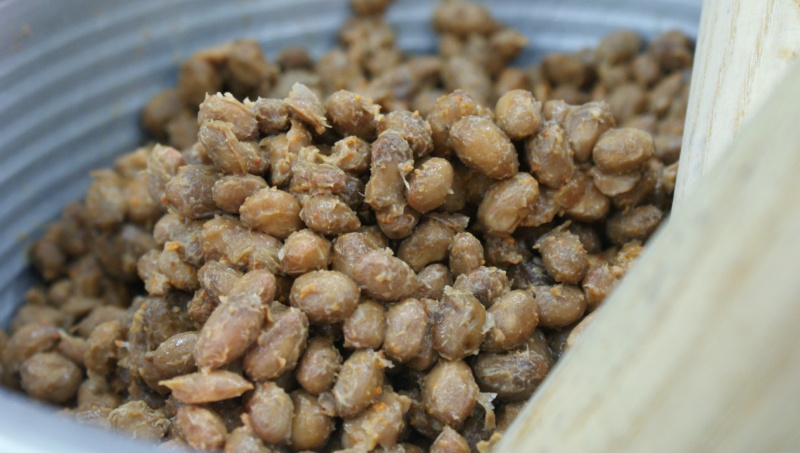
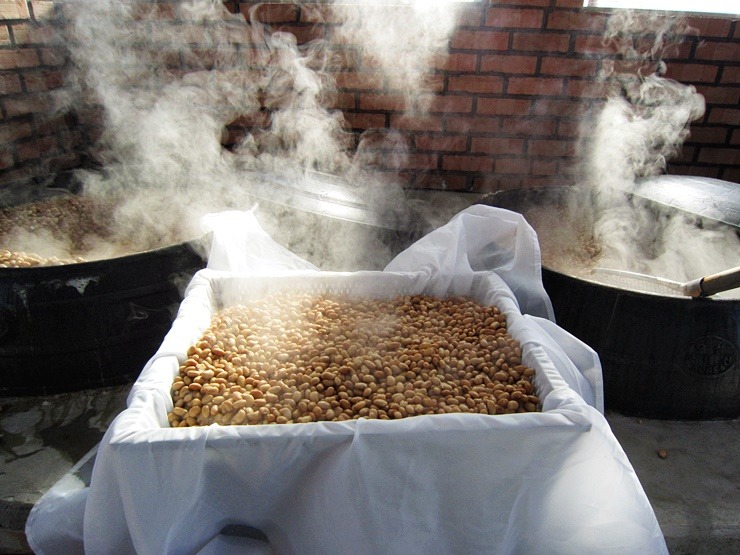
Cheonggukjang is a fermented soybean paste, but the way it’s made sets it apart from its better-known relative, doenjang. Boiled soybeans are inoculated with Bacillus subtilis bacteria, which occur naturally in the air and traditionally in rice straw, then kept warm at around 40°C (104°F). In only two to three days, the beans ferment, with no salt added during this stage. By contrast, doenjang ferments for months. This rapid process produces a paste that keeps the beans largely whole, bound together by sticky, stringy strands, a hallmark of healthy fermentation similar to Japanese nattō.
The fermentation is what creates cheonggukjang’s signature pungent smell. It’s earthy, funky, and assertive, which is exactly why it has a devoted following and also why it’s sometimes politely cooked with the kitchen window open.
Taste and Texture
Flavor-wise, cheonggukjang is intensely umami: nutty, savory, slightly sweet from the soybeans, and far more concentrated than doenjang. The texture is the fun part: you get soft, intact beans suspended in a thick, hearty broth, with that gentle stringiness signaling good fermentation. Despite the formidable aroma, the eating experience is surprisingly gentle and comforting, especially spooned over a bowl of hot white rice.
How It’s Eaten
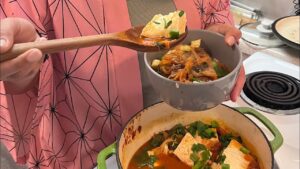
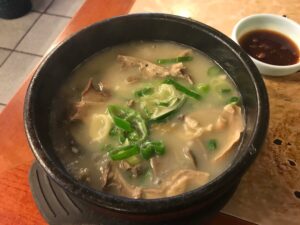
Cheonggukjang is almost always served as a stew (jjigae), bubbling hot in an earthenware pot, alongside steamed rice and a spread of banchan (side dishes) such as kimchi, seasoned greens, and pickles. It is considered a quintessential home-cooked, winter dish, valued as a warming, nutrient-dense meal during cold months. The stew is typically built with tofu, kimchi or radish, onion, mushrooms, and a little chili.
Cultural and Health Notes
Cheonggukjang has a long history on the Korean peninsula and is widely regarded as a health food. It’s rich in protein, vitamins, and beneficial fermentation bacteria, and is traditionally believed to aid digestion, so much so that it’s even sold as dietary supplement pills in Korea. Because the fermentation is short and saltless, it retains a lot of the soybean’s natural nutrition.
A Note on the Smell (Honest Caution)
Let’s be honest: the aroma is strong. A perfectly good batch of cheonggukjang smells funky and a little ammoniac, which is normal for this fast fermentation. However, you should still trust your senses. Fresh, healthy paste smells pungent but clean; if it smells sharply of harsh ammonia or shows off-colored mold (pink, fuzzy green, or black), discard it. Cook in a well-ventilated kitchen, and if you’re easing newcomers in, start with a milder ratio of paste to broth. An odorless version of cheonggukjang was even developed in the 1990s for exactly this reason.
How to Make Cheonggukjang Jjigae at Home
You’ll buy the cheonggukjang paste ready-made (look in the frozen or refrigerated section of a Korean grocery; it’s often sold frozen). The stew itself comes together in about 25 minutes.
Ingredients
- About 1/2 cup (150 g) cheonggukjang paste
- 2 cups (480 ml) water or anchovy-kelp stock
- 1/2 cup well-fermented (sour) kimchi, chopped
- 1/2 block (about 150 g) soft or medium tofu, cubed
- 1/4 onion, sliced; 1 small zucchini or a handful of radish, diced
- 2-3 fresh mushrooms (shiitake or enoki), sliced
- 1 green chili and/or 1 tsp gochugaru (Korean chili flakes), to taste
- 2 cloves garlic, minced; 1 scallion, chopped
Steps
- In a small pot (ideally earthenware/ttukbaegi), bring the water or stock to a boil.
- Add the kimchi, onion, radish or zucchini, and garlic. Simmer 5-7 minutes until softened.
- Stir in the cheonggukjang paste until it dissolves into the broth. Lower the heat to a gentle simmer; avoid a hard boil to keep the flavor mellow.
- Add mushrooms, tofu, chili, and gochugaru if using. Simmer another 5-7 minutes.
- Taste and adjust; add a pinch of salt or a spoon of doenjang only if needed.
- Scatter scallion on top and serve bubbling hot with steamed rice and banchan.
Cheonggukjang jjigae rewards the curious. Push past the aroma and you’ll find one of the most deeply satisfying, soulful bowls in Korean home cooking, the kind of dish that tastes like a grandmother’s kitchen in the dead of winter.



Leave a Reply