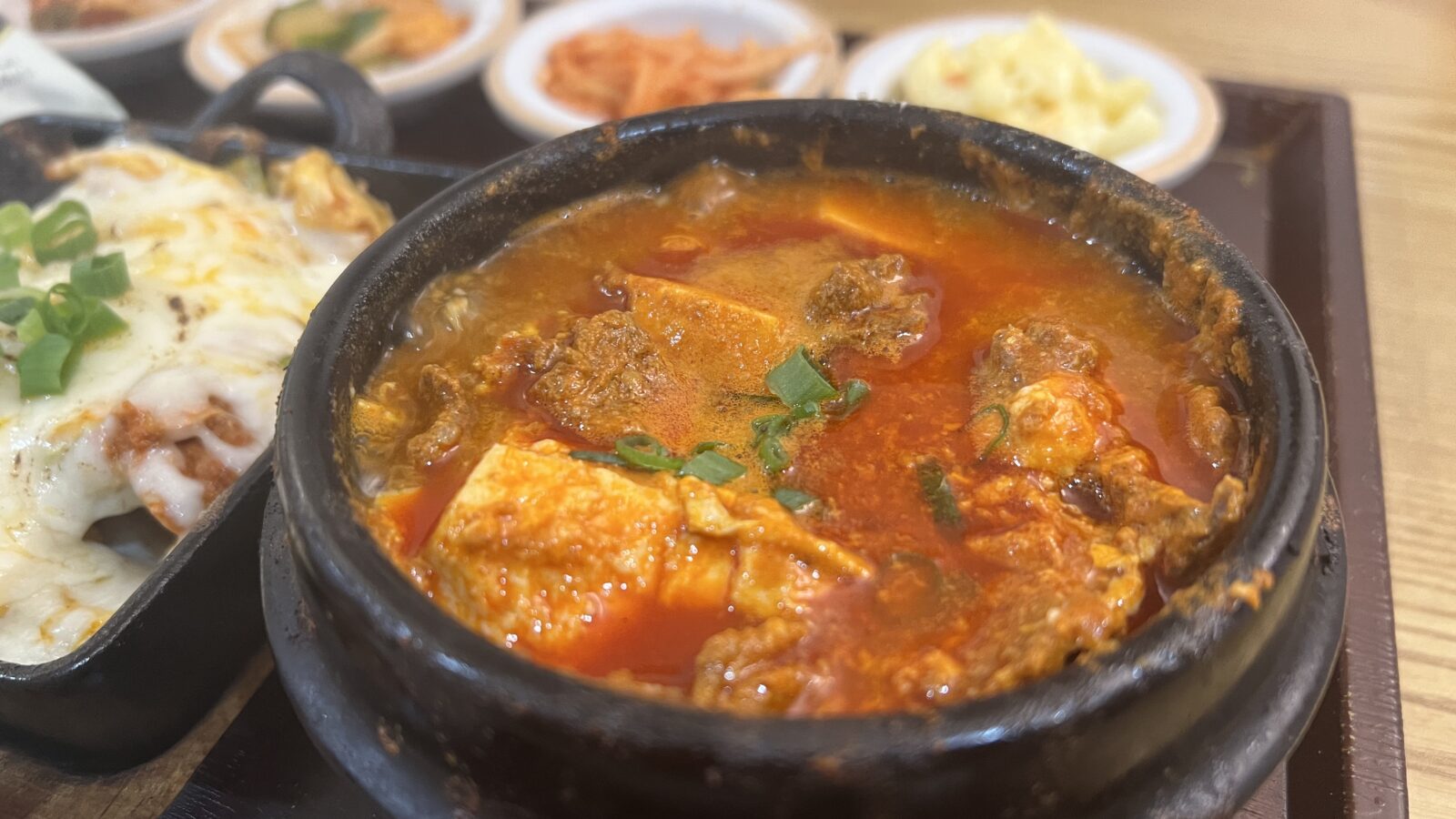
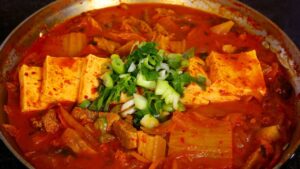
순두부찌개 (sundubu-jjigae) is the pot Koreans reach for when they want something fast, cheap, and ferociously comforting — a single-serving stew of fiery red broth with clouds of silky soft tofu floating in it, served still erupting in a 뚝배기 (earthenware pot) next to a bowl of short-grain rice. You’ll find it everywhere, from late-night chains to home kitchens, and it comes together in about 15 minutes. Here’s how to make a proper pot for one or two, plus the single step that decides whether your broth tastes deep and glowing or thin and dull.
The tofu IS the dish
Don’t confuse this with 두부 (firm block tofu) stews. 순두부 is fresh tofu that has never been pressed or cut into blocks, so it stays soft, custardy, and uncurdled — it usually comes in a tube. You do not dice it. You spoon or squeeze it straight into the broth in big chunks, and it breaks into soft, silky clouds. That softness isn’t a side note; it’s the entire point of the dish. Buy real soft or silken tofu, not the firm stuff.
The one step that makes it: bloom the chili in oil
If you take one thing from this recipe, make it this. Before any liquid goes in, you build a chili oil base: put the 고춧가루 (Korean chili flakes) and oil into a cold pot together, then turn on medium heat and stir until the mixture turns glossy and slightly pasty. Never preheat a dry pot and throw the flakes in — they scorch in seconds and turn bitter. This bloomed chili oil is where the deep red color and the rounded, smoky heat come from. It’s the difference between a stew that glows and one that just tastes like watery chili water.
Ingredients (serves 1–2)
- 1 tube (about 300–350g) 순두부 (soft / silken tofu)
- 1 cup (240ml) anchovy-kelp stock (멸치 다시마 육수) or water
- 1 Tbsp 고춧가루 (Korean chili flakes — not chili powder)
- 1 Tbsp neutral oil (or part sesame oil)
- 1 tsp minced garlic
- 1 tsp 국간장 (soup soy sauce) or fish sauce
- Salt to taste (about 1/2 tsp), or 1 tsp 새우젓 (salted shrimp) for restaurant-style umami
- Pinch of black pepper
- 1 egg (optional, raw, added at the very end)
- 1 scallion, sliced
- 1/4 onion, sliced (optional)
- Pick one protein: about 7–8 pieces of seafood (바지락 clams, shrimp, mussels, or 굴 oysters) for 해물순두부; OR about 50–60g thin-sliced pork or beef; OR sour kimchi plus pork for 김치순두부
How to make it
- Measure out the broth. Purge the clams in salted water, devein the shrimp, and slice your aromatics. Get everything ready before you start, because the cooking goes fast.
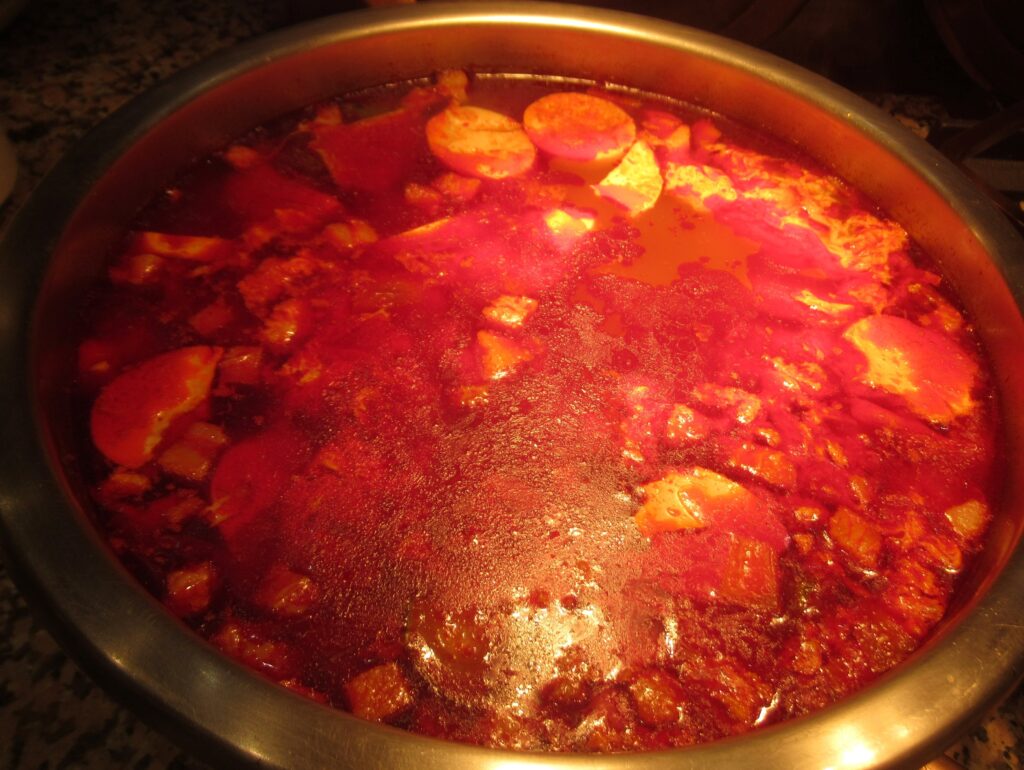
- Build the chili oil: put the 고춧가루 and oil into a cold pot, then heat to medium and stir until the mixture is glossy and slightly pasty, about a minute. Do not preheat the dry pot, or the flakes scorch and turn bitter.
- Add your protein (pork or beef), the garlic, and the onion — plus the kimchi if you’re making 김치순두부. Stir-fry for 2–3 minutes until nearly cooked. Hold any quick-cooking seafood for later.
- Pour in the stock and the 국간장. Bring to a boil and let it bubble for 3–4 minutes, skimming off any foam.
- Spoon or squeeze in the 순두부 in big soft chunks. Nudge the bottom of the pot once or twice so nothing sticks, but do not stir hard — over-stirring turns the tofu to mush. Boil for 3–4 minutes.
- Add the quick-cooking seafood (clams, shrimp, mussels, oysters) and boil 2–3 minutes until the shells open. Taste and adjust with salt or 새우젓 and a pinch of black pepper.
- At the very last second, crack a raw egg into the center, scatter over the scallion, and serve while it’s still bubbling. The residual heat poaches the egg, and diners stir it in at the table.
Variants worth knowing
The recipe above is a template, and Koreans swing it in several directions. 해물 순두부찌개 (seafood) is the most popular restaurant version — bright and briny with clams, shrimp, mussels, and sometimes oysters. 굴 순두부찌개 (oyster) is a winter favorite, leaning on plump oysters for a soft mineral sweetness. 김치 순두부찌개 is built on sour, well-fermented kimchi and pork belly — tangier and deeper red, the closest cousin to kimchi-jjigae. 소고기 / 고기 순두부 skips the seafood for thin-sliced meat: richer, rounder, and the easy pantry version. The 북창동 / 두부집 (dubu-house) style is the chain template that popularized single-serving 뚝배기 sundubu across Korea and Korean-American strip malls; it arrives fiercely bubbling, the server cracks a raw egg in for you, and you pick a spice level and a protein. For kids there’s 순한맛 (mild), with the chili cut back or swapped for a light 된장 base, and the nuttier, often non-spicy 들깨 순두부 made with ground perilla seeds.
How to eat it
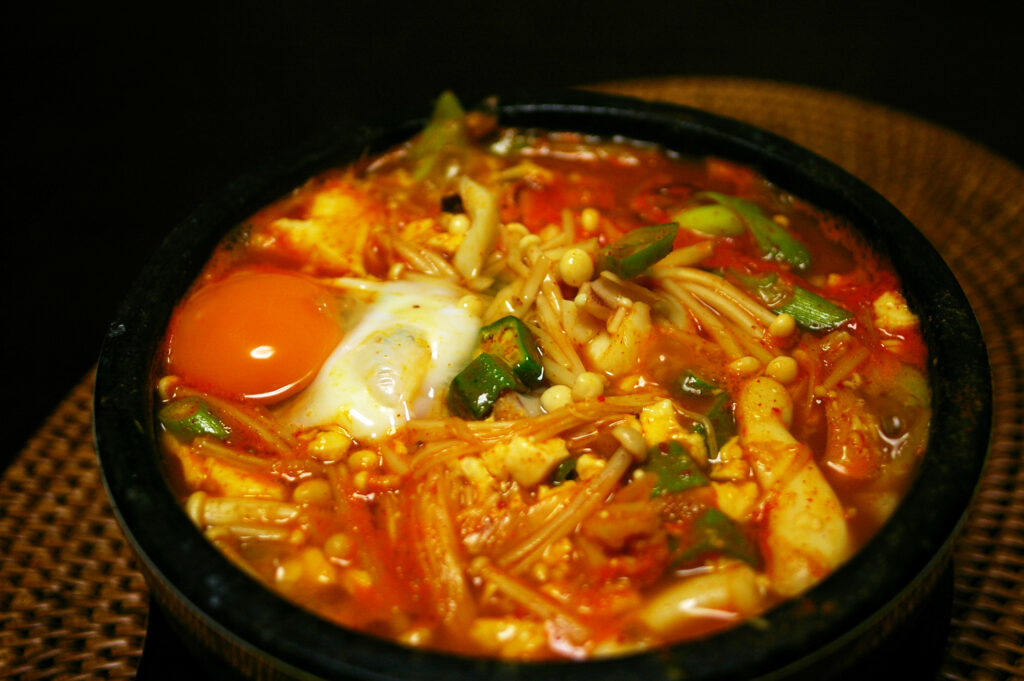
Eat it the moment it stops actively erupting but is still very hot. First, stir the raw egg into the broth so it forms soft ribbons — or scoop it out half-cooked if you prefer. This is a rice-and-stew meal: take a spoon of spicy broth and tofu, then a bite of short-grain rice, or tip the rice straight into the pot near the end. Spoon up the tofu in big custardy pieces — it should slide, not hold a cube shape. Work through the seafood (suck the clam shells for the briny broth inside), and use a spoonful of broth to flavor every bite of rice. Cool your palate with banchan — kimchi, pickled radish, seasoned bean sprouts — between spoonfuls. The 뚝배기 keeps everything searing to the last bite, so blow on each spoonful. One tube of tofu plus one bowl of rice is a full, cheap, warming meal — classic solo-diner and hangover food. One caution: the earthenware and broth stay scalding for several minutes after they leave the stove, so don’t rush the first bite.
If this is your kind of pot, two other spicy comfort-stews are worth a try: budae-jjigae, the bubbling army-base stew in the same one-pot family, and if you fell for the clams in the seafood version, the grilled 바지락 of jogae-gui at Daecheon Beach are a natural next stop.
Where to eat 순두부찌개 (sundubu-jjigae, soft-tofu stew) in Seoul
Sundubu-jjigae lives or dies on the tofu: the silkiest versions use soft curds so fresh they barely hold together, simmered in a bubbling earthenware pot with chili oil, seafood or beef, and a raw egg cracked in at the table. These three Seoul spots range from the brand that put this dish on the national map to a mountainside old-timer that still makes its tofu from the bean.
- 북창동순두부 본점 (Bukchangdong Sundubu, main branch) — Jung-gu, central Seoul, by the historic Bukchang-dong district; nearest stop City Hall Station (시청역, Line 1/2), Exit 7. This is the flagship of the chain that essentially defined modern sundubu-jjigae as a brand, with 12-plus variations (beef brisket, seafood, ham-and-cheese, dumpling) on the menu. It is the most name-recognized sundubu specialist in the country, so expect company at lunch.
- 백년옥 본점 (Baengnyeonok, main branch) — Seocho-dong, Seocho-gu, southern Seoul, right across from the Seoul Arts Center (예술의전당); nearest stop Nambu Terminal Station (남부터미널역, Line 3). Open since the early 1990s and a Michelin Bib Gourmand pick, it makes its soft tofu daily in the Gangneung Chodang style — clean, custardy, and the real reason to come. A more traveler-convenient branch also exists inside Seoul Station if you are short on time.
- 옛날민속집 (Yetnal Minsokjip) — Gugi-dong, Jongno-gu, at the foot of Bukhansan in northern Seoul; least subway-friendly of the three (closest is Gyeongbokgung Station, Line 3, then a short bus or taxi ride). A roughly 30-year-old handmade-tofu institution in a scenic mountainside setting, it leans toward broader from-the-bean tofu cooking, but the sundubu-jjigae is on the menu and the trip rewards anyone chasing tradition over convenience.
Hours, break times, and weekly closing days at all three shift often, so verify before you go — and since these are popular, well-loved spots, plan for a queue at peak meal times.



Leave a Reply