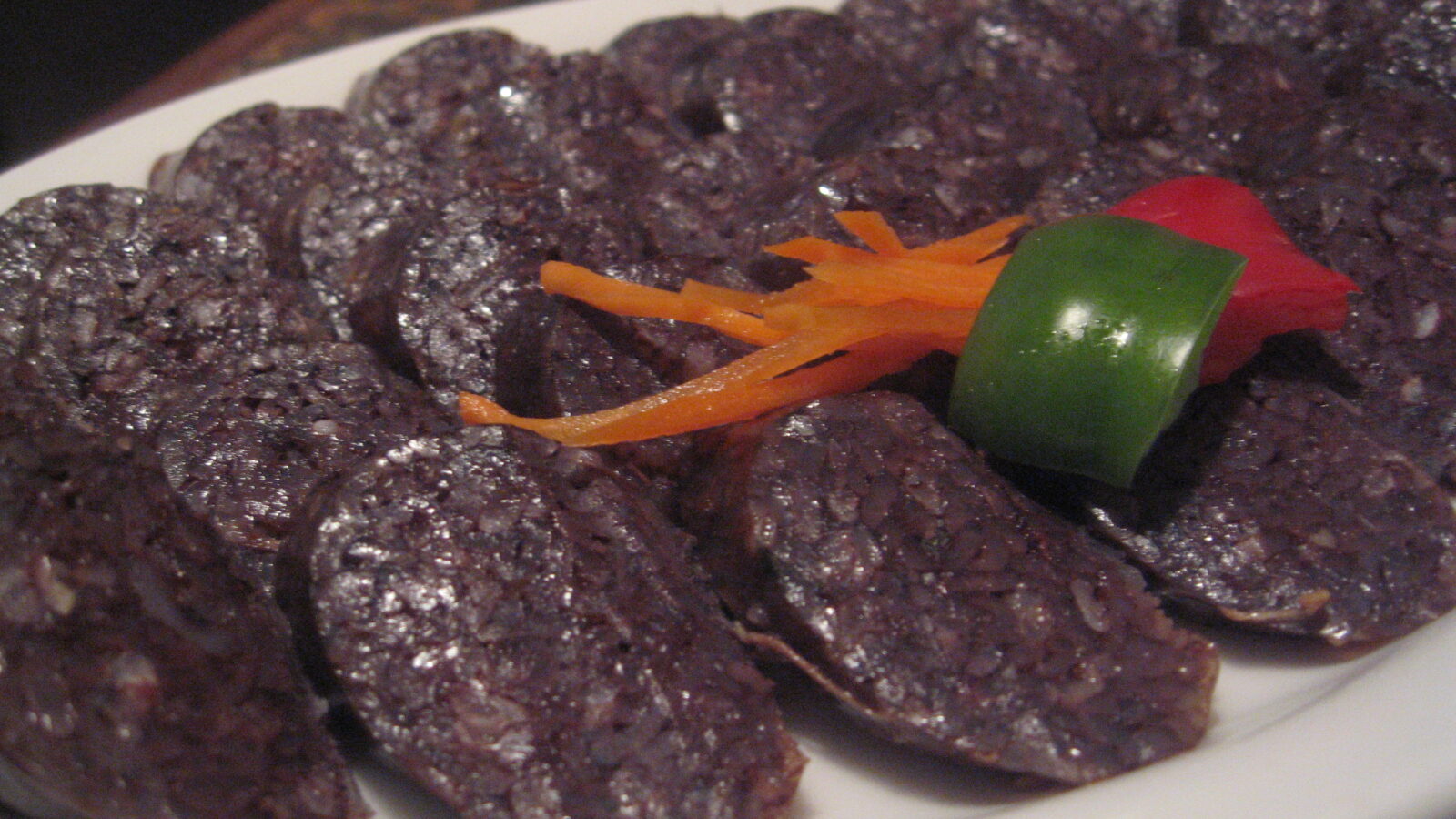
Sundae (순대) is one of those dishes that lives in two worlds at once. On one side it’s a 500-won market snack — dark sausage slices sold by weight from a steaming tray, dunked in tteokbokki sauce. On the other it’s a serious sit-down meal at a 순댓국집 (sundae-guk house), simmered into soup and eaten over rice. It’s a Korean blood sausage: pig intestine casing stuffed with a filling bound by 선지 (seonji, pig’s blood, which gives it the dark color and deep savor), then steamed. Here’s what it actually is, the regional styles worth knowing, how Koreans eat it, and a simplified way to make it at home — with the honest safety notes a blood-and-offal sausage demands.
What sundae actually is
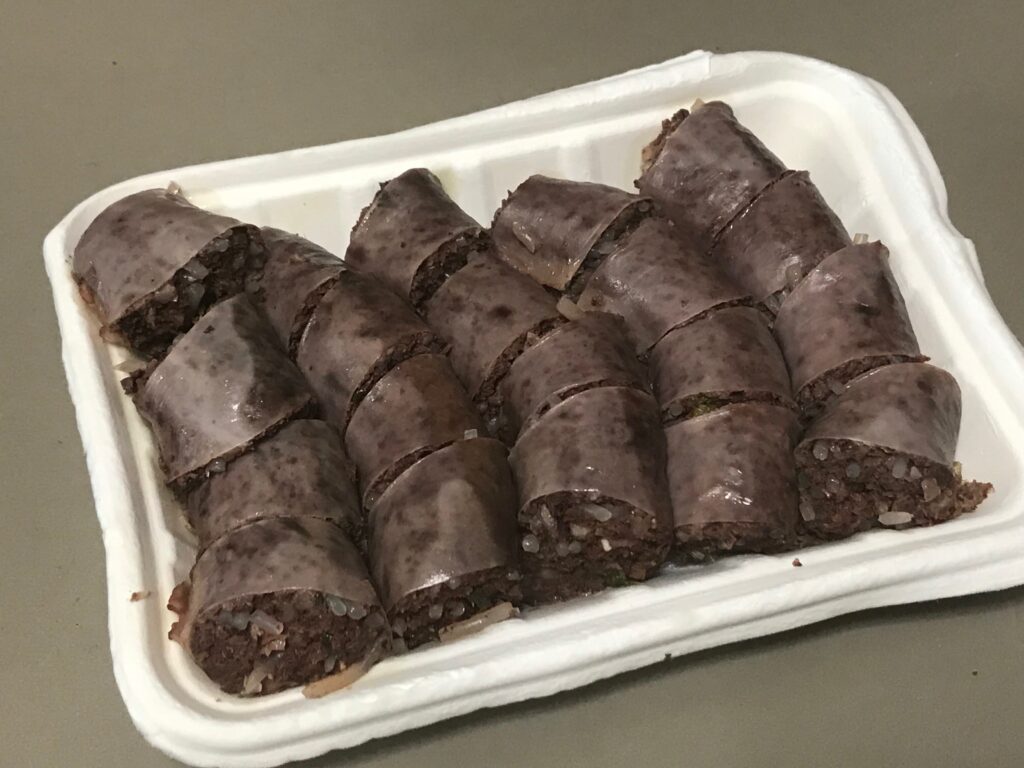
At its core, sundae is three things: a casing (pig small intestine), a binder and flavor base (선지, pig’s blood), and a filler. That filler is where the story splits. The version most foreigners meet today is 당면순대 (dangmyeon-sundae), packed mostly with 당면 (sweet-potato glass noodles). It’s a modern, post-Korean-War economy food — meat was scarce, so cheap glass noodles replaced most of it, and it took off as street food once pork became affordable in the 1970s. The older, traditional style uses 찹쌀 (glutinous rice) or barley and a high proportion of blood instead. Blood-sausage making in Korea is genuinely old, with recipes appearing in 19th-century cookbooks like 규합총서 and 시의전서.
Sundae stands alongside 떡볶이, 튀김, and 김밥 as one of the four pillars of Korean 분식 (street and snack food). A quick spelling note: the dish is 순대, but the soup and the shop take an added ㅅ, becoming 순댓국 and 순댓국집. You’ll see 순대국 everywhere informally, but 순댓국 is the standard-correct form.
The regional styles worth knowing
- 당면순대 — the ubiquitous market and 분식 version, packed mostly with glass noodles. Cheap, sold by weight, dipped in tteokbokki sauce.
- 찹쌀순대 / 피순대 — the older, meatier style of glutinous rice and a high proportion of blood. 피순대 (blood-heavy, noodle-free) is famous in Jeonju and Wanju (전주·완주).
- 병천순대 — from Byeongcheon in Cheonan (천안 병천), Chungcheongnam-do. A market-town style loaded with vegetables, often called the most refined regional sundae.
- 백암순대 — from Baegam in Yongin (용인 백암), Gyeonggi-do. Distinguished by tofu and bean sprouts, with a meatier, less-noodly filling.
- 아바이순대 — the Hamgyong / North-Korean-refugee style centered in Sokcho (속초 아바이마을). Thick, hearty, rice-and-blood-rich, and closely tied to 오징어순대, where a whole squid replaces the casing.
What you’ll need (makes about 3 ft of sausage)
A reality check first: in Korea, most people buy ready-made steamed sundae at the market, and home cooks who do make it buy cleaned casing and pig’s blood rather than sourcing it raw. Fresh pig’s blood is hard to find outside Korea — if you can’t get it, a no-blood 백순대 version works fine with the same method.
- Pig small-intestine casing, about 3 ft (90 cm), bought cleaned
- Filler — choose one: 당면 glass noodles, about 150 g (street style), or 찹쌀 glutinous rice, 2 cups (traditional), or a mix
- 선지 (pig’s blood), about 2 cups, from a Korean butcher (optional if unavailable)
- 5 stalks 대파 (scallion), a handful of 부추 (garlic chives), ½ onion
- Optional: blanched, chopped 콩나물 (bean sprouts) or 깻잎 (perilla), or a little tofu
- 3 garlic cloves and a 1-inch knob of ginger, minced
- 1 tsp salt, ½ tsp pepper, 1 tbsp 참기름 (sesame oil) or 들기름 (perilla oil), 1 tsp toasted sesame
- Coarse salt and flour, for cleaning the casing; cotton string, for tying
How to make it
- Clean the casing. Even bought-cleaned, turn it inside-out and rub with coarse salt and flour, then rinse several times to remove odor. Soak in salted water about 1 hour.
- Prep the filler. For rice, soak 30 minutes, rinse, and cook slightly underdone (¼ cup less water). For glass noodles, soak in warm water 10 minutes, boil 5–7 minutes until tender, drain, and chop short.
- Make the filling. Mix the filler with finely chopped scallion, chives, and onion (and bean sprouts, perilla, or tofu if using), plus garlic, ginger, sesame oil, salt, and pepper. Stir in the 선지 last so everything turns loosely bound and dark red. It should be loose and scoopable, never packed tight.
- Stuff loosely. Tie one end of the casing with cotton string. Using a funnel or sausage stuffer, fill loosely — the rice and noodles swell as they cook, so an over-packed casing will burst. Tie off into links and prick each a few times to release steam.
- Cook through. Steam 30–40 minutes, or gently boil in lightly salted water about 40–45 minutes, until a skewer inserted comes out clean with no raw blood. Don’t hard-boil — a rolling boil splits the casing.
- Rest and slice. Let it rest 5 minutes, then slice into rounds and serve warm.
The honest safety note
This is a blood-and-offal sausage, so a few things genuinely matter. Buy fresh and keep it cold: pig’s blood and any liver or lung sides spoil fast and can carry pathogens, so source from a reputable Korean butcher, refrigerate, and use promptly. Cook it through: the filling — especially the blood and any pork — must be fully set, with no raw or runny blood when you insert a skewer; undercooked pork and offal risk foodborne illness, and leftovers should be reheated until steaming hot. Clean the casing scrupulously: a salt-and-flour scrub and multiple rinses, or it will smell and harbor bacteria. Don’t over-pack, or the casing bursts as the filling swells. Finally, an allergen note: sundae contains pork and blood (not halal or kosher, and not for anyone avoiding blood products), and the soup base and table seasonings may contain shellfish (새우젓). Pregnant or immunocompromised eaters should be especially careful with offal and thorough cooking.
How Koreans actually eat it
The simplest way is dipping the steamed slices in seasoned salt and black pepper — the Seoul and most-common method. The dip shifts by region: the Honam area (Jeolla) leans on 초장 (vinegar-gochujang) or a soybean-paste 막장, Yeongnam uses seasoned 막장, and Jeju often goes with soy sauce. At market stalls, the slices come with steamed offal sides — 간 (liver) and 허파 (lung) — and you alternate bites, all hitting the salt.
The classic 분식 move is dunking sundae slices in spicy-sweet tteokbokki sauce; plain sundae gets monotonous fast, so this is the standard fix, and 순대떡볶이 is a menu staple. As a full meal, 순댓국 serves it in a pork-bone broth with offal and pork over rice, which you season yourself at the table with 다진양념 (chili seasoning), 새우젓 (salted shrimp), 들깨가루 (perilla powder), scallion, and chives. That table-seasoning ritual is essentially identical to Busan’s 돼지국밥 — if you’ve enjoyed a bowl of that, 순댓국 is its close sibling. And like budae-jjigae, sundae carries a quiet post-war story of scarcity turned into comfort food, the glass-noodle swap standing in for the meat people couldn’t afford. There are stir-fried versions too: spicy 순대볶음 and the milder, gochujang-free 백순대볶음.
Where to eat 순대 / 순댓국 (sundae / sundae-guk) in Seoul
Korea’s blood sausage comes in two registers: a comforting bowl of sundae-guk (pork-and-sundae soup) and a sizzling griddle pile of stir-fried sundae. Seoul does both exceptionally well, from a Gangnam old-money favorite to a working-market institution and the city’s legendary multi-floor sundae hall. Here are three places that locals actually trust.
- 농민백암순대 본점 (Nongmin Baegam Sundae, main branch) — Daechi-dong, Gangnam-gu, by the Seonjeongneung / Seolleung station area (Seolleung Station Exit 1, about a 6-minute walk). Routinely named among Seoul’s “top 3 sundae-guk” houses, it carries the prestige of Baegam in Yongin, Korea’s most famous sundae region. The hearty, clean-tasting sundae-guk is the order here. Expect a queue, often split between the main hall and the annex.
- 삼거리먼지막순대국 (Samgeori Meonjimak Sundae-guk) — Daerim-dong, Yeongdeungpo-gu, near the old Daerim Market (closest stop: Yeongdeungpo Market Station, Exit 3; the restaurant actually sits in front of Hallym University Kangnam Sacred Heart Hospital). Open since 1957, it is Seoul’s most historic sundae-guk shop, a designated Seoul Future Heritage and a government-recognized “Hundred-Year Shop.” A no-frills, deeply traditional bowl with about 70 years of practice behind it.
- 신림 순대타운 / 원조민속순대타운 (Sillim Sundae Town / Wonjo Minsok Sundae Town) — Sillim-dong, Gwanak-gu (Sillim Station). A landmark multi-floor food court that is basically shorthand for Seoul sundae culture. Come for the Seoul-style baek-sundae (white sundae) stir-fried with gopchang on a hot griddle — a generous, budget-friendly feast made for sharing. It’s a building full of competing stalls, so wander in and pick one.
Find them on the map: 농민백암순대 본점 · 삼거리먼지막순대국 · 신림 순대타운 / 원조민속순대타운
One honest caveat: hours and closing days vary and change, and these are popular spots where lines are normal — Nongmin Baegam closes Sundays, Samgeori Meonjimak closes Tuesdays, and the Sillim stalls keep their own late-night schedules. Always confirm the day’s hours before you go, and be ready to wait at peak times.


Leave a Reply