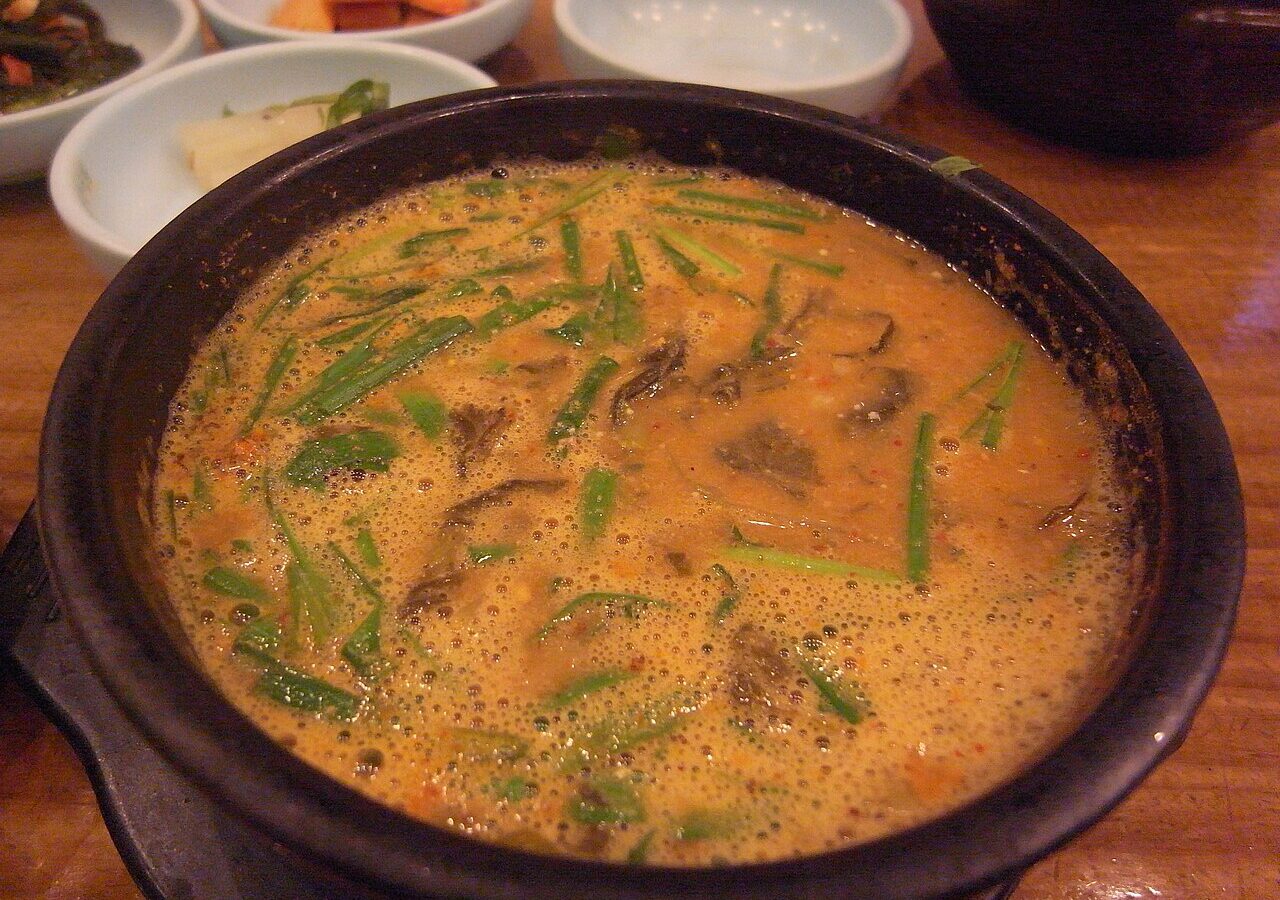
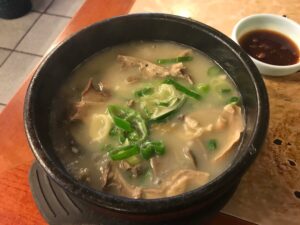
Chueotang (추어탕, chueo-tang) is one of those Korean dishes that looks humble in the bowl and tastes like it has been simmering for generations. At its heart is the freshwater pond loach (미꾸라지, mikkuraji), a small eel-like fish that thrives in rice-paddy mud. The loach is boiled until meltingly soft, then ground or pushed through a sieve so that bones and skin disappear into a thick, earthy broth seasoned with fermented soybean paste, perilla, vegetables, and a final lift of sancho pepper. The name is simple: chueo (추어, 鰍魚) means loach, and tang (탕, 湯) means soup.
What It Tastes Like
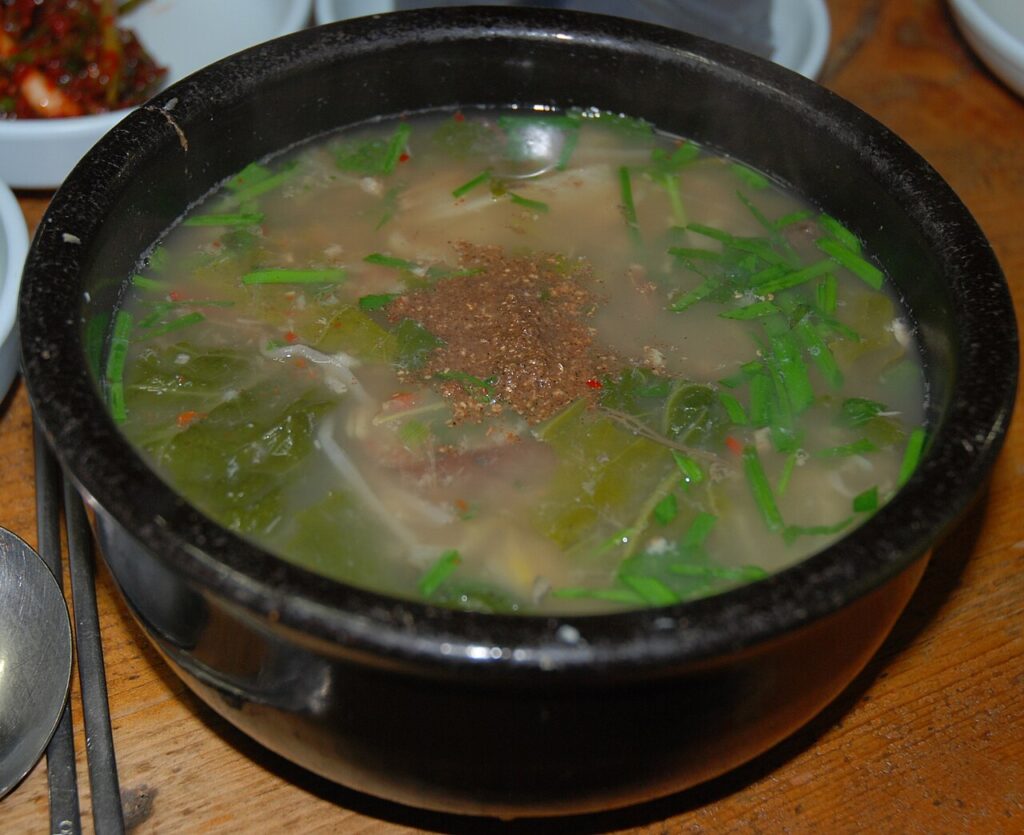
Done well, chueotang is rich without being heavy. The ground loach gives the broth a creamy, almost velvety body, while doenjang (된장, soybean paste) supplies a deep, fermented savoriness. Perilla seed powder thickens it further and adds a nutty, grassy roundness. The defining accent comes at the table: a pinch of ground sancho (산초) or chopi (초피) pepper — the Korean cousin of Japanese sansho — which adds a citrusy, tingling sharpness that cuts the fish’s richness and brightens the whole bowl. Because the loach is fully broken down, there is no fishiness in the off-putting sense and no bones to navigate; the texture is smooth and porridge-adjacent.
How It Is Eaten
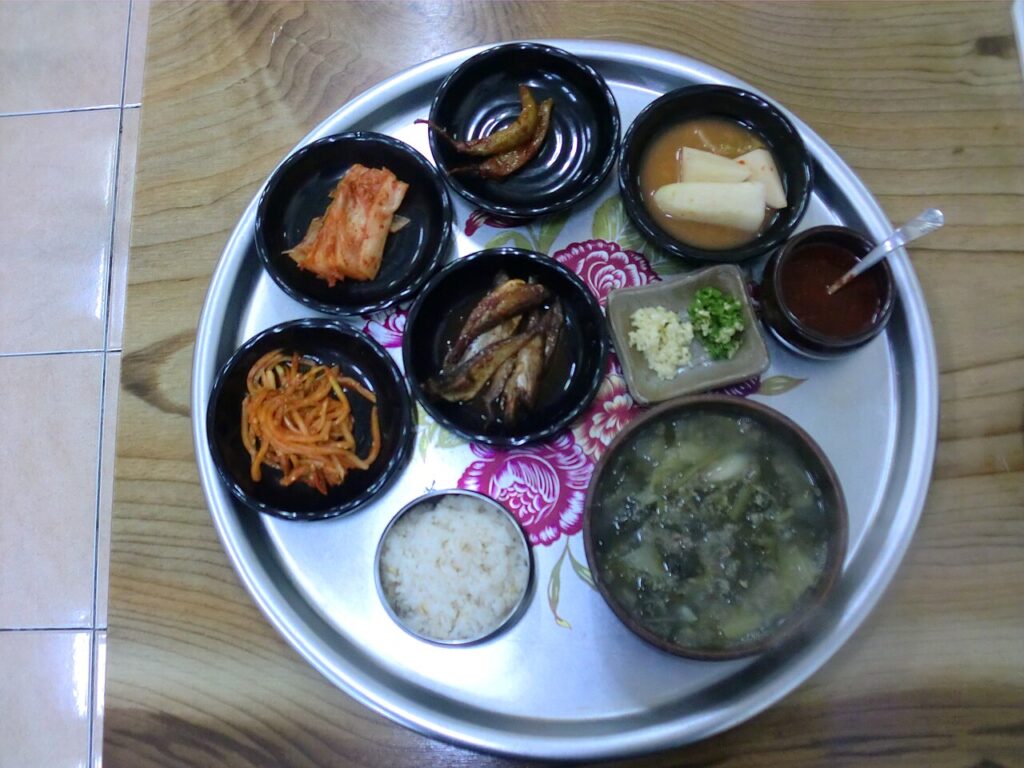
Chueotang is served piping hot, usually with a bowl of rice that you either spoon in or tip directly into the soup. Common table companions include minced garlic, ground sancho pepper, chopped chili, and garlic chives (부추, buchu) so each diner can tune their own bowl. It is classic boyangshik (보양식) — restorative stamina food — eaten especially in autumn, when loaches are fattest after the rice harvest, and in the sweltering days of summer to “fight heat with heat.”
Namwon Style vs. Seoul Style
Two traditions dominate. The southwestern city of Namwon, in the Honam region, is the most famous home of chueotang, and its style is the one most people picture: the loach is completely ground and sieved into a smooth, thick soup finished with perilla powder. In the Yeongnam (southeastern) region, cooks often garnish with Korean mint leaves (방아잎, banga) instead of perilla. Seoul, by contrast, has its own dish often called chutang (추탕), where the loaches are left whole in a clearer, chili-flake broth rather than ground — a style preserved at historic Seoul eateries such as Yonggeumok. Historically in Seoul, licensed street vendors once held exclusive rights to sell loach soup, a small reminder of how deeply this dish is woven into the city’s food history.
How to Make Chueotang at Home
Most home cooks outside Korea will not find live loach, and that is fine — the recipe below follows the Namwon-style method. If you can source frozen or canned loach from a Korean grocer, use it; otherwise this technique works as a template for the broth and seasonings.
Ingredients
- 500 g cleaned loach (미꾸라지), fresh or frozen
- 2 liters water (plus more for the first boil)
- 3–4 tbsp doenjang (된장, soybean paste)
- 1 tbsp gochujang or 1 tbsp gochugaru (chili flakes), to taste
- 3–4 tbsp perilla seed powder (들깨가루)
- 1 cup blanched napa cabbage or dried radish greens (시래기), chopped
- 1 cup mung bean sprouts and/or chopped scallions
- 3 cloves garlic, minced; 1 tsp grated ginger
- Ground sancho/chopi pepper (산초가루), garlic chives, and chopped chili to serve
- Salt and a splash of fish sauce or guk-ganjang (soup soy) to season
Steps
- Rinse the loach in cold water. (If using live loach, traditionally they are purged in salted water; with frozen this step is skipped.)
- Boil the loach in water until very soft, about 30 minutes, so the flesh falls apart easily.
- Drain, reserving the cooking water. Mash the softened loach and press it through a sieve, or blend and strain, to remove bones and skin; combine the smooth flesh back into the broth.
- Stir in doenjang and gochujang/gochugaru, then bring to a gentle simmer.
- Add the cabbage or radish greens, garlic, and ginger; simmer 20–25 minutes until tender.
- Stir in perilla powder and the bean sprouts/scallions; cook a few minutes more and adjust salt.
- Ladle into bowls and serve with rice, ground sancho pepper, garlic chives, and chili on the side.
Honest Cautions
Loach is a fully cooked dish, so the usual raw-shellfish risks do not apply — but a few notes matter. Buy loach from a reputable Korean grocer or fishmonger; freshwater fish should be cooked thoroughly (the long boil here does that). Take care to sieve out fine bones if you mash by hand. Doenjang and fish sauce make this a salty dish, worth keeping in mind for low-sodium diets. And sancho pepper, while wonderful, is potent — start with a small pinch, as too much can overwhelm and numb the palate.
Why It’s Worth Trying
Chueotang rewards an open mind. It carries the muddy-sweet flavor of Korea’s rice paddies, the depth of long fermentation, and the seasonal logic of eating what is plump and abundant. Whether you order a Namwon-style bowl or simmer one at home, it is comfort food with roots — earthy, warming, and quietly restorative.
Where to eat 추어탕/추탕 (chueotang, loach soup) in Seoul
Chueotang is hearty, peppery comfort food: freshwater loach simmered down into a deeply savory soup, served bubbling hot and usually finished at the table with sansho pepper, garlic chives, and perilla. Seoul has both the old downtown Seoul-style 추탕 and the heartier southern Namwon style, and a handful of long-running houses still do it the way generations of regulars expect. Here are three that are confirmed open and worth seeking out.
- 용금옥 (Yonggeumok) — Dadong/Mugyo-dong, Jung-gu, a 3-5 minute walk from Euljiro 1-ga Station (을지로입구역, Line 2). Founded in 1932, this is the most iconic surviving Seoul-style 추탕 노포 (old shop) — a designated Seoul Future Heritage site and a repeat Michelin Bib Gourmand pick, now run by the third generation of the founding family. If you only try one, make it this one.
- 강남원주추어탕 (Gangnam Wonju Chueotang) — Yeoksam-dong, Gangnam-gu, right by Sinnonhyeon Station (신논현역, Lines 9 & Sinbundang), about a 2-minute walk from the exit. Open since 1977 and certified a 백년가게 (centennial shop), it is Gangnam’s long-running loach-soup landmark and the easy choice if you’re staying south of the river.
- 남원추어탕 (Namwon Chueotang) — Seodaemun, Seodaemun-gu, just steps from Seodaemun Station (서대문역, Line 5). A budget-friendly local favorite for the richer southern Namwon-style 추어탕, with a sturdy bowl of soup that has held its price for years. A good, unfussy stop near the city center.
Hours and closing days at these family-run shops change often (several close on Sundays and some take a mid-afternoon break), so it’s worth a quick call or a map check to confirm before you go.

Leave a Reply