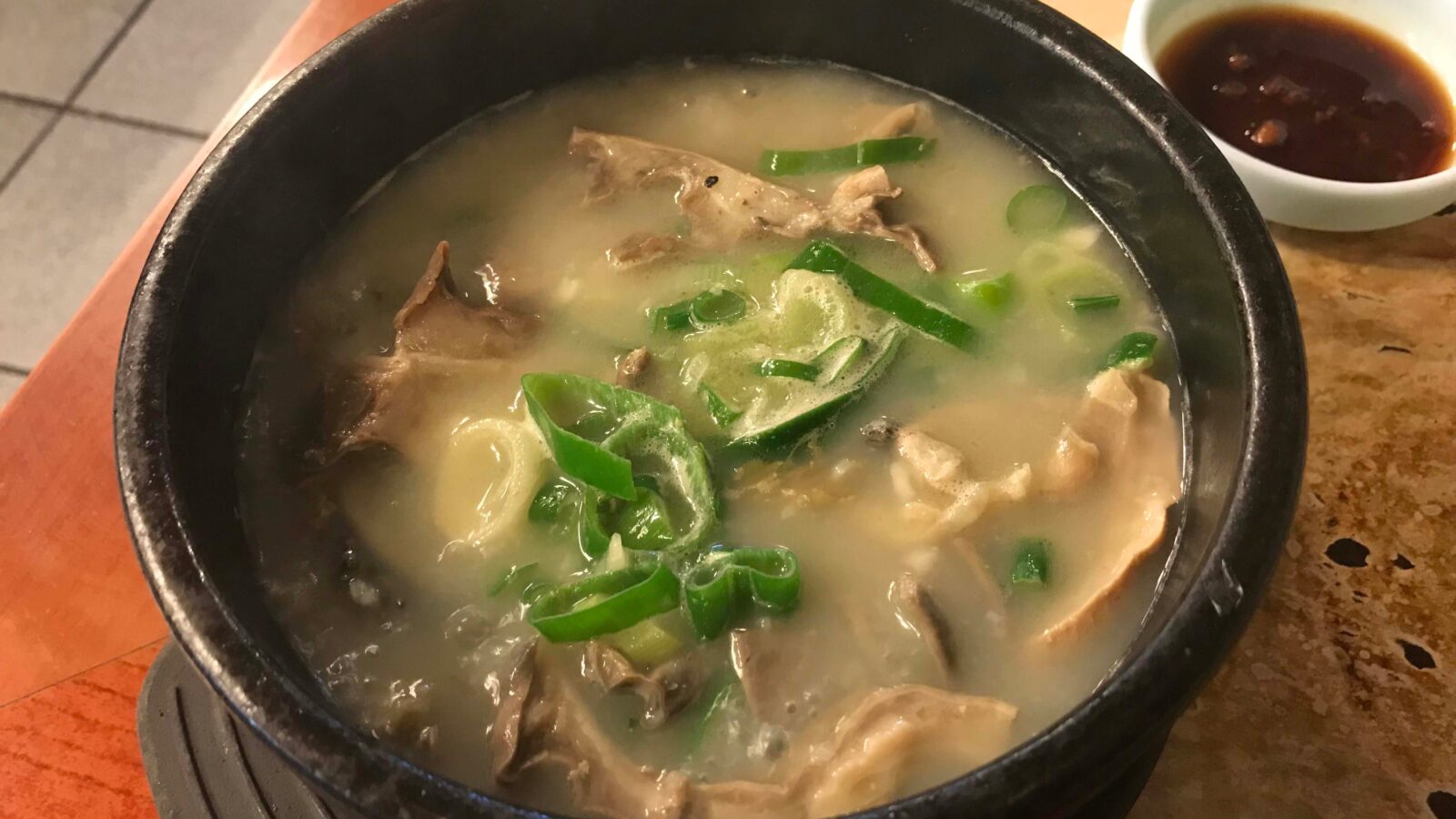
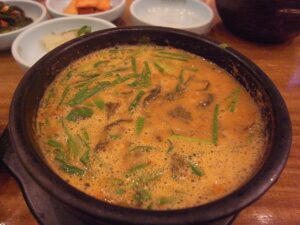
Naejangtang (내장탕, naejangtang) is one of those Korean dishes that quietly separates the curious eater from the committed one. The name says exactly what it is: naejang (내장) means internal organs, and tang (탕) is a long-simmered soup. The bowl delivers cleaned beef tripe, intestine, and assorted organ meats slow-cooked until tender in a broth so deep it tastes like it has been on the stove for days. It belongs to the same beloved family as seolleongtang and gukbap — the warming, rice-friendly soups Koreans reach for when they need to be put back together.
What Naejangtang Actually Is
At its core, naejangtang is beef offal soup. The traditional mix can include tripe (양/곱창), small intestine, and organ pieces such as liver, heart, and lung, though most home and restaurant versions lean on well-cleaned tripe and intestine as the backbone. Those parts are scrubbed, blanched, and simmered for a long time, then served in a clear, beefy broth or a spicy red one built on gochugaru (Korean chili flakes). A close cousin, naejang-gomtang, pushes the broth even milkier and richer through extended bone-and-offal boiling.
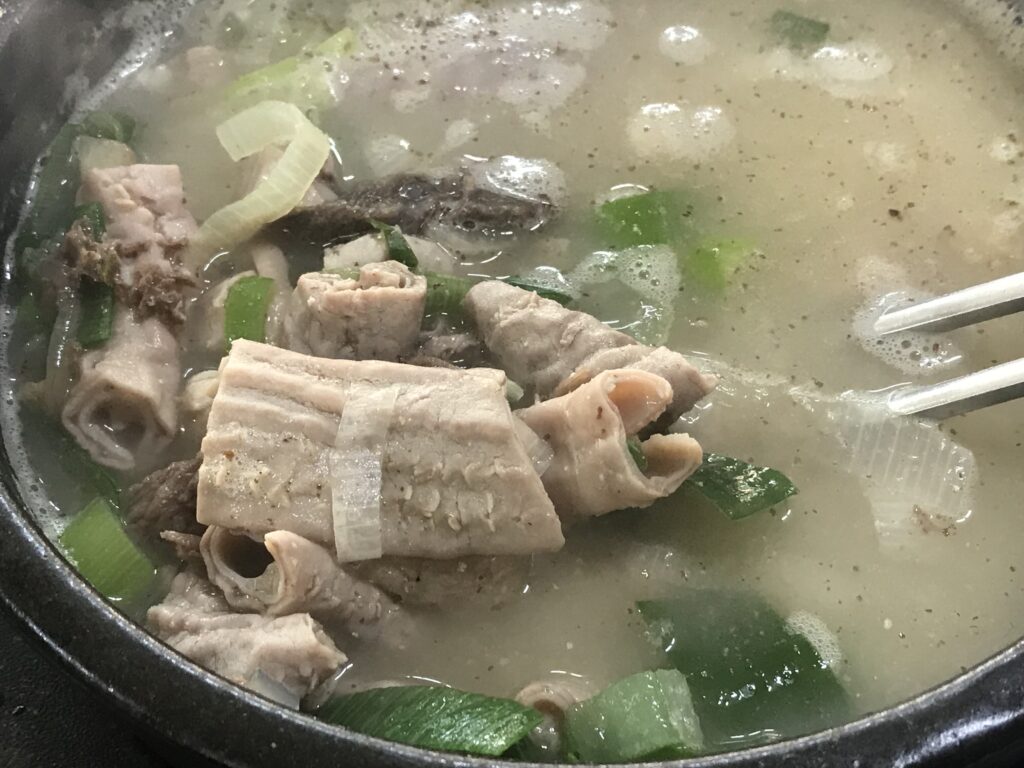
It is firmly a haejang and stamina food. Haejangguk (해장국) literally means “soup to chase away a hangover,” and naejangtang sits squarely in that tradition: a hot, mineral-rich, protein-heavy bowl that revives you after a heavy night or a hard day. Older generations also prized organ meats as nourishing, restorative eating, the kind of thing you order when you want to feel fortified.
Taste and Texture
This is a dish of contrasts in a single bowl. The broth is savory and rounded, almost buttery when made clear, with a gentle minerality from the organs. The fun is textural: tripe is springy and chewy with a clean bite, intestine is soft and faintly rich, and each part carries its own flavor. A well-made naejangtang has no off-putting odor — the whole craft of the dish is cleaning and blanching the offal so that what is left is mellow and clean-tasting. Honest note: this is a polarizing food. People who love organ meats adore it; newcomers should start with a clear, well-seasoned version rather than the most intense spicy one.
How It’s Eaten
Naejangtang is almost always eaten with a bowl of steamed rice, either served alongside or tipped straight into the soup to make gukbap. Diners brighten and customize at the table with chopped scallion, minced garlic, a spoon of gochugaru or chili oil, ground pepper, and a little salted shrimp (saeujeot) or salt to adjust seasoning. Kimchi and other banchan round out the meal. It is best piping hot, straight from the simmer.
How to Make Naejangtang at Home
The single most important step is cleaning the offal. Do not skip it — it is the difference between a clean, crave-worthy bowl and an unpleasant one. Buy pre-cleaned beef tripe and intestine from a trusted Korean or halal butcher if you can.
Cleaning the offal
- Rinse tripe and intestine under cold running water, rubbing well.
- Massage with a generous handful of coarse flour and a splash of vinegar (or a little salt and flour), then rinse. Repeat until the water runs clear and there is no slick film.
- Blanch in boiling water with a few slices of ginger and a splash of soju or rice wine for 5–10 minutes, then drain and rinse off any scum. This blanch is what removes the odor.
Building the soup
- Simmer beef bones (and the blanched offal) with onion, garlic, ginger, scallion roots, and a piece of daepa (large green onion) for at least 1.5–2 hours, skimming foam, until the broth is deep and the offal is tender.
- Lift out the offal, cool slightly, and slice into bite-size pieces. Strain the broth and discard aromatics.
- For a clear version, season the broth with salt, a little fish sauce or saeujeot, and white pepper. For a spicy version, stir in a chili paste made from gochugaru, minced garlic, a touch of doenjang, and a splash of sesame oil.
- Return the sliced offal, add sliced scallion and optional radish or bean sprouts, and simmer a few more minutes to marry the flavors.
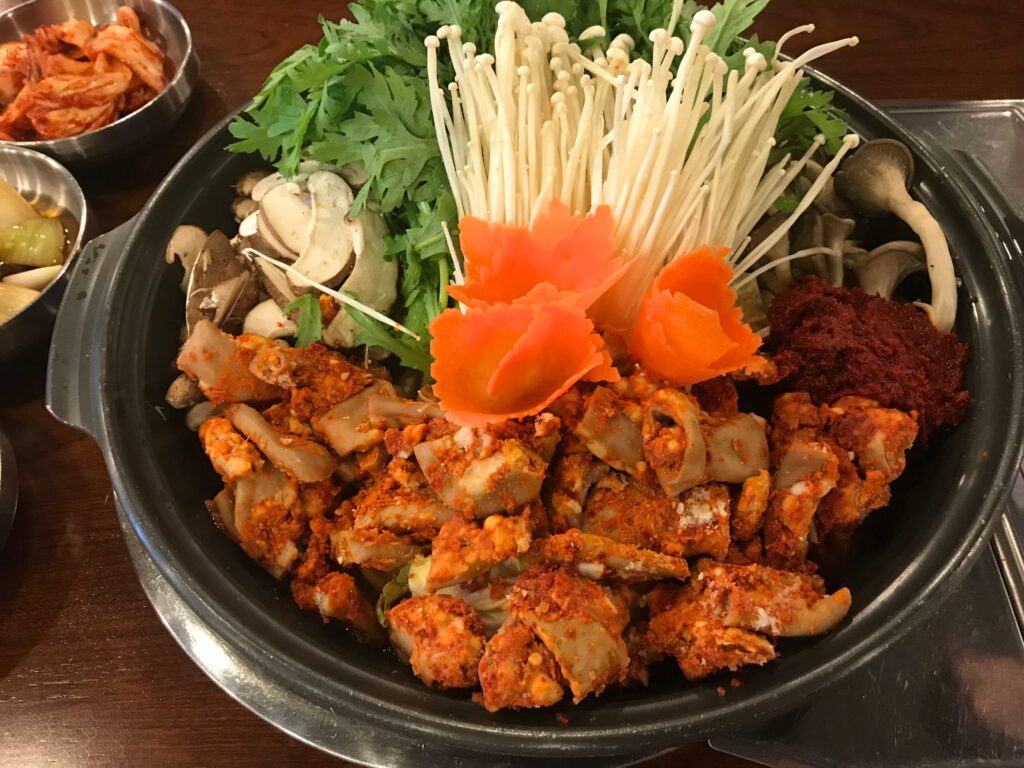
Serve in deep bowls, screaming hot, with rice, kimchi, and small dishes of gochugaru, chopped scallion, and pepper so everyone can fine-tune their own bowl.
Honest Cautions
Offal is rewarding but demands care. Always cook it thoroughly — organ meats should never be served undercooked, and long simmering is part of the point. Source from a reputable butcher and keep everything cold until you cook. If you have gout or are watching purines, cholesterol, or sodium, note that organ meats and these rich broths are high in all three, so enjoy them as an occasional treat rather than a daily staple. Pregnant eaters should be especially mindful of liver due to its high vitamin A content. Properly cleaned and fully cooked, though, naejangtang is a deeply satisfying bowl — the kind of soup that earns lifelong fans one chewy, brothy spoonful at a time.



Leave a Reply