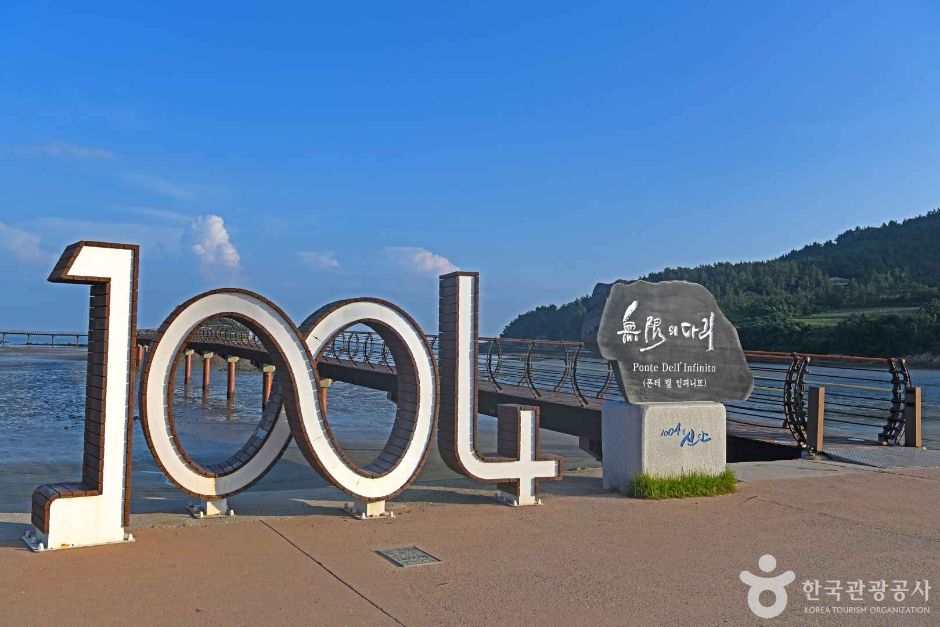

Jaeundo (자은도) is the kind of Korean beach island that still feels like a secret. It sits at the far southwestern edge of the country, in the Yellow Sea, as one of Sinan-gun’s “1004 islands” — the archipelago locals nickname the Angel Islands (천사섬, since 1004 sounds like the Korean word for angel). It’s one of Sinan’s larger inhabited islands at about 52 km², and its name, 慈恩 (“compassion”), traces back to an old story of forgiveness; the earliest written mention is a 1373 Goryeo shipwreck record. What you get today is laid-back and still pristine: nine sandy beaches, dense pine windbreak forests, wide mudflats, and one very photogenic sea bridge. This is an island escape, not a packed resort strip. Here’s what to do, what to eat, and how to get there from Seoul.
What makes Jaeundo worth the trip
For years Jaeundo was reachable only by a roughly 25-minute ferry, which kept the crowds away. That changed in 2019 with the opening of the Cheonsa (1004) Bridge, which connected the central cluster of four Sinan islands — Amtaedo, Jaeundo, Palgeumdo, and Anjwado — to the mainland by road. The bridges arrived, but the crowds mostly didn’t, so Jaeundo today is that rare thing: an easy-to-reach island that still feels quiet. It’s scenic, family- and camping-friendly, and refreshingly uncommercial.
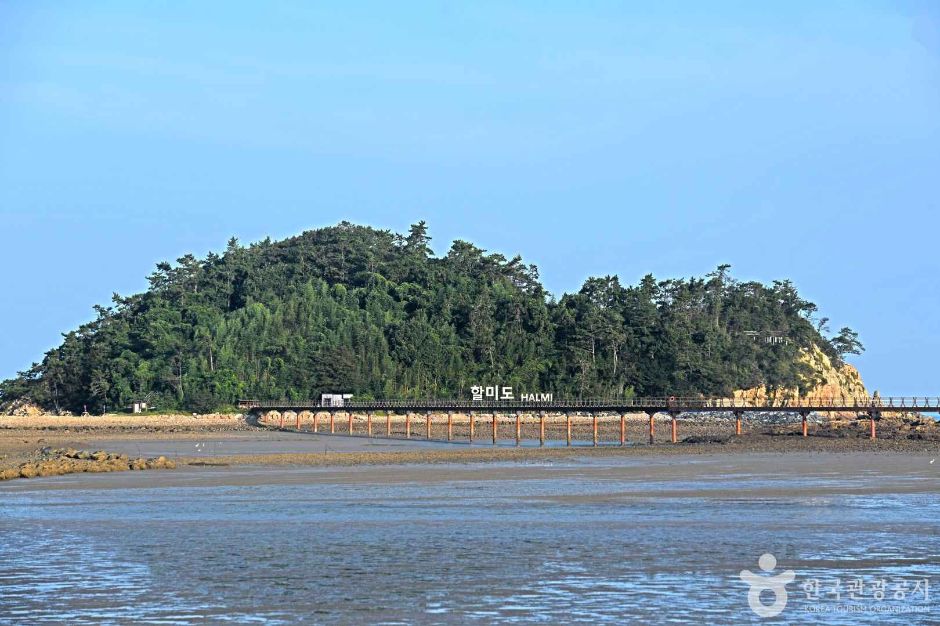
The Infinity Bridge
The island’s signature sight is the Infinity Bridge (무한의 다리), a pedestrian sea bridge that opened in September 2019 off Dunjang Beach. It runs 1,004 meters — a deliberate nod to Sinan’s 1004-island brand — and just 2 meters wide, bending in an L-shape out to a chain of tiny islets (Gurido → Godo → Halmido). At high tide the low deck nearly submerges, so it genuinely feels like you’re walking on the sea; at low tide you look down on living mudflat. The final islet, Halmido, has a traditional stone fish weir (독살) and takes about 30 minutes to explore. It was co-named by sculptor Park Eun-sun and the renowned Swiss architect Mario Botta, and there’s no entry or parking fee. Time your walk for low tide if you want to reach Halmido on foot.
The beaches and the pine forests
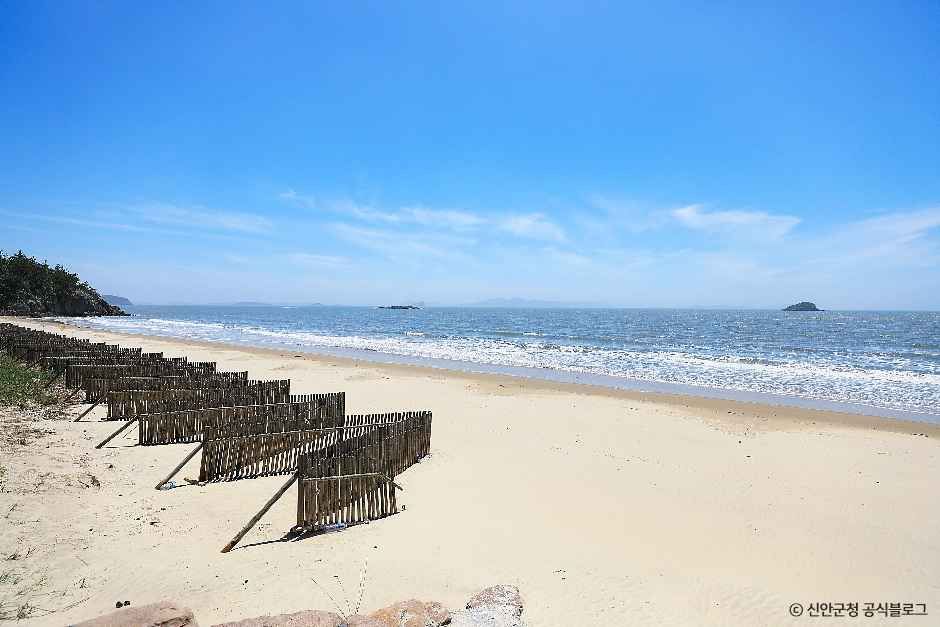
Jaeundo counts nine sandy beaches, and the two headliners are worth planning around:
- Baekgil Beach (백길해수욕장) — a long, wide stretch on the southwest coast with fine soft sand, a very gentle slope, and shallow water that’s ideal for kids. It’s backed by thick pine groves with rock-fishing spots nearby, and the island’s one full-service resort sits right beside it. The four-season family favorite.
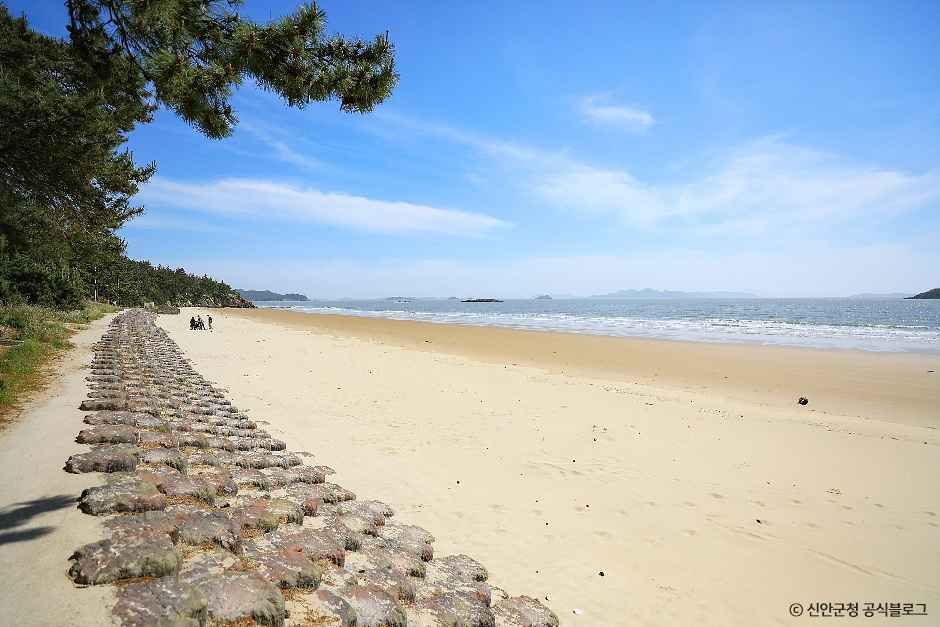
- Bungye Beach (분계해수욕장) — backed by a dense pine windbreak forest that gives it an almost painted, oriental-landscape look. Its famous “woman pine” (여인송) is named for its human-like form and tied to a legend of a fisherman’s widow buried beneath it; it’s become a love symbol where visitors stop to photograph and make a wish. There’s a campground here too.
Others include Dunjang Beach beside the Infinity Bridge (with a fishing-village mudflat experience) and Yangsan Beach inside the 1004 Museum Park, a small marine-culture district where one ticket covers a shell museum, a suiseki stone-art museum, and a native-plant center. Most of the island’s beaches are clean, shallow, and uncrowded.
Walking, hiking, and the tidal flats
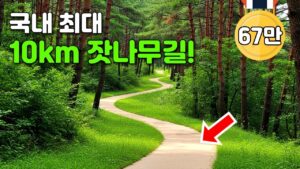
If you’d rather move than swim, the Jaeundo Sunset Trail (해넘이길) is route #46 of Sinan’s Baekseom-Baekgil trail network — a 10 km coastal walk of about 3.5 hours, famed for its sunsets and sandy beaches, passing the Infinity Bridge along the way. For a viewpoint, Dubongsan (두봉산, 363.8 m) is the island’s high point, an easy ~4.3 km hike rewarded with a sweeping panorama over the Dadohae multi-island seascape. And all around the island lie the Sinan tidal flats, part of the UNESCO-listed Korean Tidal Flats (Sinan Getbol), rich in mudskippers, crabs, and shellfish — visible from the Infinity Bridge at low tide and the basis of the local mudflat experiences.
What to eat
Jaeundo’s food is pure tidal-flat-and-salt country. Sinan is Korea’s foremost producer of sun-dried sea salt (천일염) — its Taepyeong Salt Farm is the country’s largest single salt field — so local sea salt makes a genuine souvenir. From the mudflats come small octopus (낙지, often in a delicate clear soup called yeonpotang), clams and oysters, and mudskipper. Summer brings silver pomfret (병어) and croaker (민어), a classic hot-weather restorative. But the island’s own signature meal is grilled shellfish (조개구이): a mixed tray of clams, scallops, conch, and cockle cooked over charcoal right at your table, served at restaurants by Baekgil and Bungye beaches, often with a bowl of clam porridge (백합죽) to finish. It’s the same hands-on west-coast meal you’ll find at Daecheon Beach — see our Korean grilled shellfish guide for how to eat it like a local.
Getting there from Seoul
Be clear-eyed about this: Jaeundo is in the far southwest and is not a Seoul day trip — plan an overnight (1박2일). From Seoul, take the KTX from Seoul Station to Mokpo (about 2 hours 40 minutes, roughly seven daily); an express bus from Central City to Mokpo (about 3 hours 50 minutes) is the budget alternative. The nearest airport is Muan International. From Mokpo, the island is now fully bridge-connected by car: Mokpo → Aphae Bridge → across Aphaedo → Cheonsa Bridge → Amtaedo → Jungang Bridge → Palgeumdo → Sinan Bridge 1 → Anjwado, then over the Eunam Bridge to Jaeundo. (There’s no separate span literally called a “Jaeundo Bridge” — access is via the Cheonsa and Eunam bridges.) Note that the Cheonsa Bridge is a motor-vehicle-only expressway, with no pedestrians, bicycles, or scooters. You can reach the island by public bus with a couple of transfers, but service is sparse, so a rental car is strongly recommended once you’re there.
When to go, and where to stay
Summer is peak season: the shallow, gentle water at Baekgil and Bungye is built for family swimming, and the beachfront resort runs a water park. Spring is the quieter draw — Jaeundo markets itself as the “island of pianos and magnolias,” with mild walking weather. Late spring through autumn suits the sunset trail, Dubongsan, and mudflat experiences; aim for low tide to walk the Infinity Bridge out to Halmido. Winter is very quiet.
For lodging, the main option is the Ramada Plaza & C-One Resort, a one-minute walk from Baekgil Beach, with a water park, indoor heated pool, lazy river, sauna, and restaurants (check-in 15:00, check-out 11:00, free parking and Wi-Fi). Beyond that, the island leans toward camping and small pensions — there are campgrounds and camping decks at Baekgil, Bungye, and Dunjang, plus scattered minbak. Because beds are limited and dispersed, book ahead in peak summer.
A natural pairing: if you’re chasing Korea’s beaches, Jaeundo is the quiet far-southwest counterpoint to the crowds of Busan — see our Busan in summer guide for the big-city beach version of the same idea. A good 1박2일 plan here is Day 1: Infinity Bridge, the sunset trail, then Bungye Beach; Day 2: Baekgil Beach and a Dubongsan climb before the drive back to Mokpo.
Where to eat in and near Jaeundo (자은도)
Jaeundo is a quiet, far-west Sinan island, so don’t expect a dense restaurant scene — eateries are few, family-run, and clustered along Jaeun-seobu-gil near Baekgil Beach and the Sea One resort area. What the island does well is what the surrounding mudflats and waters give it: 낙지 (nakji, octopus), white-fleshed fish like 병어 (byeong-eo, pomfret) and croaker, and fresh seafood spreads. These three are the spots most consistently recommended by locals and food-listing sites.
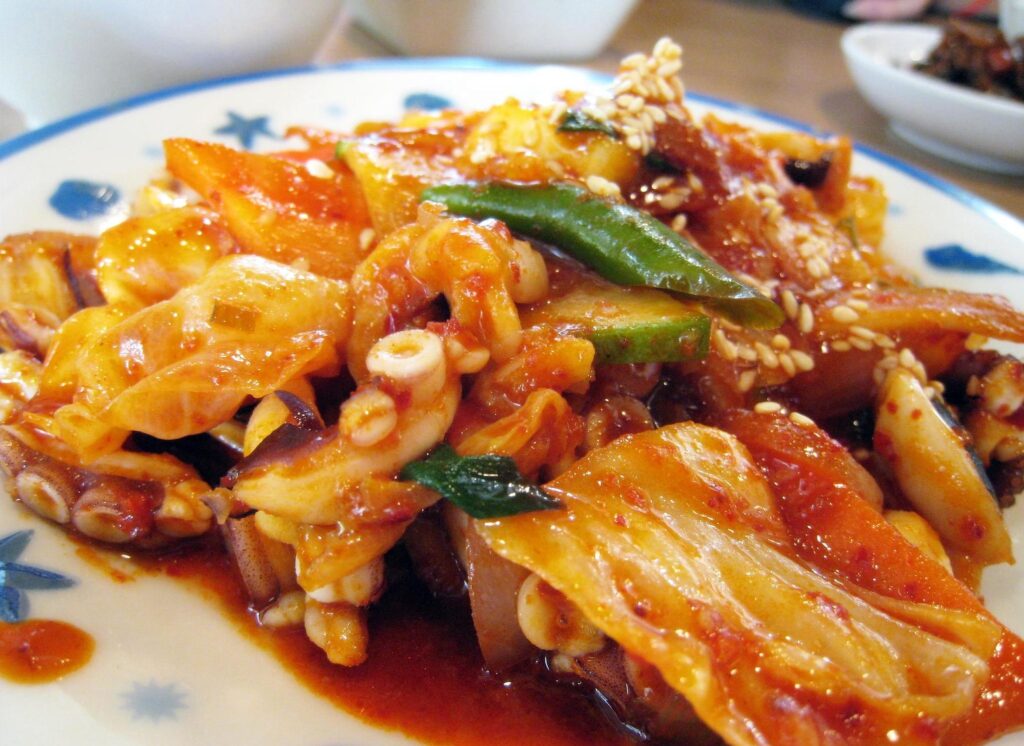
- 자은신안뻘낙지 (Jaeun Sinan Ppeol-nakji) — the island’s octopus house, serving local wild mudflat octopus as yeonpotang (clear hotpot), nakji-tangtangi (chopped raw), and spicy stir-fry. The honest go-to if you want Jaeundo’s signature dish; it has only a few online reviews, which is normal for an island this quiet.
- 자은도식당 (Jaeundo Sikdang) — a home-style fish restaurant near the same strip, best known for braised pomfret (병어조림) and spicy fish stew (생선매운탕). Well-liked for freshness, though as on much of Sinan, set meals can feel pricey for the portion.
- 백길천사횟집 (Baekgil Cheonsa Hoetjip) — a roomy sashimi/seafood spot near Baekgil Beach, known for generous mixed-sashimi platters and a big spread of seafood side dishes. It runs largely on reservations, so call ahead.
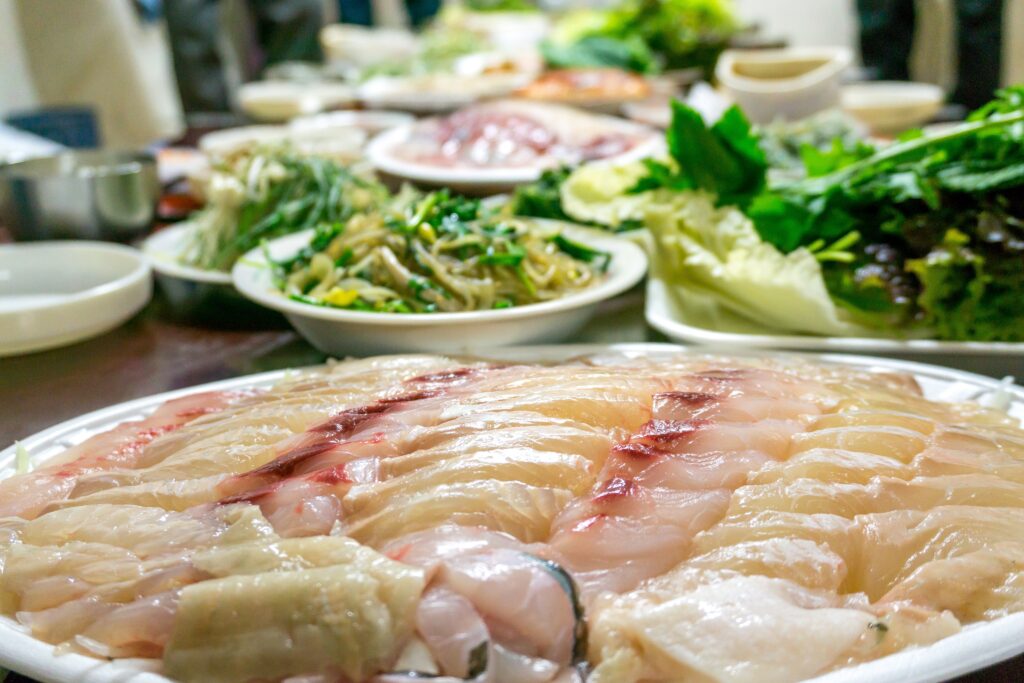
One caveat: on a small island like Jaeundo, hours and closing days shift with the seasons and the catch, and small family-run places can pause without notice — call ahead to confirm opening hours, closing days, and (for the hoe restaurant) a reservation before you make the trip.

Leave a Reply