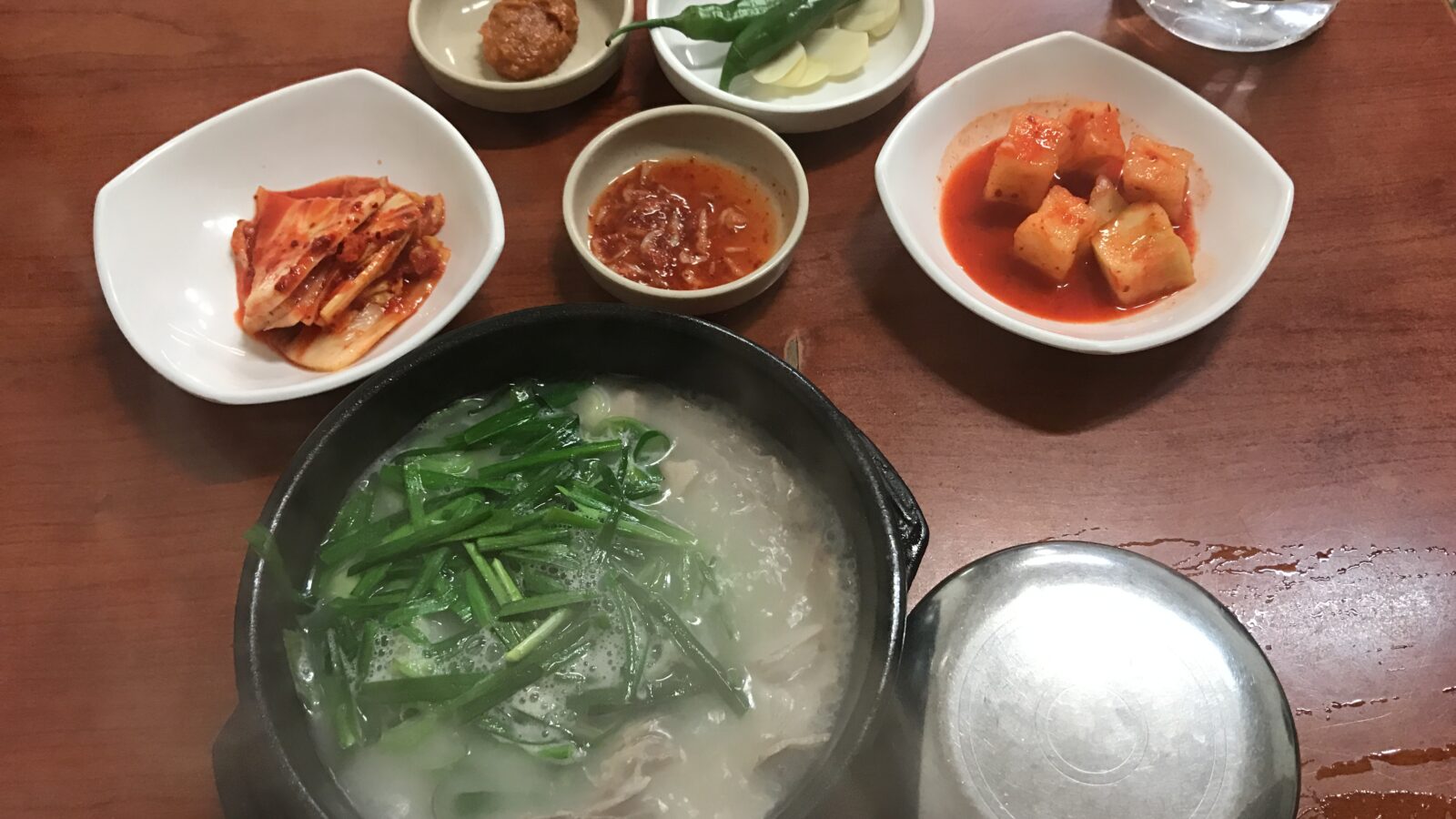
If you eat one thing in Busan, make it dwaeji-gukbap. It’s a milky pork-bone broth poured over rice, served bubbling hot with a tray of things to stir in yourself — and it’s as close to a city emblem as a bowl of soup gets. Here’s what it is, how to eat it like a local, where to find it in Busan, and a rough way to make it at home.
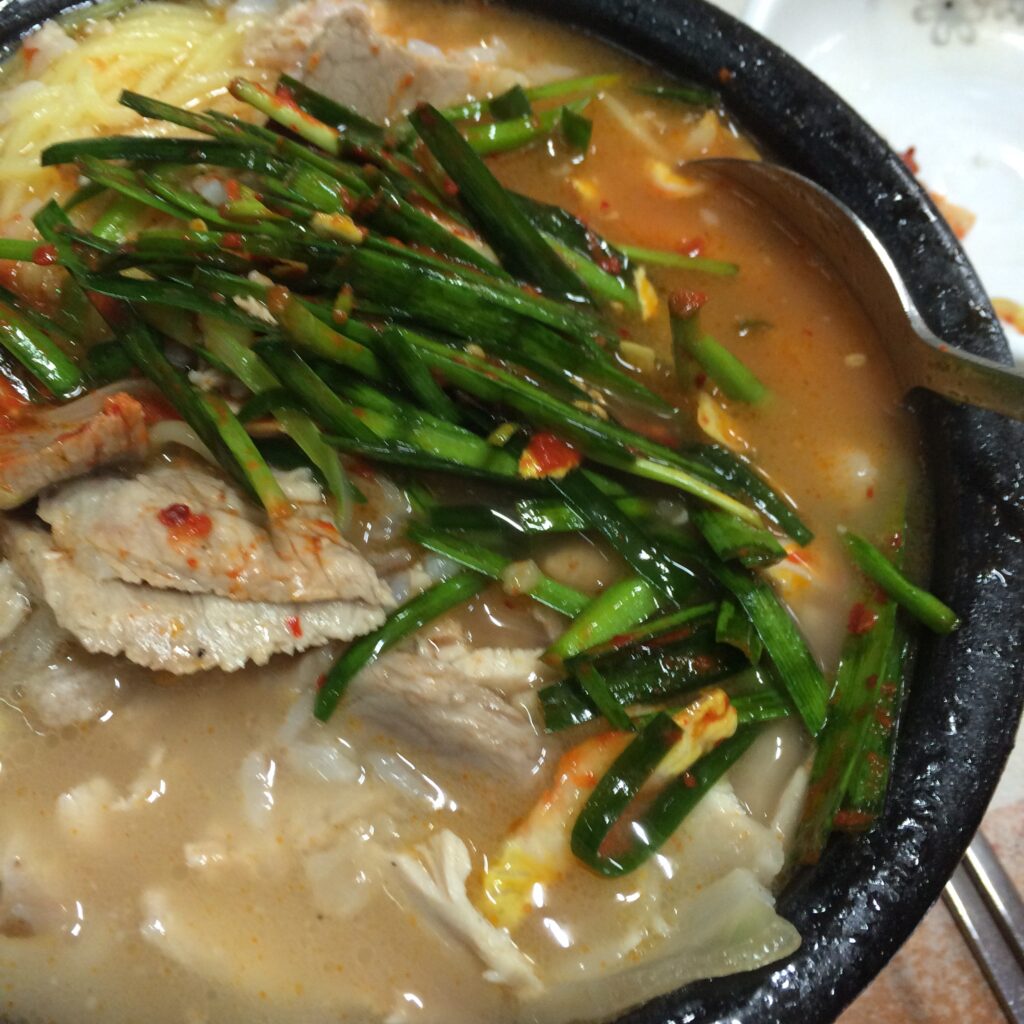
What dwaeji-gukbap actually is
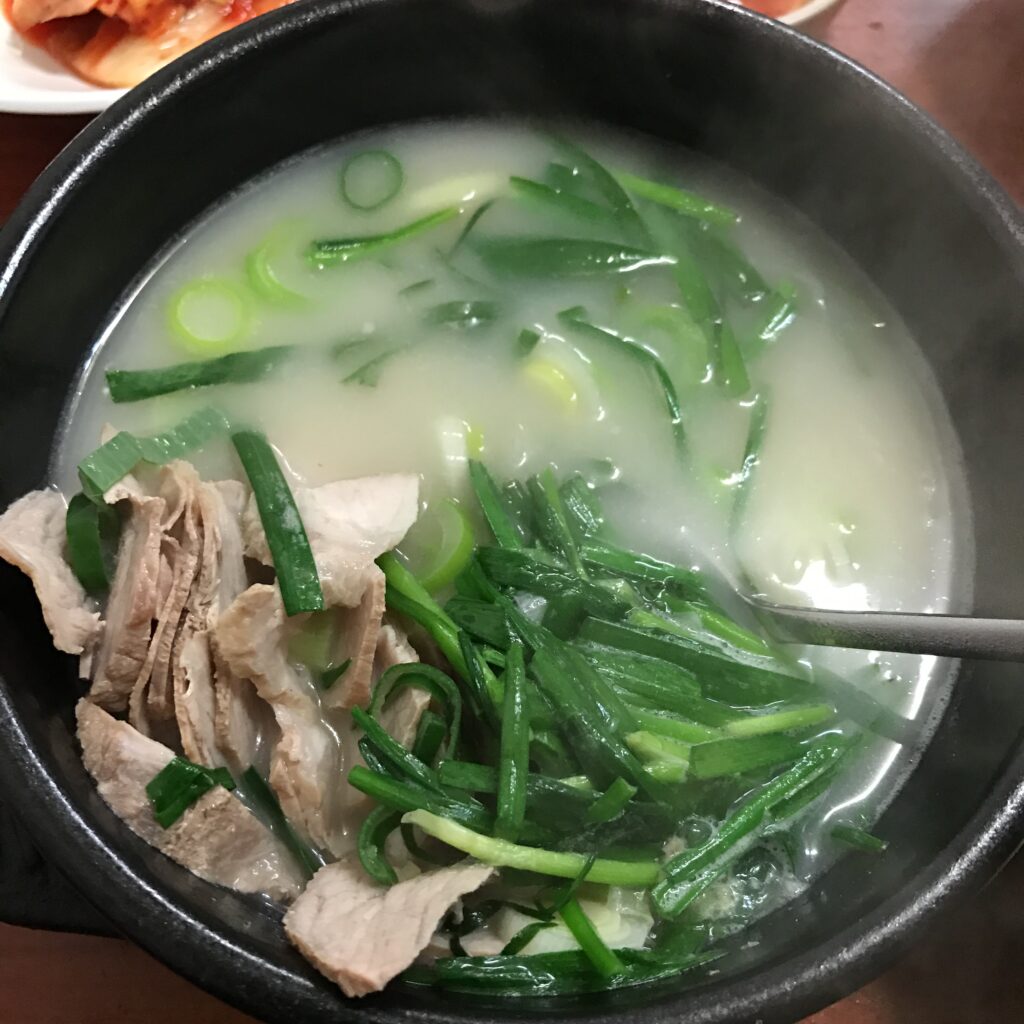
Dwaeji-gukbap (돼지국밥) literally means “pork soup with rice.” Pork bones and meat are simmered for hours until the broth turns rich and cloudy, then it’s ladled over rice with slices of tender boiled pork. It arrives plain on purpose — the seasoning is up to you, which is half the fun. It’s cheap, filling, and eaten any time of day, including breakfast and well after midnight.
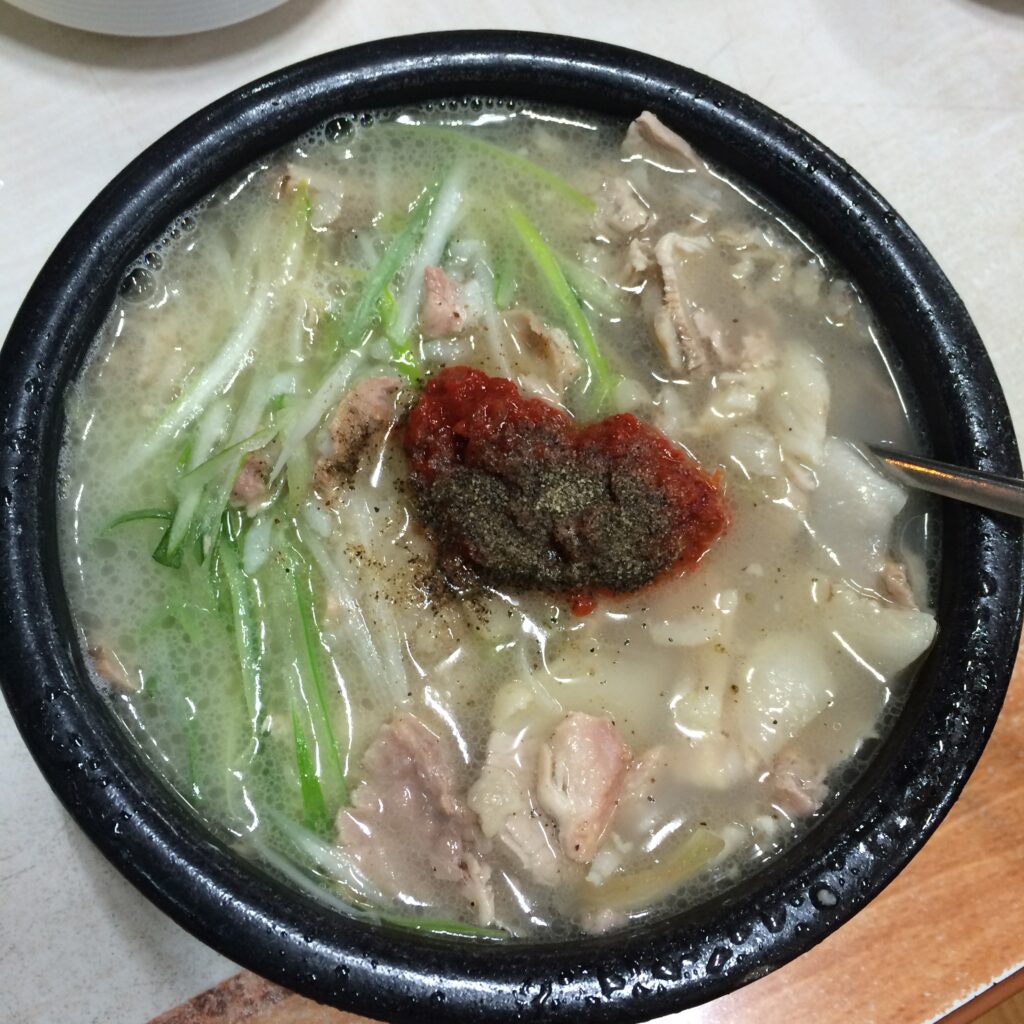
Why it belongs to Busan
The dish is tied to Busan’s history as a refuge city during the Korean War, when cooks stretched scarce pork bones into a soup that fed a lot of people for very little. It stuck, and Busan turned it into an institution — there are streets lined with gukbap shops, some open around the clock, each with its own broth style (clear vs. milky) and house seasoning. Ordering it in Busan is a small rite of passage.
How to eat it like a local
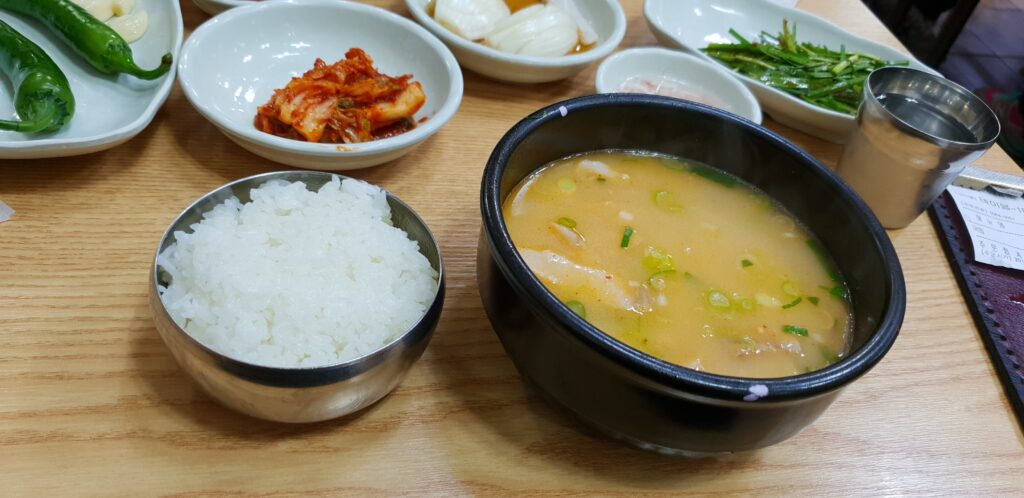
The bowl comes with a lineup of add-ins on the table. Season in this order and taste as you go:
- Saeujeot (salted fermented shrimp) — this is the salt. Add a small spoon, stir, taste. It’s saltier than it looks, so go light.
- Dadaegi (a red chili-garlic paste) — for heat and depth. A little goes a long way.
- Buchu (garlic chives) — pile in a handful for freshness and crunch.
- Saeu-jeot’s partner, kkakdugi or kimchi — eat on the side; the cold, sour crunch cuts the richness.
Some shops serve the rice already in the soup (gukbap); others bring rice separately (ttaro-gukbap) so it stays firm — both are correct, it’s just preference. Wrap a slice of the boiled pork in the provided shrimp sauce for a bite on its own, too.
Where to eat it in Busan
You’re never far from a good bowl. The classic hunting grounds are the gukbap alleys around Seomyeon (the city’s busy center) and near Busan Station, where clusters of long-running shops compete. Look for places that are full of locals and have a pot going at the front — that’s the signal. Many are open very late or 24 hours, which makes it the perfect first meal off the train or last meal before a night out.
A simple version at home
You won’t fully replicate a shop’s all-day broth, but you can get close. Simmer pork neck bones (and a piece of pork belly or shoulder) with onion, garlic, ginger, and a little doenjang for 2–3 hours, skimming the foam; for a milkier broth, keep it at a rolling boil rather than a gentle simmer. Slice the cooked pork, ladle the broth over hot rice, and set out the same add-ins — salted shrimp, a chili-garlic paste, chopped garlic chives, and kimchi. The one mistake to avoid: salting the broth in the pot. Keep it neutral and let each bowl be seasoned at the table, exactly like Busan does it.
Planning a trip? Pair this with a couple of days at the beach — it’s the ideal recovery meal. See our Busan summer guide for getting there and what else to do.





Leave a Reply