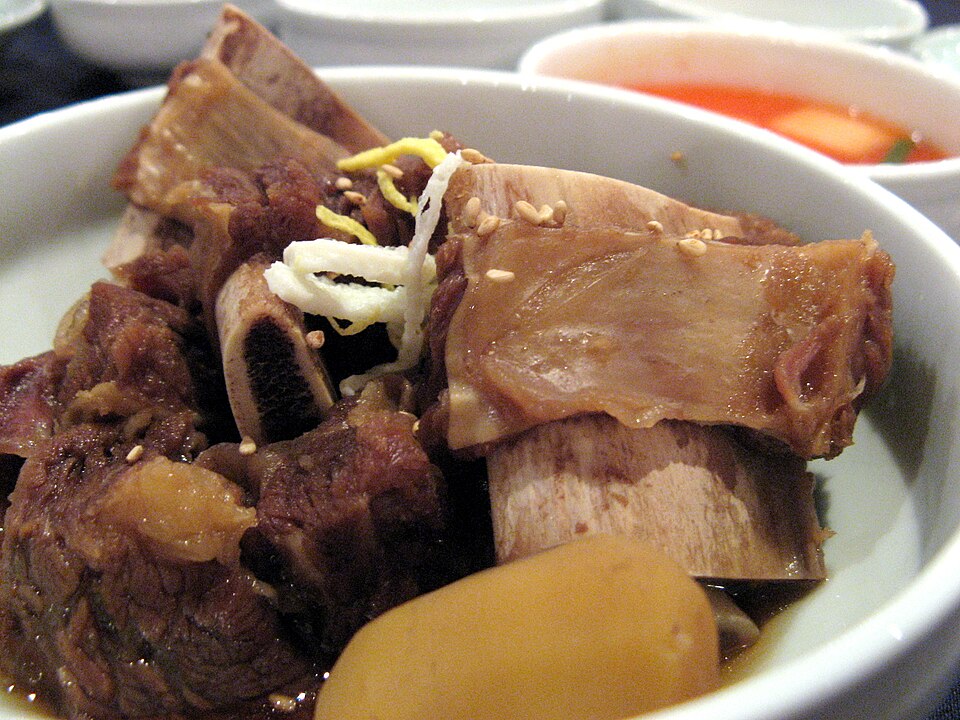
Few dishes say “special occasion” in Korea quite like galbijjim (갈비찜, gal-bi-jjim). Beef short ribs are simmered low and slow in a sweet, garlicky soy braise until the meat slips off the bone, then jeweled with glossy jujubes, soft chestnuts, mushrooms, and carrots. It is rich, deeply savory, and a little sweet, and it has crowned Korean holiday and ancestral-rite tables for generations.
What Is Galbijjim?
The name breaks down simply: galbi (갈비) means “ribs,” and jjim (찜) refers to a category of Korean dishes that are braised or steamed in a small amount of seasoned liquid. So galbijjim is, literally, “braised ribs.” It is most often made with beef short ribs, though a popular pork version, dwaeji-galbijjim (돼지갈비찜), exists too.
Historically, galbijjim was a high-status dish. The best part of the rib was reserved for the braise while the rib ends went into soup stock, which made galbi one of the more expensive cuts of beef in Korea. That premium status is exactly why galbijjim became a centerpiece for celebrations rather than an everyday meal.
Taste and Texture
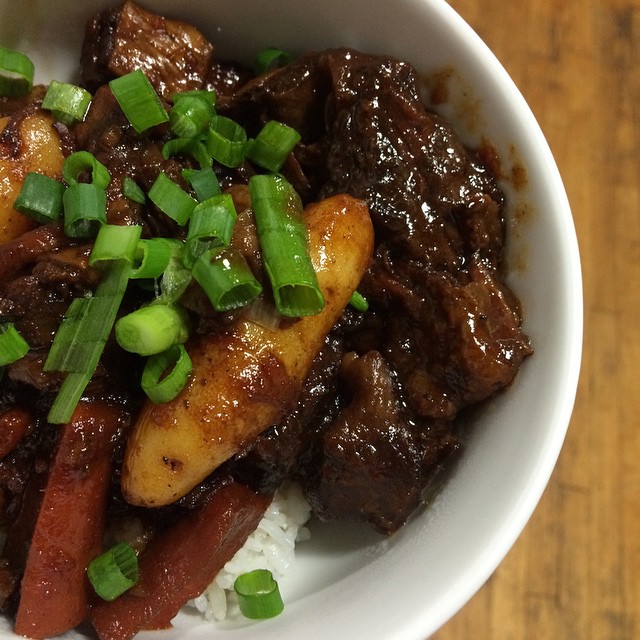
Good galbijjim hits several notes at once. The beef is fork-tender and faintly fibrous in the best way, having soaked up a braise built on soy sauce, garlic, ginger, and a measured amount of sugar, pear, or syrup. The sauce reduces to a clingy, glossy glaze rather than a thin broth. Tucked among the ribs, the chestnuts turn buttery, the jujubes go jammy and concentrated, and the carrots and Korean radish soften into sweet, sauce-soaked bites. It is comforting and festive without being heavy-handed.
When and How It Is Eaten
Galbijjim is closely tied to the Korean holiday calendar. It is a classic dish for Chuseok (the autumn harvest festival) and Seollal (Lunar New Year), and it frequently appears at jesa, the memorial rites held for ancestors, as well as at milestone birthdays and weddings. On the Chuseok table it traditionally shares space with songpyeon (rice cakes), namul (seasoned vegetables), and seasonal fruit.
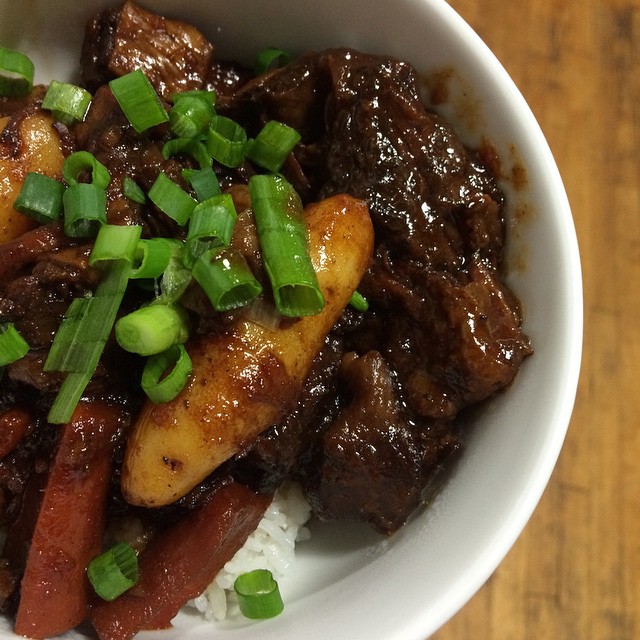
At the table it is served family-style in a large shallow bowl, eaten with steamed white rice and an array of banchan (side dishes). The ribs are picked up or pulled apart with chopsticks, and the thick sauce is spooned over rice so nothing goes to waste.
Regional and Variant Notes
Beyond the beef and pork versions, you will find spicier interpretations, especially in southern Korea, where dried or fresh chili is worked into the braise for a fiery, slightly less sweet result. Garnishes also vary by household and region: pine nuts, ginkgo nuts, and slivered egg garnish (jidan) are common finishing touches that signal a dish made with extra care.
How to Make Galbijjim at Home
The technique is forgiving, but two steps matter most. First, soak and parboil the ribs to draw out blood and excess fat so the final sauce is clean-tasting. Second, braise gently and uncovered toward the end so the liquid reduces into a glaze. Below is a reliable home version.
Ingredients
- 1.5 kg (about 3.3 lb) beef short ribs, cut into chunks
- 1/2 Korean radish (mu) or daikon, peeled and cut into chunks
- 1 carrot, cut into chunks
- 6-8 dried shiitake mushrooms, soaked and halved
- 8-10 peeled chestnuts
- 6-8 dried jujubes (Korean red dates)
- 1/2 onion and 1/2 Asian pear, grated
- 6 cloves garlic, minced; 1 tbsp minced ginger
- 1/2 cup soy sauce
- 2-3 tbsp sugar or honey, plus 1 tbsp rice syrup (optional)
- 1 tbsp sesame oil, 1 tsp ground black pepper
- 2 stalks green onion; pine nuts for garnish (optional)
Steps
- Soak the ribs in cold water for 1-2 hours, changing the water a few times to remove blood.
- Parboil the ribs in boiling water for about 8-10 minutes, then drain, rinse well, and trim excess fat.
- Whisk the braising sauce: soy sauce, grated onion and pear, garlic, ginger, sugar/honey, sesame oil, pepper, and about 2-3 cups water.
- Add ribs and sauce to a heavy pot. Bring to a boil, then cover, reduce heat to low, and simmer about 45-60 minutes, stirring occasionally.
- Add radish, carrot, mushrooms, and chestnuts. Cover and braise another 30-40 minutes until the meat is nearly falling off the bone.
- Stir in the jujubes and any rice syrup. Uncover and simmer 10-15 minutes to reduce the sauce into a glaze, spooning it over the ribs.
- Finish with green onion and pine nuts. Serve hot with steamed rice.
Tips and Honest Cautions
Galbijjim is rich and high in sodium and sugar, so balance it with plenty of rice and vegetable banchan. Do not skip the soak-and-parboil step; it is the difference between a clean, glossy braise and a greasy, cloudy one. If you prefer less sweetness, scale back the sugar and lean on grated pear and onion for natural depth. For the pork version, the same method applies, though pork ribs cook a bit faster, so check tenderness earlier.
Make it a day ahead if you can. Like most braises, galbijjim tastes even better after resting overnight, when the flavors settle and the sauce thickens further. Skim any solidified fat from the top before reheating gently.




Leave a Reply