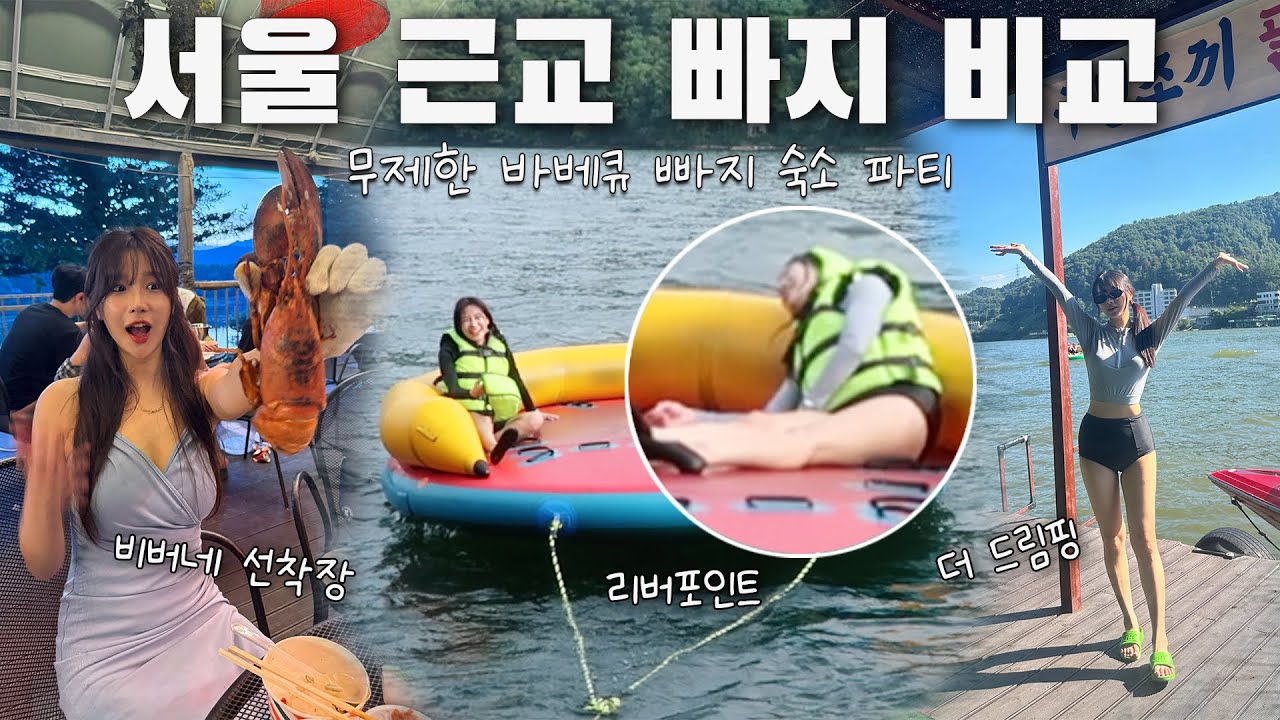

If you follow Korean travel accounts in summer, you have seen it: a wide, slow river, a floating deck packed with twenty-somethings, a banana boat flinging people into the water, and then everyone back on the platform grilling pork over charcoal. That is a ppaji (빠지), and the stretch of the Bukhan River (북한강) around Gapyeong is the de-facto capital of the genre. Here is what a ppaji actually is, three of the spots people post about, and how to do a day there from Seoul without overpaying or guessing.
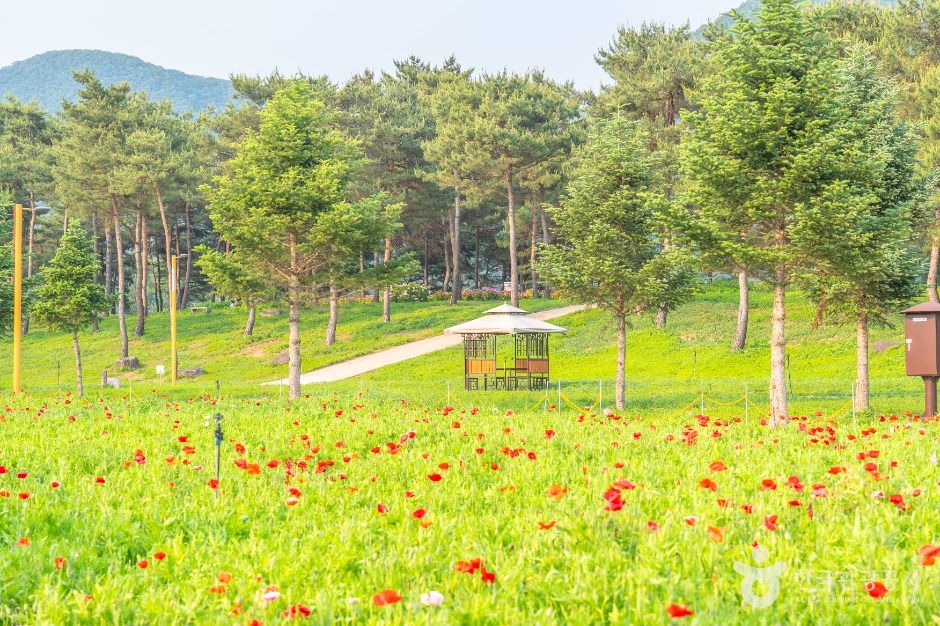
What a “ppaji” actually is
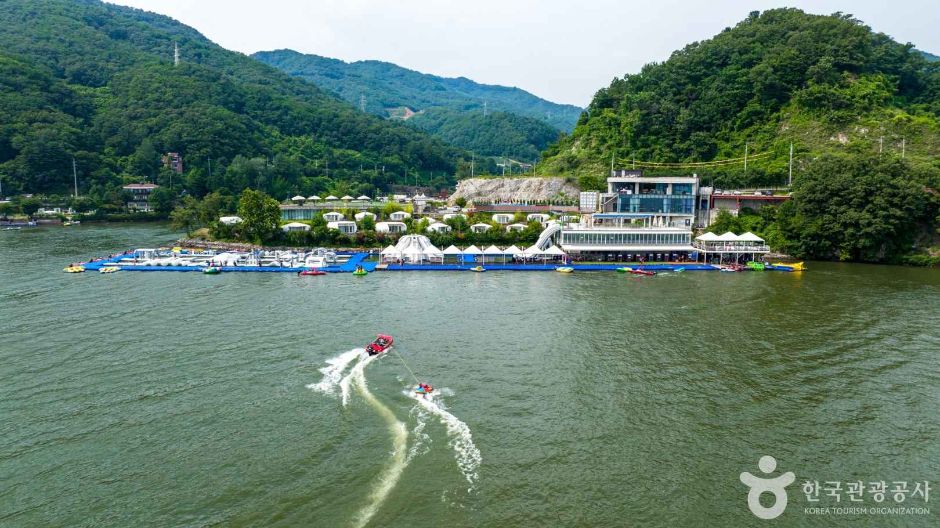
The word is a bit of slang. It comes from the English “barge” → Korean baji-seon (바지선, “barge ship”) → shortened to baji → hardened in speech to ppaji. The name fits, because the flat floating pontoon that anchors the boats genuinely looks like a cargo barge. In practice a ppaji is the wide platform “base camp” — terrace seating, a bar or café, sometimes a slide — from which you launch towed-tube and powered-boat rides on the river, then come back to eat and hang out.
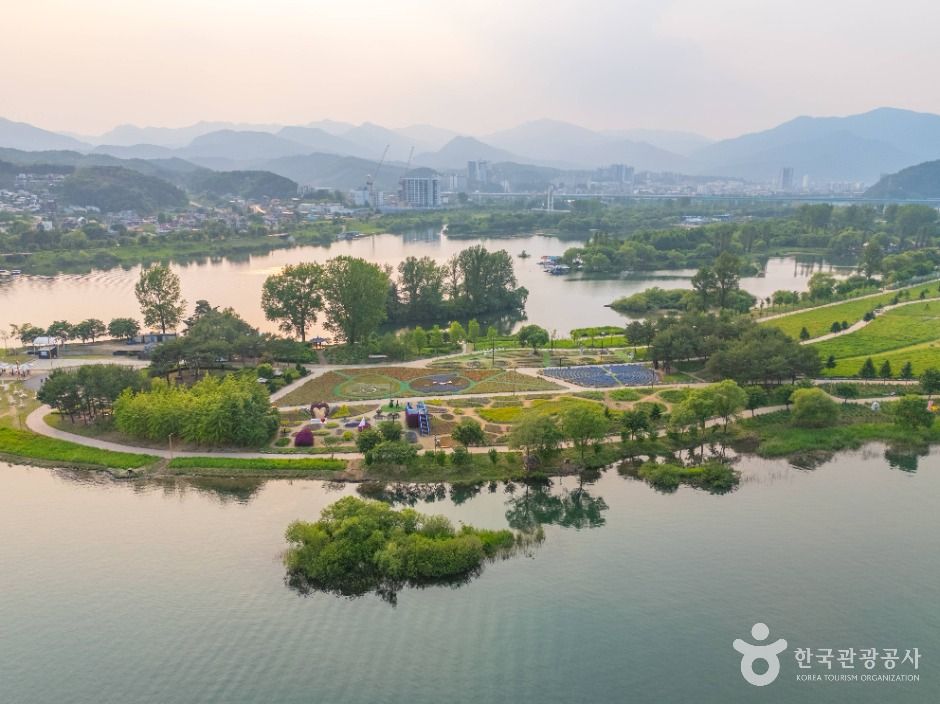
Gapyeong dominates this market for three concrete reasons that Korean sources repeat constantly: the Bukhan River and the dammed Cheongpyeong Lake (청평호) here are wide and calm, so it is beginner-friendly; it is only about 40 minutes to an hour from Seoul, making it an easy day trip or overnight; and dozens of operators cluster in the same corridor (one source counts roughly 100), which keeps prices competitive and packages varied. Culturally it has turned into a young-crowd party scene: the standard bundle is unlimited water rides + all-you-can-eat BBQ + a riverside party with live busking at night + glamping or a partner pension to sleep over.
The water activities
The core menu is powered, towed, and gleefully bouncy. Expect the banana boat and the “peanut boat” (땅콩보트), the flyfish (the big inflatable everyone gets launched off), bumper tubes, jet skis and jet boats (the spin-and-dunk jet boat is a signature thrill), and wakeboard and water-ski runs, often with a quick beginner lesson. Fixed amenities usually include a tall water slide, a blob-jump, and a shallow slide/kids’ pool. Most day packages are sold as “unlimited rides” within a window — morning, afternoon, or all-day. Because the water here is wide and gentle, it is marketed squarely at first-timers and groups.
Three Instagram-famous spots (not a ranking)
One popular vlog compared three venues by name, and they are a good illustration of the range — but treat this as “examples people post about,” not an official top three. Details and prices below change constantly, so confirm everything with the venue before booking.
- River Point (리버포인트) — the veteran. It bills itself as a 10-plus-year, top-ranked operator in Homyeong-ri, Cheongpyeong-myeon, on the Bukhan River about 40 minutes from Seoul, and as the place that started the area’s “BBQ party” culture: night grilling with live music, a mini-bar and café, and a large site it claims can hold around 500 people. A genuinely useful feature is full in-house pickup — its own shuttle fleet runs station/terminal → ppaji → pension → checkout, so you do not need a car. It runs a directly operated pension plus roughly 20 partner pensions, and is reportedly run by a professional wakeboarder. It does not post fixed prices; you call for a quote.
- The Dreamping (더드림핑) — the resort/glamping-forward option, slightly downstream on the same river in Namyangju (북한강로 1630-18). It leans calm and family-friendly: luxury glamping cabanas, vintage caravans and auto-camping, plus a gentle “Dream Wave” water side with river-tour boats, a transparent kayak, paddleboard, a slide pool, a kids’ pool, and even indoor “Wave Surf” surfing. Two on-site eateries (the Dream Gol restaurant and the River Nine riverview café) anchor the food, it lets you bring and cook your own, and it offers BBQ and fire-pit (불멍) sets. Open 10:00–22:00; bus 58 from Maseok Station; reservations 031-595-2345.
- Beaver Nation (비버네이션) — the third spot in that video, and the hardest to pin down. The closest verifiable match is a “Beaver dock” (비버네 선착장) just across the provincial line in Chuncheon, Gangwon, advertised with around a dozen rides, a steep near-90° water slide, unlimited BBQ, a free shuttle, a waterside café, and pet-friendly stays. It is most likely the same place under a near-identical name — so take those specifics as the venue’s own marketing until you confirm them directly.
The riverside BBQ
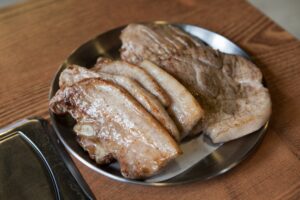
Half the reason people come is the food, and the food is all-you-can-eat Korean BBQ (무제한 바베큐) — grill-your-own pork belly, the same samgyeopsal-style cut and the same cook-at-your-table method you would do in the city, just on a deck over the river. It is bundled into almost every package. River Point markets itself as the originator of the area’s night-BBQ-plus-busking scene; The Dreamping runs a more sit-down operation (domestic pork belly, dak-doritang, stir-fried baby octopus) and lets you bring your own food; Beaver-type venues advertise unlimited BBQ with a riverside café. If you want to know what to actually order and how to grill it, see our guide to Korean grilled pork (samgyeopsal) — it is exactly the meal the day is built around. (If a party deck is not your speed, you can flip the trip and pair a quiet Gapyeong forest day with a low-key riverside grill instead.)
Getting there from Seoul
You almost never need a car. From Seoul it is about an hour on the Gyeongchun Line (수도권 전철 경춘선) or the faster ITX-Cheongchun express from Yongsan/Cheongnyangni toward Chuncheon. Get off at Cheongpyeong (청평역) or Gapyeong (가평역) for most Gapyeong ppaji; for The Dreamping the nearer stop is Maseok (마석역), with local bus 58. ITX-Cheongchun runs roughly every 30 minutes at peak. Crucially, most ppaji offer a free shuttle or full pickup from the station — River Point advertises door-to-door pickup with its own vehicles, and operators note the free shuttle effectively saves you 40,000–50,000 KRW in round-trip transport. Otherwise it is a short taxi from the station, or about 40 minutes to an hour driving from Seoul.
When to go, prices, and safety
Season: this is open-water river leisure, so the heart of the season is roughly late June through August into early September — peak summer. Some venues extend the calendar with shoulder-season glamping and pension stays, but the watersports themselves are a warm-weather thing; check each venue’s exact opening months for the current year.
Prices (rough — verify before booking): packages are sold as bundles by window. As an illustration only, recent Korean write-ups put day/unlimited packages around 50,000–80,000 KRW per person (one operator listed AM 59,000 / PM 69,000 / all-day 79,000), and overnight (1박2일) packages with BBQ and lodging around 80,000–134,000 KRW per person. Treat every number here as approximate. River Point and The Dreamping do not post fixed prices on their homepages — River Point asks you to call for a custom quote, and The Dreamping lists only à-la-carte items. When you book (usually by phone or online), ask what is included — towels, showers, the ride list — and about the free shuttle and group rates.
Safety: under Korea’s Water Leisure Safety Act (수상레저안전법), wearing a life jacket (구명조끼) for water-leisure activity is legally required, and powered craft must be operated by a licensed driver — so the boats are run by licensed staff. Do the warm-up, and never ride after drinking; the party is for afterward, back on the deck.
Where to eat in and near Gapyeong
Gapyeong, wrapped in Korean pine forests along the Bukhan River, is known for hearty dak-galbi and buckwheat makguksu, river-fresh trout, and dishes built around its prized local pine nuts (jat). These three spots cover that spread and are repeatedly recommended across Korean food guides and review sites.
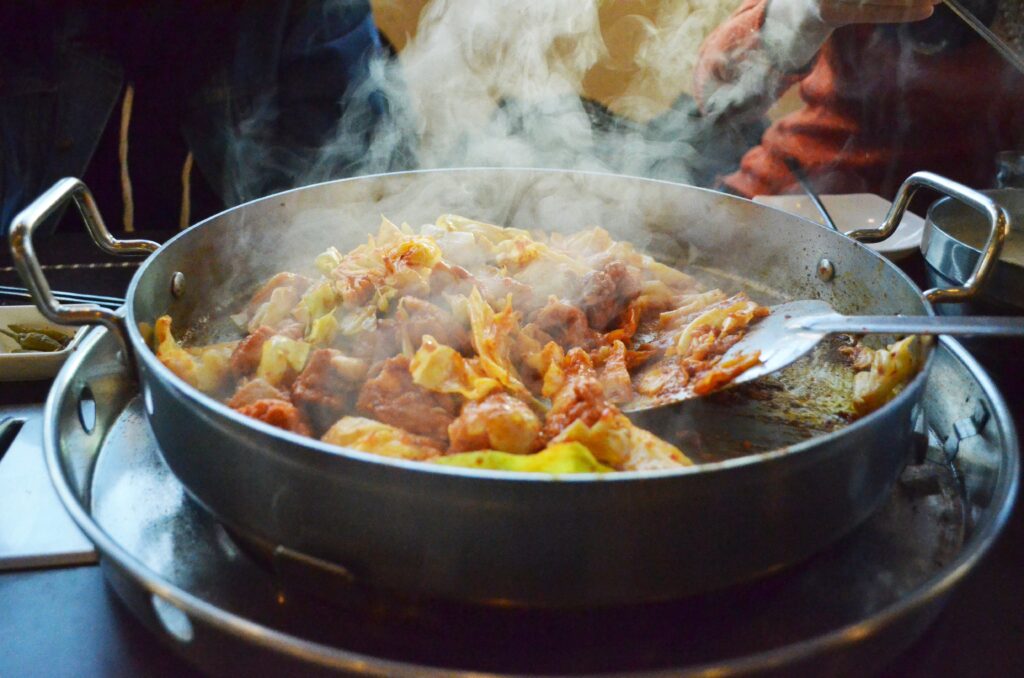
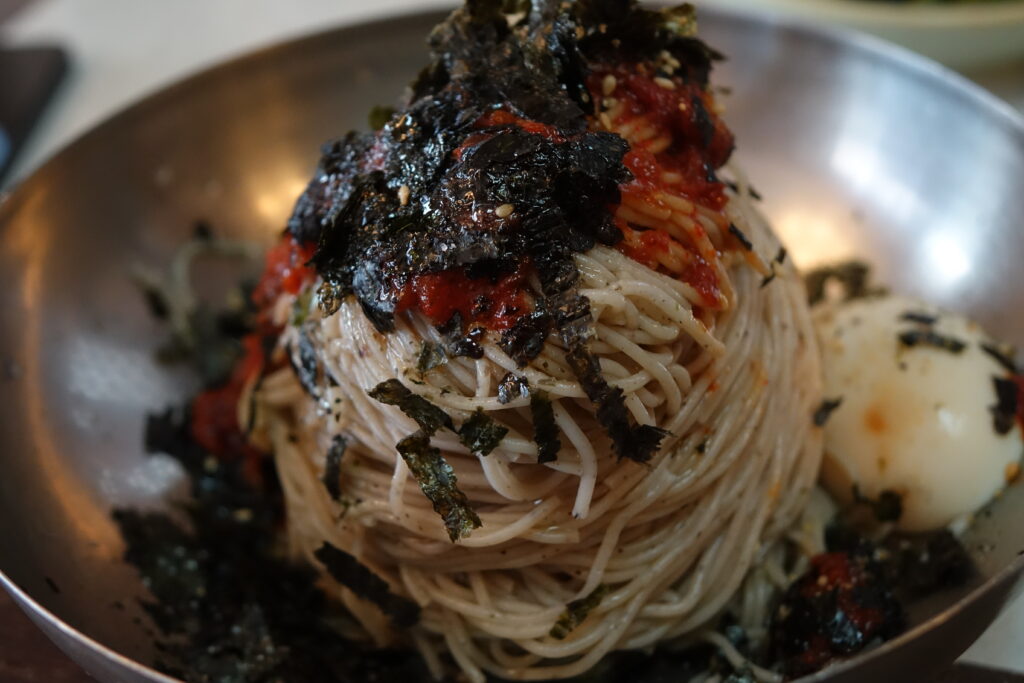
- 청평호반닭갈비막국수 (Cheongpyeong Hoban Dakgalbi Makguksu) — Iron-plate dak-galbi with house-made buckwheat makguksu. Open since 1999 near Cheongpyeong Lake, it is often called the area’s oldest dak-galbi-makguksu house and the only one in Gapyeong holding a Blue Ribbon; the noodles cut the richness of the chicken nicely.
- 유명산 종점가든 (Yumyeongsan Jongjeom Garden) — Pine-nut kalguksu (잣칼국수) and pine-nut baeksuk at the foot of Yumyeongsan in Seorak-myeon. Featured by the Korea Tourism Organization for Gapyeong’s signature jat cooking, it leans on the region’s famous pine nuts for a nutty, gentle bowl.
- 모두의 송어 (Modu-ui Songeo) — Raw trout sashimi (송어회) right beside Jaraseom island on the Bukhan River. It is a convenient, well-liked stop if you are pairing a meal with Nami Island or the rail bike, though it is a modern favorite rather than a decades-old institution.
Find them on the map: 청평호반닭갈비막국수 · 유명산 종점가든 · 모두의 송어
A quick caveat: confirm opening hours and weekly closing days before you go (several of these close one day a week, and break times are common), as small Gapyeong restaurants change schedules seasonally.

Leave a Reply