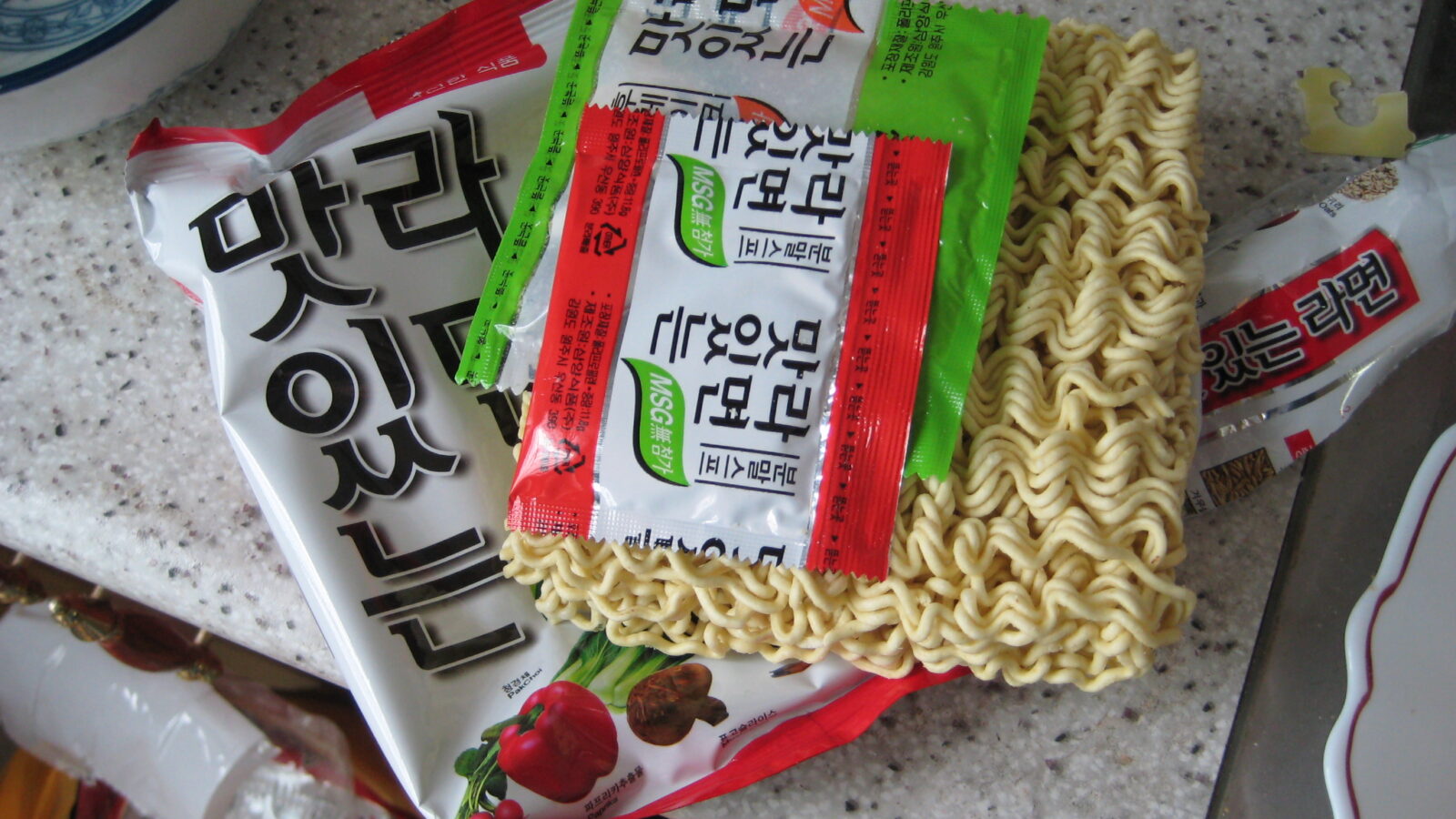
In Korea, ramyeon (라면) is far more than a packet of instant noodles. It is the after-school snack, the soldier’s midnight comfort, the broke student’s dinner, and the late-night fuel of office workers and chaebol heirs alike. (Note the spelling: 라면 is Korean instant ramyeon, not Japanese 라멘 / ramen.) Spicy, savory, and ready in minutes, it is the most democratic food in the country, and Koreans have quietly turned cooking it into a small art form with its own correct technique, etiquette, and pop-culture mystique.
What surprises many first-timers is that there really is a “right” Korean way to make it. The water amount, the timing of the soup base, the boil, the way you lift the noodles into the air, and the moment you add the egg all matter. Get them right and the noodles come out springy and chewy (쫄깃, jjolgit) instead of bloated and soft.
How Koreans cook ramyeon
The standard package calls for about 550 ml of water for a single packet, roughly 2.5 cups. Use a little less for firmer, saltier noodles, a little more for a milder soup.
- Water and soup base first. Bring about 550 ml of water to a rolling boil, then stir in the powder soup base (수프) and the dried vegetable flakes (건더기) and let them dissolve. Seasoning the water first, rather than dumping the powder on plain noodles at the end, gives a rounder, more even broth. This is the by-the-book home order.
- Noodles into a hard boil. Add the noodle block only once the broth is at a strong, rolling boil, and keep the heat high the whole time. A vigorous boil is what gives the noodles their bouncy bite. Do not cover the pot and walk away.
- Boil 4 to 4.5 minutes, and lift the noodles. This is the signature move: every 30 to 60 seconds, lift the noodles up out of the broth with your chopsticks into the air, then drop them back. Aerating them this way repeatedly cools and reheats the strands so the surface starch sets and the noodles stay chewy. Most Koreans pull them a touch early, slightly al dente, since they keep cooking in the hot bowl.
- The egg, your way. Add an egg in roughly the last minute. Three common styles: crack it in whole and don’t stir, so it poaches into a soft custardy yolk on top; beat it and swirl it in for cloudy egg-drop ribbons that make the broth richer and milder; or crack it in and gently break the yolk into the soup for a creamier result. Too early and it clouds everything; too late and the white stays raw.
- Finish and eat from the pot. Kill the heat the moment the noodles are right. Many Koreans don’t bother plating at all, eating straight from the pot (냄비) and using the lid (뚜껑) as a little plate to catch a few noodles and let them cool. Use a metal spoon for the broth and chopsticks for the noodles, with kimchi on the side. From cold water, the whole thing takes about 6 to 7 minutes.
한강 라면: the Han River ramyeon ritual
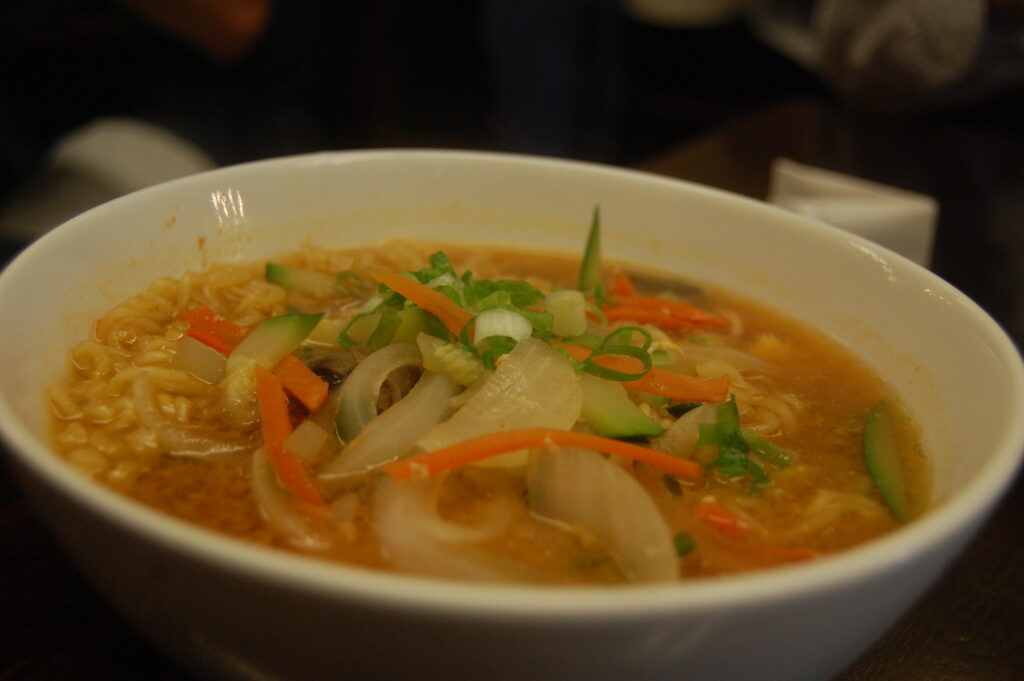
One of Seoul’s most beloved casual rituals is 한강 라면 (Han River ramyeon). The convenience stores and snack kiosks inside the Han River parks (한강공원) are fitted with coin- and card-operated instant-ramyeon cooking machines, 즉석라면 조리기, that combine a water dispenser and a heating well. You buy a packet inside (plus whatever toppings you like), tip the noodles and soup base into the machine’s special bowl, slot it in, choose your menu and time, and the machine meters the hot water and cooks it. You usually stir or lift the noodles once partway through. A few minutes later you carry your steaming pot out to a riverside table or a mat on the grass and eat it outdoors with the bridges and the city lights in front of you, ideally with a cold drink.
The machines first appeared at Yeouido (여의도) Han River Park in the late 2000s and spread widely after GS25 rolled them out across its riverside branches around 2011. Today you’ll find them at parks including Yeouido, Banpo (반포), Ttukseom (뚝섬), Mangwon (망원), and Jamsil (잠실). A pot runs roughly 4,000 to 4,800 won as of 2026. Cheap comfort food, a self-cook gimmick, and a gorgeous outdoor setting turned it into a must-do for locals and tourists alike.
The King the Land ramyeon date
If the Han River ramyeon night looks familiar, you may have seen it in King the Land (킹더랜드), the hit 2023 JTBC romantic comedy starring Lee Jun-ho (이준호) as luxury-hotel heir Gu Won and Im Yoon-a (임윤아) as the hotel’s warm “smile queen” Cheon Sa-rang. Amid the show’s polished, high-gloss hotel world, one of its most-loved moments is deliberately humble: Sa-rang invites Gu Won to share a pot of instant ramyeon on the terrace of a convenience store by the Han River, and the two eat outdoors with a drink, far from the formality of the hotel. The scene became a fan favorite precisely because it is so ordinary and so quintessentially Korean, the kind of relaxed riverside night that makes viewers worldwide want to try 한강 라면 for themselves.
Popular toppings
- 계란 (egg) — the near-universal topping: dropped in whole for a soft poached yolk, beaten for egg-drop ribbons, or yolk-broken for a creamier broth.
- 파 (green onion) — thin-sliced and added at the end for fresh bite and aroma; the most classic finishing touch.
- 치즈 (cheese) — a slice of processed cheddar melted on top for a mild, creamy, rich soup, especially good with spicy ramyeon.
- 떡 (rice cake) — chewy sliced tteok simmered in, making 떡라면 (tteok-ramyeon); it soaks up the spicy broth.
- 김치 (kimchi) — eaten alongside as the standard partner, or cooked into the broth for tang and depth.
- 만두 (dumplings) — added to make 만두라면 for a heartier, more filling bowl.
- 콩나물 (soybean sprouts) — for crunch and a cleaner, refreshing broth.
- 밥 (rice) — not a topping but the ritual finish: tip leftover rice into the remaining spicy soup and eat it (말아 먹기).
Ingredients
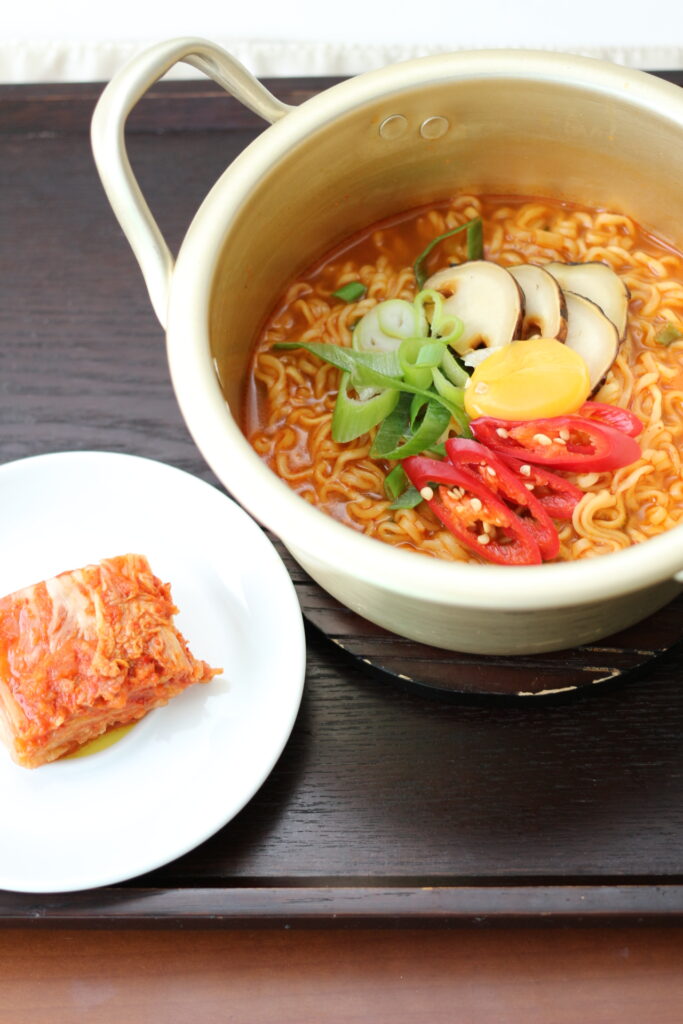
- 1 packet Korean instant ramyeon (such as Shin Ramyun, Jin Ramen, or Neoguri), with its soup powder (수프) and dried vegetable flakes (건더기)
- About 550 ml water (roughly 2.5 cups)
- 1 egg
- 1 green onion (파), thinly sliced
- Optional: 1 slice processed cheese, sliced rice cake (떡), dumplings (만두), or soybean sprouts (콩나물)
- To serve: kimchi, and a small bowl of cooked rice (밥) for the end
Steps
- Bring about 550 ml of water to a rolling boil in a small pot.
- Stir in the soup powder (수프) and dried vegetable flakes (건더기) and let them dissolve into the broth.
- Once the broth is at a strong, rolling boil, add the noodle block. Keep the heat high; do not cover.
- Boil for 4 to 4.5 minutes. Every 30 to 60 seconds, lift the noodles up out of the broth with chopsticks, then drop them back, to keep them springy and chewy.
- In the last minute, add the egg: crack it in whole for a soft poached yolk, or beat and swirl it in for egg-drop ribbons. Add any rice cake, cheese, or dumplings around now too.
- Pull the noodles slightly al dente, since they keep cooking in the hot broth. Turn off the heat.
- Scatter the sliced green onion (파) on top. Eat straight from the pot with a metal spoon and chopsticks, with kimchi on the side.
- At the end, tip a small bowl of rice into the leftover spicy soup (말아 먹기) and finish it off.



Leave a Reply