
There is a popular genre of Korean YouTube video that promises “free Seoul spots even locals don’t know.” It is a fun pitch, but those clips rarely name their picks up front, and “secret” usually means “well known to anyone who lives here.” So this is not a transcription of any one video. It is an independent guide to places we actually checked: every spot below is free to enter, verified against official Seoul city, museum, and tourism sources. The honest framing matters because a few famous attractions hide a paid asterisk, and we will flag those too. Plan a walking loop, load a T-money card once, and you can fill a full day in Seoul on essentially zero won.
The route at a glance
Seoul’s free spots cluster into three groups, so chain them by area instead of crisscrossing the city. The transit between clusters is the only real time cost.
- Old Seoul (Gwanghwamun area): Gwanghwamun Square, the Changing of the Royal Guard, the National Folk Museum, and Cheonggyecheon all sit within a 15-minute walk of each other.
- Han River: Seonyudo Park and Nodeul Island, plus the seasonal Banpo fountain after dark.
- West / Hongdae: Gyeongui Line Forest Park, the leafy former-railway promenade. Seoullo 7017 and the National Museum bridge the central and river clusters.
- Budget: the day’s only required spend is subway fare — roughly 1,500 to 3,000 won total on a T-money card — plus whatever you eat.
Cheonggyecheon: a stream through downtown
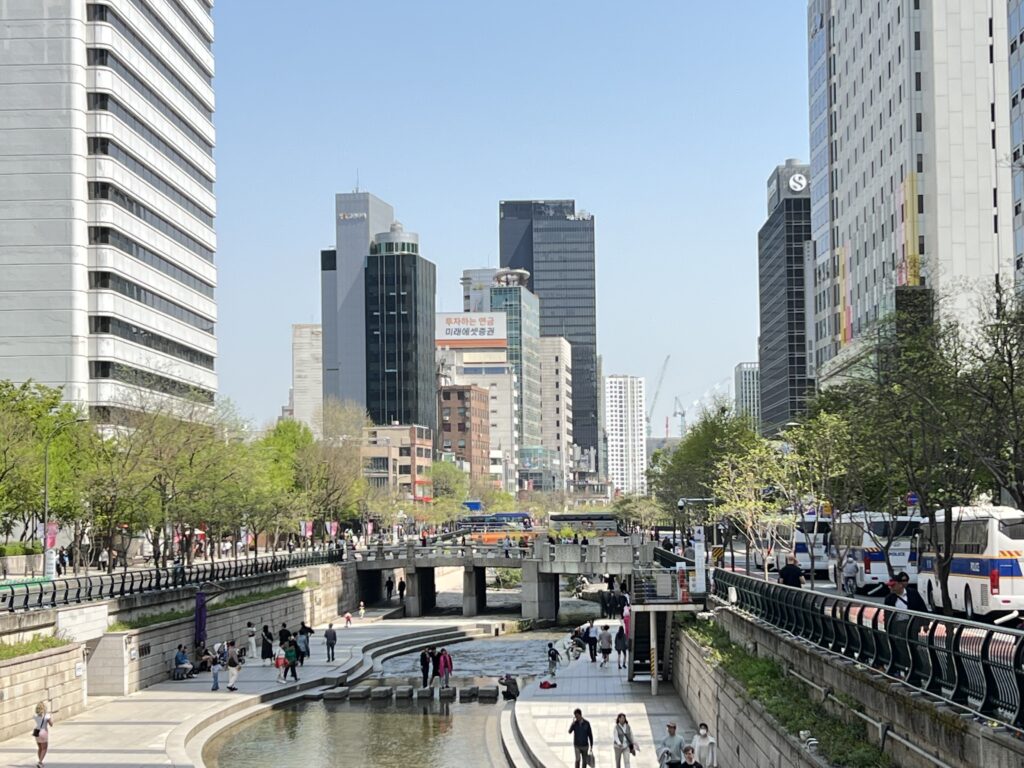
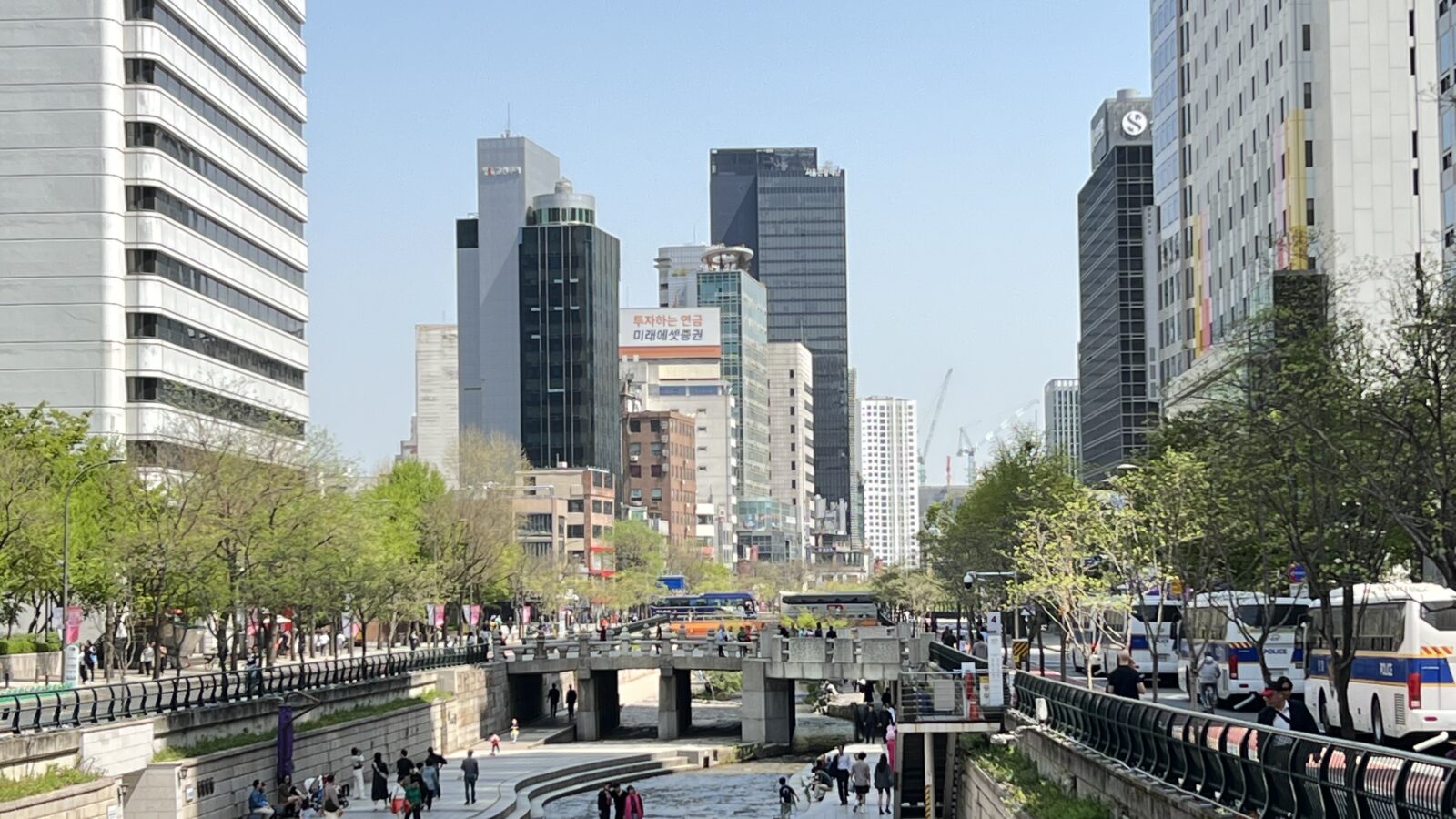
Cheonggyecheon is a restored stream that runs about 11 km straight through the center of the city, reopened in 2005 where an elevated highway used to be. Walk down the stairs to water level and you are in a cool, traffic-free corridor a few meters below the roar of Jongno traffic. It is free and open 24/7, with stepping stones, small waterfalls near the start at Cheonggye Plaza, and seasonal light installations. Stairs every block make it easy to drop in and climb out wherever you like. Nearest stations: Gwanghwamun (Line 5), Jonggak (Line 1), or City Hall (Lines 1 and 2). It pairs naturally with the Old-Seoul cluster, since Gwangjang Market sits a short walk downstream.
Gwanghwamun Square and the Changing of the Guard
The plaza in front of Gyeongbokgung is open public space, free to wander, anchored by the statues of King Sejong and Admiral Yi Sun-sin and summer fountains kids run through. The real draw is the Royal Guard Changing Ceremony at Gwanghwamun Gate, a costumed procession with drums and banners. It is free to watch at 10:00 and 14:00 daily (closed Tuesdays), because it happens in the plaza before the palace ticket checkpoint. Here is the asterisk: entering Gyeongbokgung Palace itself costs 3,000 won. The free experience is the gate and the ceremony, not the inner grounds. Nearest: Gwanghwamun Station (Line 5) Exit 2 or Gyeongbokgung Station (Line 3).
National Folk Museum: free, and you skip the palace line
This is the best “even Seoulites forget” pick. The National Folk Museum sits inside the Gyeongbokgung complex but has its own gate on Samcheong-ro, so you walk straight in for free without buying a palace ticket. All exhibitions are free, covering everyday Korean life across the seasons. Most visitors assume they need a ticket and never realize the side entrance exists. While you are in this cluster, a cheap market lunch fits the theme perfectly: jeon, Korea’s savory pan-fried pancakes, is the classic few-thousand-won plate at nearby Gwangjang and Tongin markets. Nearest: Gyeongbokgung Station (Line 3) or Anguk Station (Line 3).
Seoullo 7017: a sky garden over the station
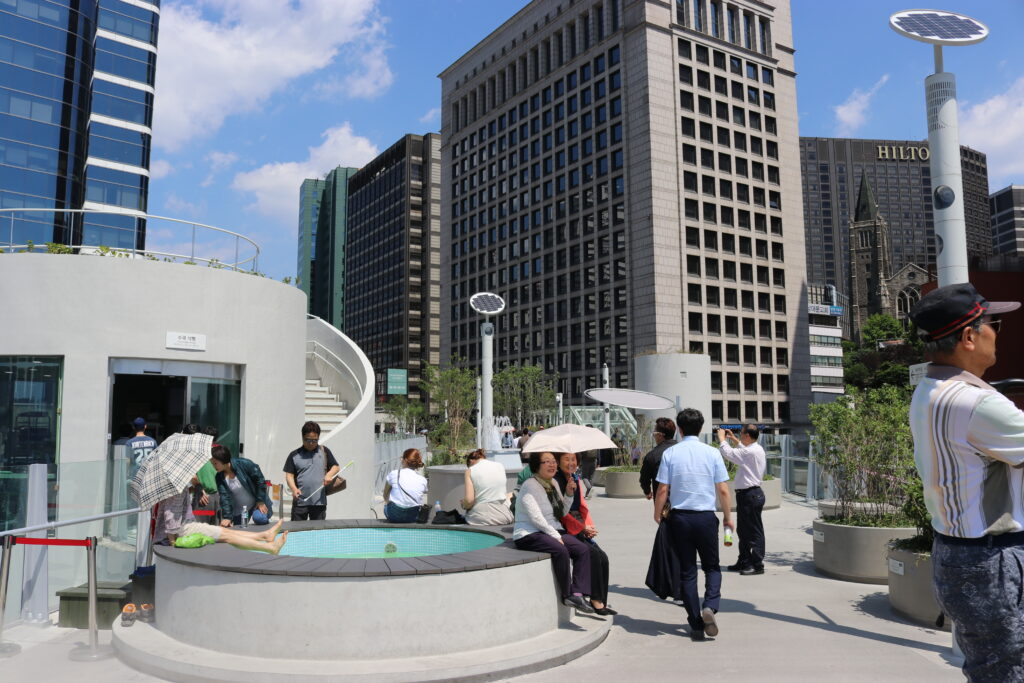
Seoullo 7017 is a roughly 1 km elevated walkway built on the old Seoul Station overpass and reborn in 2017 as a linear “sky garden” planted with hundreds of trees, shrubs, and flowers in pots. The name nods to the 1970 overpass and its 2017 rebirth, about 17 m up. It is free, open 24 hours, lit at night, and step-free with elevators, so it works for strollers and wheelchairs. The views over the rail yards and city skyline are best at sunset, and it connects on foot toward Namdaemun and Myeongdong. Nearest: directly outside Seoul Station (Lines 1 and 4, plus the airport line).
Naksan Park and the Seoul City Wall
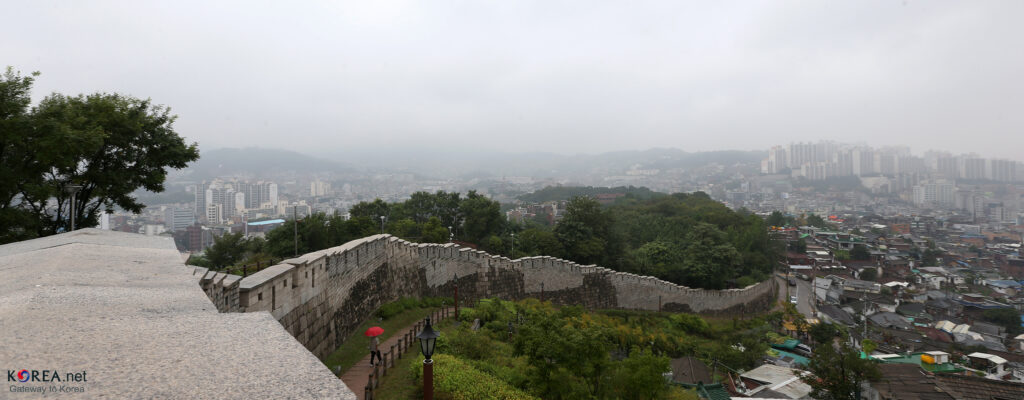
East of downtown, Naksan Park is a free hilltop where you walk a restored stretch of the 600-year-old Seoul City Wall (Hanyangdoseong). The roughly 2 km Naksan section, between Hyehwamun and Heunginjimun at Dongdaemun, delivers some of the best free night views in the city as the ramparts light up. It is always open and free, and the path passes the Ihwa Mural Village. One etiquette note: the mural village is a real lived-in neighborhood, so keep your voice down and do not photograph into people’s homes. Nearest: Hyehwa Station (Line 4) Exit 2.
Seonyudo Park: a garden inside an old water plant
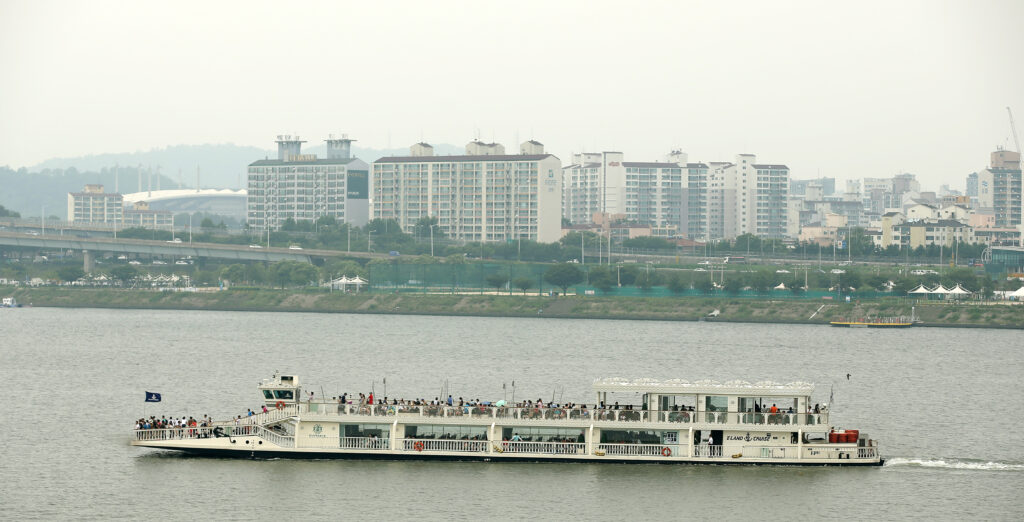
Seonyudo is a free park on a small Han River island, built inside a decommissioned water-treatment plant. The old concrete filtration tanks were turned into sunken gardens, ponds, and a quiet greenhouse, making it one of Seoul’s most unusual “urban regeneration” landmarks. It is free and open 06:00 to 24:00 year-round. You reach it on foot across the Seonyugyo pedestrian bridge. It is photogenic, calm, and genuinely unlike anywhere else in the city. Nearest: Seonyudo Station (Line 9), Exit 2.
National Museum of Korea: world-class, and free in 2026
Korea’s flagship museum in Yongsan holds more than 12,000 artifacts, including ancient gold crowns and the celebrated Pensive Bodhisattvas. The permanent galleries and the Children’s Museum are free. Hours are 09:30 to 17:30, extended to 21:00 on Wednesdays and Saturdays; the outdoor garden and pagoda grounds open earlier. Only special exhibitions are ticketed. The timely caveat: after record crowds, the government is discussing an admission fee for the permanent collection from 2027 at the earliest, so 2026 is the “still free” window. It is free as of this writing, but check before you go if you are reading this later. Nearest: Ichon Station (Line 4 / Gyeongui-Jungang), Exit 2.
Gyeongui Line Forest Park and more Han River options
Out west, the Gyeongui Line Forest Park is a 6.3 km greenway built on a buried railway. The Yeonnam-dong stretch near Hongik University Station, nicknamed “Yeontral Park,” is the famous spot to picnic on the lawn with convenience-store snacks beside Hongdae’s cafes. Free and always open; head for Hongik Univ. Station (Line 2) Exit 3. For more free riverside time, add Nodeul Island, a free Han River cultural complex in Yongsan with lawns, a bookshop, and free weekend performances. After dark in warm months, the Banpo Moonlight Rainbow Fountain runs free 20-minute shows from the bridge, typically spring through October with evening showings around 19:30 to 21:00 — but it is seasonal and cancels in rain or high wind, so confirm the schedule for your date.
One honest note and the smartest move
Not everything labeled “free Seoul” actually is. Seoul Botanic Park is a common example: its outdoor lake and wetland gardens are free, but the indoor greenhouse costs 5,000 won, so it is only partly free. Likewise, the four grand palaces are ticketed (about 3,000 won), though a money-saver helps: as of April 1, 2026, the “Culture Day” free-admission benefit expanded from the last Wednesday of the month to every Wednesday, and wearing hanbok gets you in free any day. Beyond that, the smartest move on a free Seoul day is not to chase more spots — it is to build a tight walking loop within one cluster, save the river and city-wall stops for sunset when Seoul lights up, and let your only real expense be the T-money fare and a market lunch.
Where to eat along the route (by area)
A free day in Seoul pairs naturally with cheap, iconic eats. Most of these sit inside historic markets a short walk from the downtown sights, so you can graze your way between Cheonggyecheon, Gwanghwamun, and the Gyeongui Line park without blowing your budget. Names are given in Hangul with romanization so you can match them to the storefront.
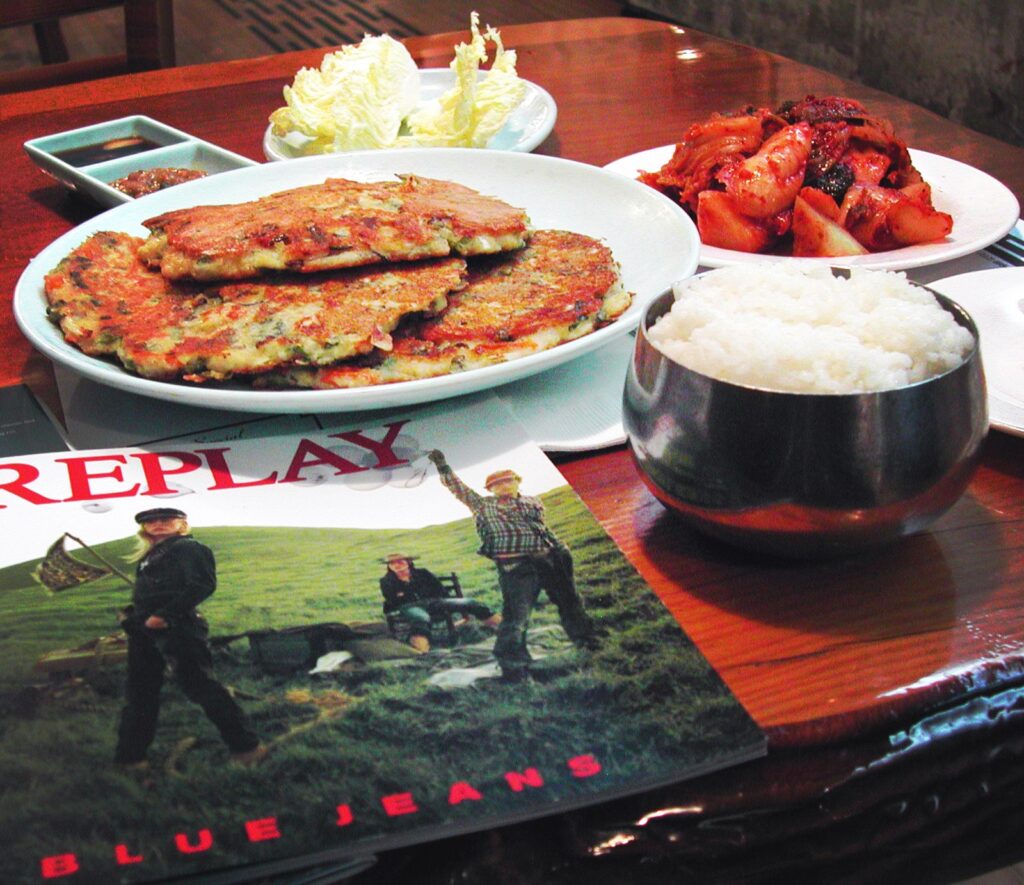
- Gwangjang Market (downtown, near Cheonggyecheon/Gwanghwamun) — 순희네 빈대떡 (Sunhuine Bindaetteok): 빈대떡 (bindaetteok, mung-bean pancake), griddled crisp from beans ground on a stone mill. It’s the market’s most famous pancake stall and a TV-featured crowd magnet, so expect a line — cheap, hot, and made to share.
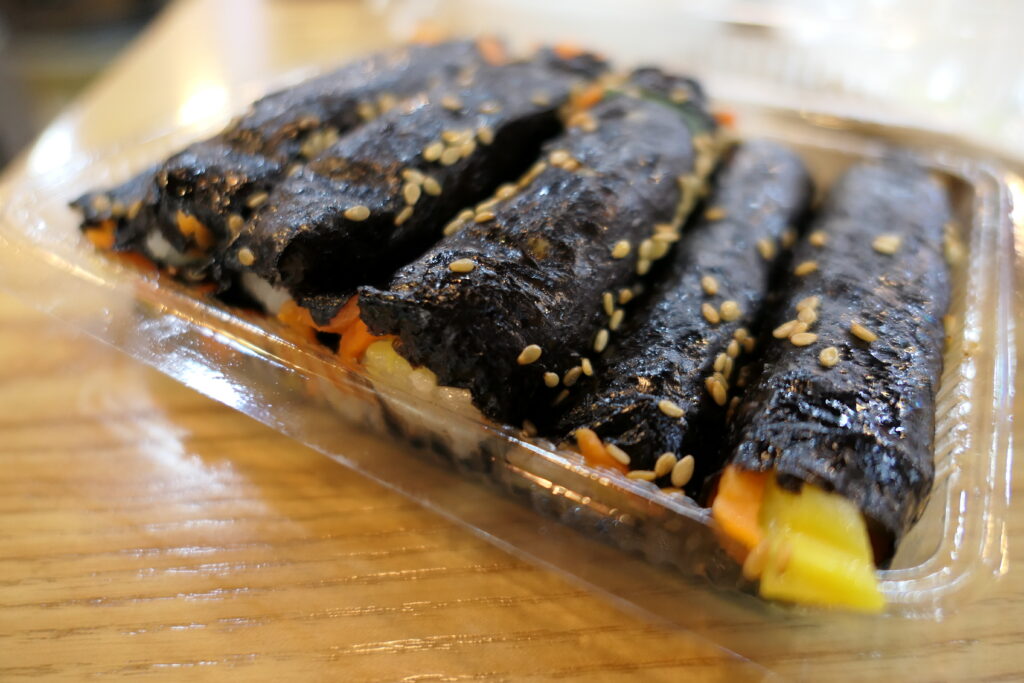
- Gwangjang Market (downtown, near Cheonggyecheon/Gwanghwamun) — 모녀김밥 (Monyeo Gimbap): 마약김밥 (mayak gimbap, mini seaweed rolls with a mustard-soy dip), the stand credited with originating this addictive bite. Tiny, dirt-cheap rolls eaten standing at the counter make it the quintessential budget snack — note signage may now read 꼬마김밥 after a citywide labeling change.
- Gwangjang Market (downtown, near Cheonggyecheon/Gwanghwamun) — 부촌육회 (Buchon Yukhoe): 육회 (yukhoe, seasoned raw beef topped with an egg yolk). A 60-plus-year institution and former Michelin Bib Gourmand pick, it’s the market’s signature splurge — still far cheaper than any sit-down steakhouse if you want one slightly bigger meal.
- Tongin Market (near Gwanghwamun/Gyeongbokgung) — 효자동옛날떡볶이 (Hyojadong Yennal Tteokbokki): 고추장 기름떡볶이 (gochujang gireum-tteokbokki, red-pepper-paste oil-fried rice cakes). A long-running stall in a market famous for its brass-coin “yeopjeon” dosirak buffet — pair the two for a fun, very low-cost lunch a short walk from the palace.
- Hongdae / Yeonnam-Donggyo, by the Gyeongui Line Forest Park — 하하 (Haha): 만두 and 가지튀김 (mandu and crispy fried eggplant). A cheap, long-standing neighborhood Chinese eatery beside the forest park, repeatedly cited on Yeonnam value-eats lists — a good inexpensive sit-down break when you want to get off your feet.
One honest caveat: hours and weekly closing days shift, and some Seoul spots relocate or close without much notice (Haha typically closes Tuesdays; the Gwangjang stalls run roughly 09:00–21:00). Verify the latest hours before you go, and check the storefront name and photo on arrival — several of these markets have multiple near-identically named stalls right next to each other.

Leave a Reply